The way businesses meet has changed. Teams now regularly work across offices, homes, cities, and time zones, making video conferencing software an essential part of day-to-day collaboration.
But meetings often involve sensitive information, including business strategies, project timelines, and client and employee details. As business conversations increasingly move online, productivity and privacy are more important than ever.
Below are seven common examples of business meetings, along with practical tips to help make each one more effective and secure.
7 common types of business meetings
Strategy meetings
Strategy meetings help leaders and teams align on how to achieve specific goals, such as entering new markets and hitting revenue targets. The decisions made in these sessions can shape the direction of a department, project, or entire company.
Productivity tip: Share a clear agenda in advance and ask attendees to review relevant information beforehand. This enables everyone to arrive prepared and contribute to a more focused discussion.
Privacy tip: Strategy meetings usually involve commercially sensitive data. If you’re hosting them online, use an internal communication tool with end-to-end encryption. This ensures only authorized participants can access what is said and shared during the meeting.
Project check-ins
Also referred to as standups or team syncs, these meetings are meant to help keep everyone up to speed on ongoing projects. Team members can share progress, raise blockers, and confirm which tasks are on schedule.
Productivity tip: Keep the discussion focused on updates, decisions, and dependencies. If something needs further discussion, schedule a follow-up meeting with only the people directly involved so everyone else can continue with their tasks.
Privacy tip: Even these routine meetings can still reveal a lot about internal priorities, customers, and team structures. Consider if your meeting tool collects participant information or other metadata that could expose these details to third parties.
Brainstorming sessions
Brainstorming sessions are spaces for teams to explore new ideas. They can help improve processes, plan campaigns, and develop new products or strategies. These meetings are usually open-ended and invite open feedback from all attendees.
Productivity tip: Enforce timeboxing to keep the session focused and efficient. For example, set a timer for 10 minutes dedicated to idea generation. Once the timer rings, move on to the next phase for evaluating and prioritizing shortlisted ideas.
Privacy tip: New ideas can become valuable intellectual property. Check how your video conferencing software handles meeting content, recordings, and AI features. Your ideas should not be used to train AI models or for other purposes that your organization has not approved.
Problem-solving meetings
Also known as solution meetings, these focus on resolving specific issues or internal challenges. From fixing client deliverables to settling a misunderstanding between team members, these calls can be complex and sensitive.
Productivity tip: Define the problem at the start of the meeting, then focus the conversation on evidence, objective options, and next steps. Avoid turning the meeting into a search for who to blame.
Privacy tip: A secure online meeting environment allows participants to speak freely about internal challenges without fear that your meeting tool will store or use what they say. Avoid using AI transcription or unnecessary recording features, and to keep things truly private, use a fully encrypted video conferencing tool like Proton Meet.
One-on-one meetings
As the name suggests, these meetings are held between two people — typically a manager and a direct report. These meetings can be used for discussing performance or project updates, sharing feedback and career aspirations, or for raising concerns.
Productivity tip: Prepare a few talking points to keep the conversation focused. This ensures that the meeting stays useful while leaving room for both sides to address important topics.
Privacy tip: One-on-one meetings often touch on sensitive employee matters, such as salary and health concerns. Ensure you’re using a video conferencing tool that is compliant with data protection regulations such as GDPR to protect your employees’ privacy.
Town halls
Often referred to as an all-hands, these meetings involve the entire company. Leaders usually conduct town halls to share updates about company performance, strategic priorities, and major changes.
Productivity tip: Use a structured agenda and leave time for questions. Because a town hall has the whole company in attendance, even a short overrun can result in a significant number of lost productivity hours.
Privacy tip: A larger audience compounds the risk of unwanted access and accidental sharing. Use a video call platform that can support your company’s size without compromising on full encryption and meeting controls.
Client meetings
Client meetings help businesses build relationships, manage accounts, and move deals forward. Taking that online reduces friction and makes these conversations much easier to schedule, reducing travel time and costs.
Productivity tip: Make joining the meeting as simple as possible. Opt for browser-based video conferencing solutions to avoid installation and setup issues during your call.
Privacy tip: Privacy is paramount when dealing with external partners. Using a secure meeting platform signals that privacy is part of how your business operates, rather than an afterthought.
What to include in a business meeting agenda
Regardless of the meeting type, going into a discussion without a clear agenda leads to wandering conversations and can impact productivity. A good business meeting agenda sets expectations before the meeting starts, helps participants understand what needs to be discussed and prepared, and indicates the desired outcome. When setting a meeting agenda, ensure these are included:
- Objective(s): State what the meeting needs to accomplish.
- Topics and timing: Allocate time for each topic or speaker to keep the discussion on track.
- Owners: Identify which participants will lead or be involved in each part of the meeting.
- Pre-work: Link to any pre-reading material as needed and share it well beforehand so participants can prepare appropriately.
Once the meeting is over, share clear meeting minutes so everyone knows what was decided and what needs to happen next.
Why security is important for business meetings
Most advice on company meetings focuses on efficiency. But while productivity matters, it shouldn’t be the only consideration when choosing a video conferencing tool. Business meetings often contain valuable information about your company, and improper protection puts your business at risk.
Not all meeting tools offer the same level of protection. Some providers only encrypt data in transit, giving them control over your data when it reaches their servers. Others collect metadata about your meetings that reveal company relationships, and may even use your data to train AI.
For businesses, especially those in regulated industries, privacy should be built into the tools employees use every day. This applies just as much to small teams: securing communication tools is a core part of cybersecurity for startups, where a leak could have disastrous consequences on fundraising potential, partnerships, or customer trust.
A video conferencing platform with end-to-end encryption helps meetings run smoothly, while ensuring confidential data stays only accessible to you and the people you authorize.
Keep company meetings secure and confidential with Proton Meet
Closing the door of a physical meeting room helps keep conversations private. Proton Meet brings that same expectation of confidentiality to all your online calls.
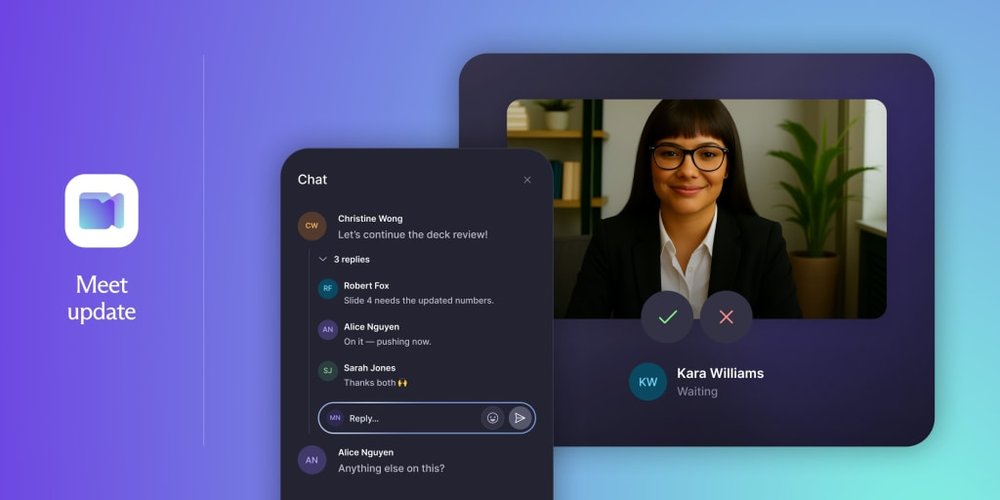
Built by the team behind Proton Mail, Proton Meet protects your audio, video, screen shares, and chat messages with end-to-end encryption by default. This means only participants have access to the contents of each meeting — not advertisers, third parties, or even Proton. With Messaging Layer Security (MLS), Proton Meet protects calls from unauthorized access and prevents meeting content from being used to train AI. And with Proton being based in Switzerland, your business benefits from some of the world’s strongest privacy protections.
From intuitive screen sharing to browser-based access, Proton Meet gives your business the tools you need to collaborate without compromising on privacy. Calls can be joined and hosted from any device, and external guests can also be invited for meetings even without a Proton account. Start holding secure business meetings today with Proton Meet for Business.