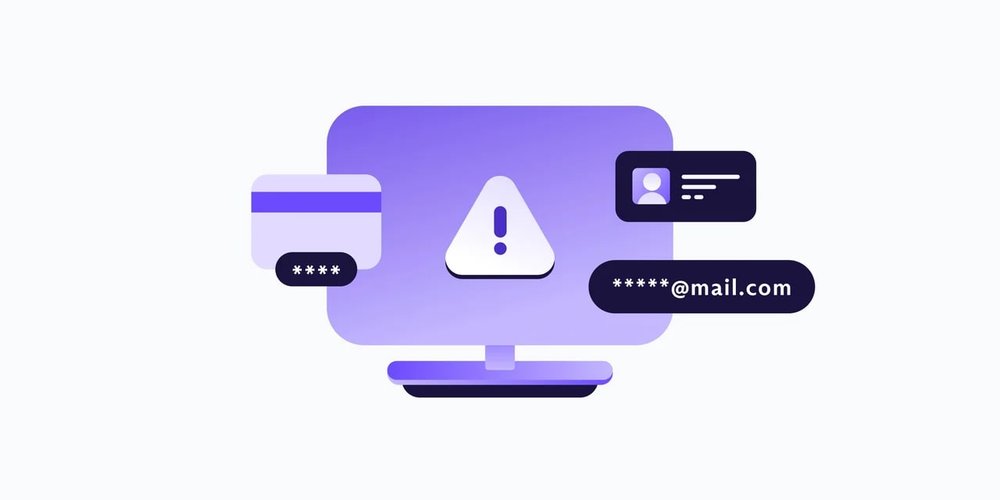
Phishing remains one of the most common ways for attackers to gain access to business networks. It mimics legitimate day-to-day business communications, so it’s an ideal technique for collecting valuable business information unnoticed. In the UK government’s Cyber Security Breaches Survey 2025 report, phishing was the most common type of breach or attack reported by businesses that identified incidents, affecting 85% of them and the equivalent of 37% of all businesses overall.
Awareness training must be a business mandate, not just a compliance task. One successful phishing attempt can expose credentials, grant access to internal systems, and create problems that spread well beyond a single employee inbox.
The issue is that many organizations still rely on one-off awareness efforts, even though phishing changes constantly. A more effective program can give employees repeated practice, clearer reporting habits, and supporting controls that reduce the impact of mistakes.
What phishing looks like in a business context
Business phishing has evolved beyond obviously fake emails full of spelling mistakes. In practice, employees are far more likely to encounter realistic-looking attempts such as:
- Account-verification prompts
- Shared document notifications
- Sign-in pages for common business platforms
- Invoice approvals
- HR updates
- Messages from trusted suppliers or internal executives.
If a team member responds, attackers can then use information they’ve collected about employees or companies to make messages more persuasive and realistic, especially in more targeted campaigns.
Spear phishing, executive impersonation, and credential harvesting
Phishing awareness training needs to prepare teams for several patterns at once. Spear phishing is one of the most common variations of phishing. Instead of sending a generic message to thousands of recipients, the attacker tailors the email to a specific role, project, colleague, or supplier relationship.
The message feels plausible because it is built around something the employee would realistically expect to see. This kind of targeting is often made more convincing by information gathered from company websites, public profiles, or other online sources.
Another variation of phishing is executive impersonation, sometimes referred to as CEO fraud. Here, the attacker mimics a senior leader or important stakeholder to create urgency around a payment, a file, or a credential request, pressuring staff into transferring money or information unless normal verification processes are followed.
A third pattern is credential harvesting. In these attacks, the employee is pushed towards a fake login page designed to capture usernames, passwords, and sometimes even one-time password (OTP) codes.
Phishing training has to reflect real business workflows rather than giving generic advice. Many phishing pages are built to resemble tools employees already use every day.
Why routine business messages are so effective
Phishing remains effective in organizations because it often blends into everyday operations. A fake login prompt only needs to feel familiar long enough for someone to act on autopilot. The same is true of supplier messages, shared-document notifications, or urgent internal requests.
That is why training should not focus only on suspicious wording or poor grammar. Employees also need to understand how attackers exploit normal ways of working. Think about how your organization operates and how you can help staff recognize requests that fall outside normal processes, especially when money, credentials, or sensitive information are involved.
Recent breach examples
Recent breach reporting reinforces the point that phishing inside businesses now goes far beyond simple inbox scams.
According to Proton’s Data Breach Observatory, greeting card company Hallmark Cards was targeted by the criminal extortion hacker group known as ShinyHunters. The group obtained records belonging to Hallmark Cards from Salesforce and gave the business an extortion deadline to meet. Ultimately, the group leaked 2.8 million unique records.
ShinyHunters is prolific, targeting many high-profile businesses in recent months. In January 2026, apparel brand Canada Goose was linked to a breach of around 600,000 customer records. The data originated from a third party breach that occurred in August 2025.
These examples are useful because they show what phishing looks like in business settings now: not just inbox deception, but attacks aimed at contractors, identity systems, internal access, and the trust relationships organizations rely on every day.
Why awareness alone is not enough
Phishing awareness is important, but it isn’t enough on its own. Employees don’t make mistakes just because they lack information. They also make them because they’re busy, distracted, under pressure, or moving quickly through workflows where a phishing message can easily pass as legitimate at first glance.
That is why training shouldn’t be built around the idea that every employee can spot every phishing attempt. Organizations can’t rely on user detection alone. Some attacks will still get through, which means technical controls, clear processes, and user education need to work together.
A stronger phishing awareness training program is built around that reality. It helps employees recognize common warning signs, pause when something feels off, report quickly, and work within systems that make one mistake easier to contain. It also connects naturally to incident readiness.
If someone clicks a malicious link or shares credentials, the organization needs a fast and clear response path. Training becomes much more effective when employees know what happens after a report is made and what role they play. Proton’s guide to incident response can help your organization put a plan together.
What does an effective phishing awareness training program look like?
An effective phishing awareness training program is not built around a single annual session and a few outdated examples. It is ongoing, practical, and designed around the way people actually work. This means regular reinforcement, realistic scenarios, and feedback that helps employees build better judgement over time.
In practice, phishing awareness should appear at more than one moment. It should be part of onboarding, refresher training, short scenario-based reminders, and incident reviews, not something employees see once and forget. It also needs to reflect real exposure.
Someone dealing with invoices, executive support, supplier communication, privileged access, or sensitive records is likely to face different kinds of phishing pressure from someone in a lower-risk workflow. The NCSC’s phishing guidance reflects that reality by noting that staff with access to sensitive information, financial assets, or IT systems may be targeted more heavily.
Practice also needs to be used well. Simulated phishing can be useful, but not when it turns into a blame exercise. Poorly handled simulations can damage trust and discourage people from reporting mistakes if they feel they are being caught out rather than supported.
A stronger program uses simulations carefully, gives immediate feedback, and increases difficulty gradually. It is not trying to prove that employees are easy to fool. It is helping them build pattern recognition, reporting habits, and more confidence in real situations.
The five phishing red flags employees still miss
Many employees know the classic warning signs, but they still miss the subtler cues that occur in real business attacks. Phishing awareness training is much more useful when it teaches people how to recognize the patterns that fit their day-to-day work.
1. A message that matches the workflow, but changes the channel or urgency
The most effective phishing emails don’t look random at all. They resemble invoice requests, shared documents, payroll updates, or sign-in notifications that employees expect to receive.
What changes is the urgency, secrecy, or process. An attacker wants the target to skip normal checks. NCSC guidance specifically warns that attackers exploit business processes and requests, including requests for information or unauthorized payments.
2. A believable sender name hiding a bad domain or spoofed source
Employees often focus on the display name and not the full address, reply path, or domain. That is one reason anti-spoofing controls matter, but training still needs to teach people to slow down when a familiar brand or colleague appears slightly “off”.
The NCSC advises organizations to make email spoofing harder through controls such as Domain-based Message Authentication, Reporting, and Conformance (DMARC), Sender Policy Framework (SPF), and DomainKeys Identified Mail (DKIM). Together, these email authentication checks help receiving systems verify whether a message really comes from the domain it claims to come from.
3. A login page that looks normal enough
Credential harvesting pages don’t need to look perfect. They only need to feel familiar long enough for an employee to enter a username and password. In practice, the biggest clue may be context rather than design: why is this login request appearing now, and why through this route?
4. A request that asks for speed over verification
Executive impersonation, invoice fraud, and supplier scams often lean on urgency. The message is crafted to make verification feel inconvenient or disloyal. Strong phishing training should teach that unexpected urgency is not just suspicious language; it is a signal to switch from email response mode into verification mode.
5. A situation where reporting feels embarrassing
One of the most overlooked warning signs is internal rather than technical: an employee notices something odd, but hesitates to report it because they’re unsure, too busy, or worried about looking careless.
The NCSC warns against reprimanding users who struggle to recognize phishing because fear of reprisals suppresses reporting. Healthy programs therefore teach employees that raising a concern early is useful even if the message turns out to be harmless.
What happens when training fails
When phishing training fails, the damage is often measured in credentials before it is measured anywhere else. A user enters a password into a fake portal, approves an unexpected prompt, or shares login details through a convincing internal-looking request. From that point on, the problem is no longer only about one inbox decision. It becomes an access-control problem.
This is where the connection between phishing and password hygiene becomes so critical. If the same password is reused across multiple services, one compromised credential can become a route into email, SaaS tools, cloud platforms, or admin systems. If shared logins are still being handled through informal or uncontrolled methods, accountability drops even further.
Proton’s Data Breach Observatory Report notes that names and emails appear in 9 out of 10 breaches, that 72% of breaches contain contact data, and that 49% include passwords. That means attackers often have exactly the raw material they need to make phishing more convincing and to exploit password reuse when they succeed.
Recent breach examples make the same point from another angle. In Proton’s breach reporting, phishing-related incidents in 2026 did not stop at a clicked link; they became network access, internal exposure, and broader business incidents. That is why phishing attack prevention can’t consist of employee recognition alone. It also has to reduce how far stolen credentials can travel once one account is compromised.
Unique passwords for every service are one of the simplest and highest-value controls here. They do not stop a phishing attempt from happening, but they do help contain the fallout. If one password is stolen, it should not unlock five other systems.
A secure business password manager supports a security culture strategy. Proton Pass for Business is designed to help teams generate and store strong, unique passwords for each service, reducing the chance that one successful phishing event cascades across the organization.
A practical model for phishing training for employees
The best place to start is not with generic training materials, but with the way your organization actually works.
Focus first on the phishing scenarios employees are most likely to face: sign-in prompts, supplier impersonation, payment approvals, shared-document notifications, executive requests, or identity-provider attacks. Training becomes much more useful when people can recognize their own working reality in it.
Reporting also needs to be simple and safe. The NCSC’s phishing guidance makes clear that organizations should help users identify and report suspected phishing messages, while the Reporting Fraud Website(新視窗) provides the UK’s official reporting route for phishing and cyber crime. Employees should know where to report internally, what to include, and what to do immediately if they clicked a link, entered credentials, or approved access.
Training should be backed by controls that reduce the cost of mistakes. That includes email filtering, anti-spoofing protections, secure sign-in flows, 2FA, and stronger password hygiene. Proton’s business guidance on phishing attack prevention also points to the value of clear reporting channels, repeated practice, and monitoring for exposed credentials.
Finally, measure more than clicks. Simulation click rates can be useful, but reporting rates, time to report, repeated failure patterns, and credential-related incidents often give a clearer picture of whether resilience is improving. The NCSC also recommends thinking carefully about phishing metrics so organizations do not end up discouraging safe reporting.
Perfect detection isn’t possible, but a stronger response is
Phishing awareness training is most effective when it moves beyond the idea that employees should be able to spot every attack perfectly. A more realistic goal is to build a team that can recognize familiar warning signs, report concerns quickly, and respond in ways that stop one mistake from escalating into a wider incident.
That takes more than information. It takes repeated practice, examples that reflect real roles and workflows, and clear processes employees can rely on when something feels wrong. It also takes controls that reduce the impact of credential theft when a phishing attempt succeeds. For that reason, phishing training for employees works best as part of a broader security culture, not as a standalone awareness exercise.
Organizations that reduce phishing risk well tend to combine the same elements: practical training, clear reporting habits, stronger incident readiness, and tighter credential hygiene. Proton’s resources on phishing attacks, and incident response all reinforce the same principle: awareness is far more effective when it is backed by systems that make a compromise easier to contain.