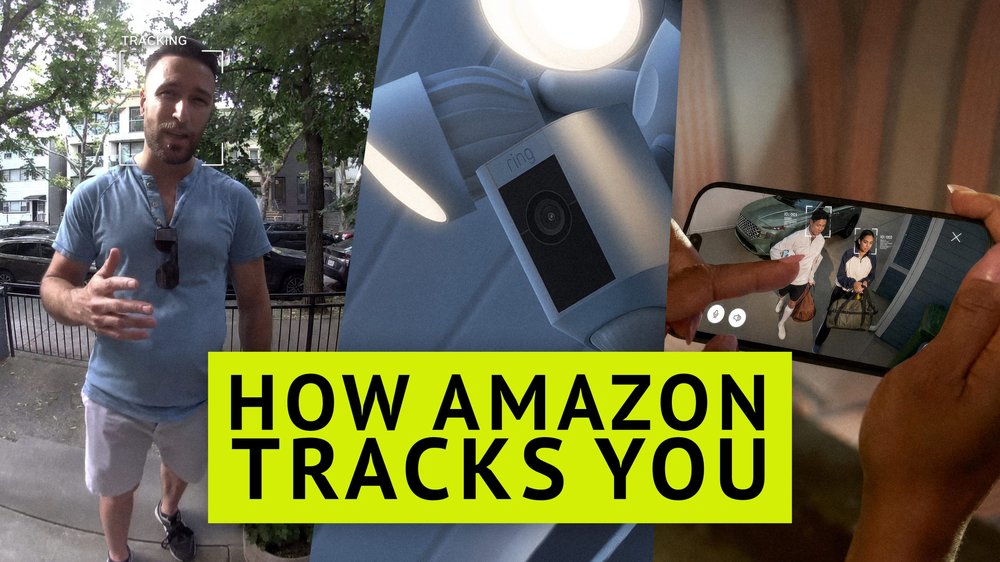
Smart home devices can make everyday life more convenient, from answering the front door to tracking your workouts. But many also collect data about your habits, routines, and even your health. Taken together, that information can paint a surprisingly detailed picture of life inside your home.
From the moment someone rings your doorbell to the time you switch off the lights at night, connected devices can record where you go, what you watch, when you’re home, and even how you sleep. Some of that data is essential for the products to work, some helps companies improve their services, and some raises important questions about how much information we’re comfortable sharing.
In this guide, we’ll take a room-by-room tour of a modern smart home to see what devices know about you, and where you can take back a little more control.
Jump to:
- The front door
- The hallway
- The living room
- The children’s room
- The bathroom
- The bedroom
- The kitchen
- The home gym
The front door
Video doorbells have become one of the most popular smart home upgrades, offering a convenient way to keep an eye on deliveries and visitors. But they also create a permanent digital record of everyone who walks past your home.
Privacy concerns extend beyond the footage itself. In 2023, the U.S. Federal Trade Commission accused Ring of allowing employees and contractors broad access to customer videos(nuova finestra), with allegations that some viewed recordings from sensitive locations. These incidents highlight the importance of understanding who can access cloud-stored footage.
What you can do
- Choose cameras that support local storage rather than cloud-only recording.
- If you use a cloud camera, disable facial recognition and optional AI features whenever possible.
- Review your privacy settings regularly to minimize unnecessary data collection.
The hallway
Motion sensors, entry logs, and optional facial recognition features can reveal when you leave for work, when you return home, and even your family’s daily habits. Privacy experts often refer to this as a “pattern of life”, a detailed timeline built from seemingly ordinary events.
Security companies have also experienced data breaches that exposed customer information, reinforcing the importance of choosing providers that prioritize security as much as convenience. Traditional alarm companies often focus on intrusion detection rather than building extensive advertising profiles around user behavior.
What you can do
- Review which features your security system has enabled by default.
- Disable facial recognition and other cloud-based AI features you don’t use.
- Consider providers that focus on intrusion detection rather than building detailed user profiles.
- Check your account settings periodically to understand what information is being collected and stored.
The living room
Your television may know more about your viewing habits than your favorite streaming service. Some smart TVs collect information about what you watch through technologies like Automatic Content Recognition (ACR)(nuova finestra), which can identify content playing on the screen regardless of where it comes from. In one widely reported case, Vizio collected viewing data from millions of TVs before selling that information for targeted advertising. Samsung also faced criticism after users discovered voice commands relied on the TV actively listening for speech.
Convenience often comes bundled with data collection, especially when manufacturers subsidize hardware with advertising revenue.
What you can do
- Consider using a basic television paired with a streaming stick.
- Build a personal media library with platforms like Plex or Jellyfin if you’d rather not rely entirely on cloud services.
- Review your TV’s privacy settings and disable optional advertising features.
The children’s room
Devices designed for children deserve an even higher standard of privacy. Connected toys can store conversations, while smart baby monitors may stream video and audio over the internet. This convenience can come with risks. Recent reports involving AI-powered toys exposed children’s chat logs, while compromised baby monitors have allowed strangers to speak directly through connected devices.
For many parents, these products provide genuine peace of mind. But they also demonstrate why devices aimed at children deserve careful scrutiny before bringing them into the home.
What you can do
- Choose closed-loop baby monitors that don’t rely on cloud services.
- Research how children’s devices store and protect recordings before purchasing.
The bathroom
Bathrooms are among the most private spaces in any home, yet they’re increasingly home to connected health technology.
Smart devices can now monitor everything from brushing habits to urine biomarkers, uploading that information to cloud services for analysis. While these features can provide useful health insights, they also require users to trust lengthy privacy policies that often permit data sharing with third parties.
What you can do
- Consider keeping a health journal in apps like Obsidian, Standard Notes, or even Apple Notes instead of relying on cloud-connected devices.
- Ask whether a smart feature genuinely adds value before sharing sensitive health information.
The bedroom
Few devices are more personal than those used in the bedroom.
A lawsuit involving the smart vibrator We-Vibe alleged that usage information was collected through its companion app without users’ knowledge or consent. Whether or not someone uses connected devices in intimate settings is a personal choice, but it’s worth considering whether internet connectivity actually improves products that are already highly personal.
What you can do
- Consider whether your device really needs internet connectivity in the first place.
- Review the companion app’s privacy settings and data-sharing options.
- Delete old accounts if you no longer use the device.
- If privacy is your priority, an analog alternative remains the safest choice.
The kitchen
Not every appliance needs to be connected to the internet.
Smart refrigerators, ovens, and even air fryers increasingly ask for app permissions, account creation, or cloud connectivity. While some features are genuinely useful, others appear difficult to justify. A refrigerator with internal cameras might help you check what’s inside while shopping but it also creates another source of personal data.
Privacy experts have also warned that connected home devices can become tools for coercive control, allowing abusive partners to remotely manipulate lights, speakers, thermostats, and other household appliances.
What you can do
- Skip smart features if they don’t offer any value.
- Use strong, unique passwords for connected appliances and change them regularly.
- Disable microphones, cameras, or cloud features you don’t use.
- If multiple people have access to your smart home, regularly review who can control your devices.
The home gym
Smart home gym equipment doesn’t just record workouts, it can also collect surprisingly sensitive personal information.
Some products ask users to share details such as pregnancy status or long-term health goals. Individually, these questions may seem harmless. Combined with other personal data, however, they can contribute to highly detailed personal profiles.
Privacy is all about about maintaining control over who has access to your information and deciding when that information is shared.
What you can do
- Only share the personal information needed to use the service.
- Review what health data your fitness apps collect and whether you can opt out.
- Use offline workout tracking when possible.
- Ask yourself whether a connected gym offers benefits that outweigh the privacy trade-off.
Smart home, outsmarted
Smart home technology isn’t inherently bad. Many connected devices genuinely make life safer, easier, and more comfortable. The goal isn’t to eliminate technology altogether but rather to make informed decisions about the trade-offs that may impact your internet privacy.
Before buying a new smart device, ask yourself a few simple questions. Does it really need an internet connection? Where is the data stored? Can cloud features be disabled? Is there a version that works locally instead?
Small choices add up. Using stronger passwords, disabling unnecessary cloud features, choosing devices with local storage, and only buying smart products when they offer meaningful benefits can significantly reduce how much information leaves your home.
Your home should still feel like your sanctuary. With a little extra attention to privacy, it can remain one.