Grandes mayorías de consumidores en el Reino Unido, Alemania y Francia creen que sus países se han vuelto dependientes de las empresas tecnológicas de EE. UU., y a más de 8 de cada 10 les preocupa esa dependencia, según una encuesta de Proton a 3.000 personas en los tres países.
La encuesta se basa en una investigación anterior de Proton que descubrió que el 74 % de las empresas que cotizan en bolsa en Europa utilizaban servicios con sede en EE. UU. como Google y Microsoft para su correo electrónico, y potencialmente otros servicios en paquete como almacenamiento en la nube o mensajería.
En conjunto, los datos destacan la profunda dependencia económica del continente de empresas, y de un gobierno, que muchas personas sienten cada vez más que no tienen en cuenta los mejores intereses de Europa.
Muchos encuestados quieren cambiar a alternativas locales que protejan su información personal, se rijan por la legislación europea y les den una mayor sensación de control. Nuestra encuesta descubrió que:
- El 73 % de los europeos cree que sus sociedades son demasiado dependientes de las empresas tecnológicas de EE. UU. Y entre estos, el 83 % dijo que está preocupado por esta dependencia.
- El 54 % de los europeos que siguen las noticias son más propensos a preferir alternativas europeas a los servicios digitales de EE. UU., lo que sugiere que las tensiones geopolíticas recientes influyen en sus actitudes.
- Las razones para preferir alternativas tecnológicas europeas varían, pero una protección más sólida de la privacidad de los datos es el factor más importante en los tres países encuestados. Alrededor del 66 % dijo que la seguridad contra el hackeo y el fraude les motivaba.
Empresas como Google, Meta, Amazon y Microsoft almacenan y controlan los datos que impulsan los negocios de las personas, intervienen en su comercio y estructuran sus vidas. En respuesta a las continuas violaciones de la privacidad y la competencia por parte de la tecnología de EE. UU., los europeos están tomando cada vez más el control de sus vidas digitales y avanzando hacia soluciones tecnológicas europeas alternativas.
Hemos visto estas actitudes reflejadas en el comportamiento real de los consumidores: la adopción por parte de los usuarios y los registros en Proton han aumentado significativamente en toda Europa. Tras las amenazas de invadir Groenlandia, Proton también ha visto un aumento de casi el 80 % en los registros de Proton Mail y Proton Drive en los países nórdicos. En Dinamarca, los registros en Proton han aumentado más del 100 %.
Otros titulares recientes han acentuado la percepción de la tecnología de EE. UU. como arriesgada. A finales del año pasado, el fiscal jefe de la Corte Penal Internacional perdió el acceso a su bandeja de entrada de Microsoft(ventana nueva), tras las sanciones del presidente Trump a la CPI. Khan se cambió a Proton Mail para reanudar su trabajo, pero las relaciones internacionales siguen siendo tensas. Este y otros episodios han amplificado los llamamientos para perseguir la soberanía tecnológica europea y construir un EuroStack(ventana nueva).
Nuestra encuesta buscaba comprender cómo los acontecimientos recientes están moldeando las opiniones de los europeos de a pie hacia la tecnología de EE. UU.
La resistencia a la tecnología de EE. UU. está creciendo
- El 65 % de los encuestados alemanes cree que Europa es muy o extremadamente dependiente de las empresas tecnológicas de EE. UU., y el 90 % expresa preocupación por esta dependencia
- El 80 % de los encuestados franceses cree que Europa es muy o extremadamente dependiente de las empresas tecnológicas de EE. UU., y el 85 % expresa preocupación por esta dependencia
- El 74 % de los encuestados británicos cree que Europa es muy o extremadamente dependiente de las empresas tecnológicas de EE. UU., y el 74 % expresa preocupación por esta dependencia
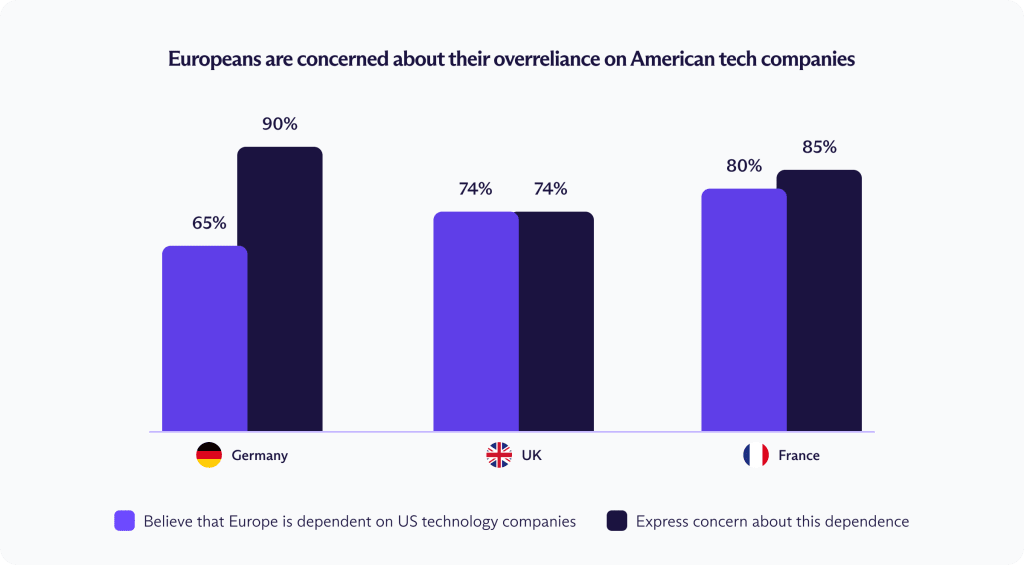
Los europeos están preocupados por su excesiva dependencia de las empresas tecnológicas estadounidenses. Muchos factores influyen en esta preocupación, pero el constante incumplimiento de las leyes de protección de datos por parte de la industria tecnológica de EE. UU. y de las expectativas de los consumidores no ha pasado desapercibido.
Las tensiones transatlánticas afectan al sentimiento europeo
- El 53 % de los encuestados alemanes que siguen las noticias dicen que son más propensos a preferir los servicios digitales europeos.
- El 56 % de los encuestados franceses que siguen las noticias afirman que las crecientes tensiones entre EE. UU. y Europa les motivan a preferir los servicios europeos.
- El 55 % de los encuestados británicos que han estado siguiendo las noticias actuales afirman que el ciclo de noticias les ha hecho más propensos a preferir los servicios europeos.
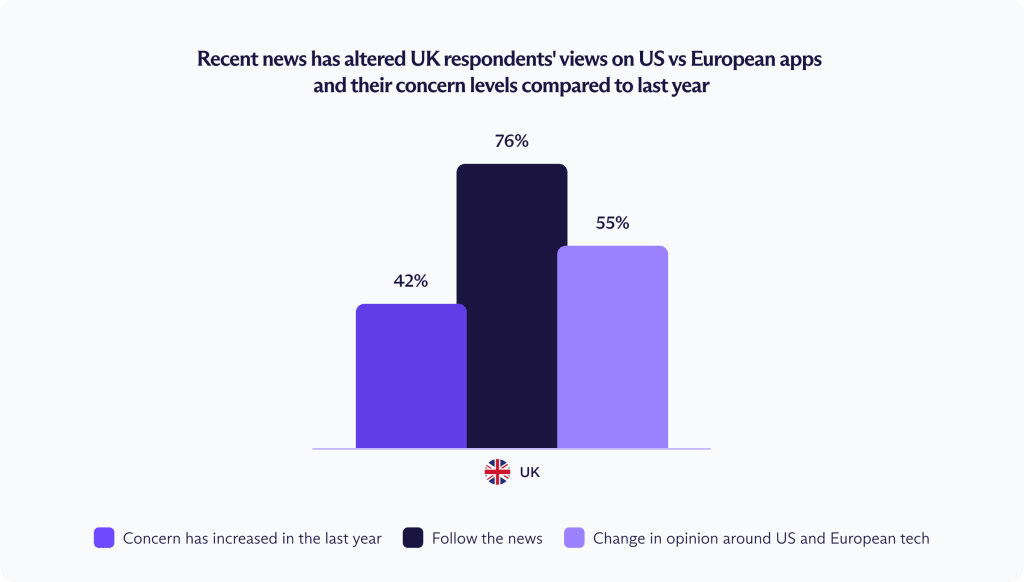
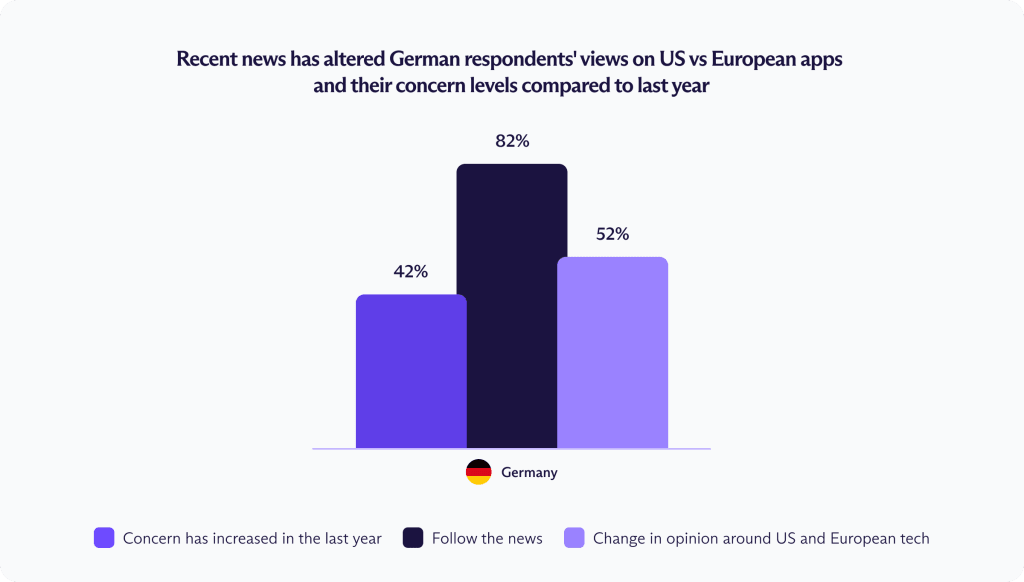
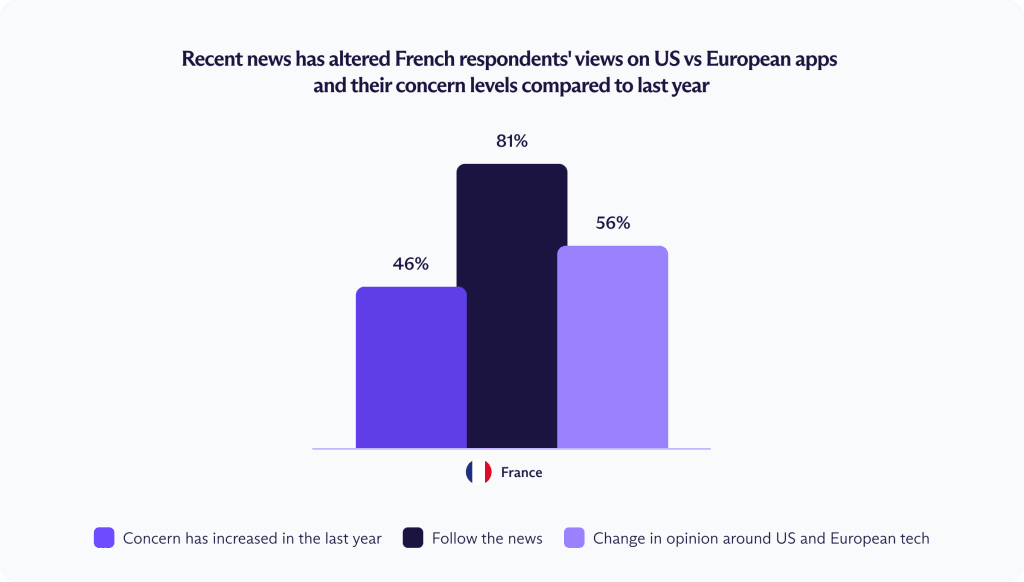
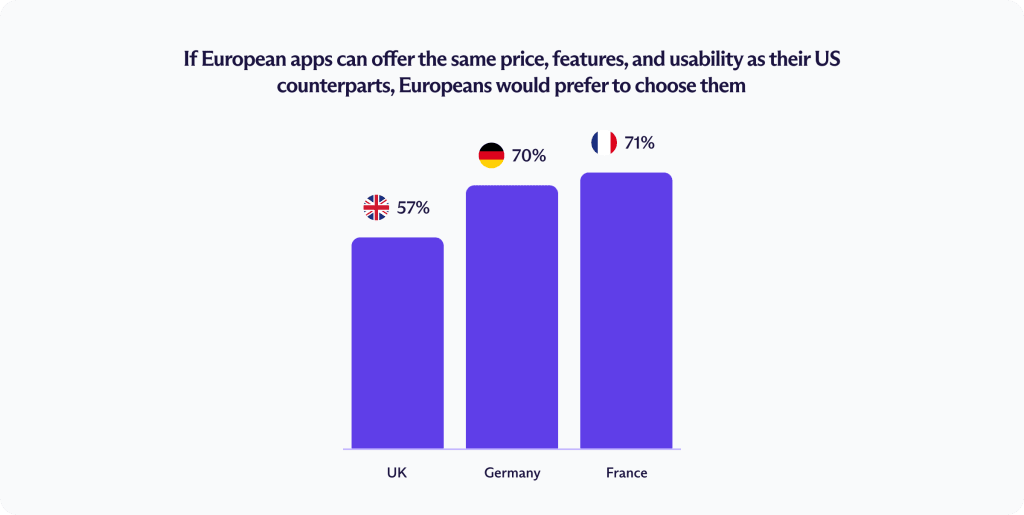
Años de relaciones turbulentas entre EE. UU. y Europa han llevado a un mayor interés en invertir en servicios europeos. En nuestra encuesta, el 57 % de los británicos, el 70 % de los alemanes y el 71 % de los franceses preferirían usar aplicaciones y servicios con sede en Europa si tuvieran el mismo precio, facilidad de uso y funciones que sus alternativas con sede en EE. UU.
¿Por qué quieren alternativas tecnológicas europeas? Hay una correlación clara entre seguir las noticias y buscar dejar la tecnología de EE. UU., con casi un 55 % diciendo que están motivados por las crecientes tensiones entre EE. UU. y Europa.
Impulsado por iniciativas como EuroStack(ventana nueva), existe un movimiento creciente para invertir en la industria tecnológica de Europa y disminuir la dependencia de las plataformas de EE. UU. Adoptar tecnología europea no es solo una decisión económica, sino patriótica. Por ejemplo, el gobierno francés anunció(ventana nueva) que dejará de usar Zoom y Teams para 2027. El año pasado, la UE emitió una Declaración sobre la Soberanía Digital Europea(ventana nueva), con el objetivo de “reforzar la capacidad de Europa para regular su infraestructura digital, datos y tecnologías”.
La soberanía tecnológica se ha vuelto más atractiva para los europeos y sus gobiernos porque representa tanto autonomía como una oportunidad para construir un nuevo bastión tecnológico europeo.
Las preocupaciones de seguridad impulsan la resistencia a la tecnología de EE. UU.
- El 67 % de los encuestados alemanes, el 70 % de los encuestados británicos y el 61 % de los encuestados franceses dijeron que la seguridad contra el hackeo y el fraude es extremadamente importante.
- El 55 % de los encuestados alemanes, el 60 % de los encuestados británicos y el 59 % de los encuestados franceses dijeron que las protecciones de privacidad son extremadamente importantes.
Tras años de uso indebido de datos por parte de grandes empresas tecnológicas heredadas, incluidas Microsoft(ventana nueva), OpenAI(ventana nueva) y Meta(ventana nueva), la confianza de los consumidores se ha desplomado. Las revistas publican repetidamente consejos sobre cómo evitar la tecnología de EE. UU.(ventana nueva) y por qué es una buena idea. El interés de los consumidores en estos temas ha llevado a servicios como European Alternatives(ventana nueva) que facilitan la compra de tecnología europea.
La política pública en torno a la protección de datos es un factor importante en estas percepciones. La diferencia entre las leyes de EE. UU. y las europeas es sorprendente. En EE. UU., una ley federal llamada CLOUD Act otorga a las autoridades el derecho a acceder a datos europeos almacenados utilizando aplicaciones o servicios estadounidenses, incluso si esos datos residen en la UE. La vigilancia sin orden judicial en EE. UU. es algo común.
Estas leyes entran en conflicto directo con el GDPR de Europa. Si una empresa europea cumple con una orden de EE. UU., se arriesga a infringir el GDPR; pero si se niega a cumplirla, se enfrenta a acciones legales por parte de EE. UU. (No existe una ley federal en EE. UU. que proteja generalmente los datos personales de hackers o del uso indebido).
Los gobiernos europeos también están cada vez más preocupados por lo fácil que sería para EE. UU. cortar el acceso de los europeos a los servicios. En la Cumbre de Política de Código Abierto 2026, la eurodiputada finlandesa Aura Salla resumió esta preocupación(ventana nueva) de manera concisa: “La UE funciona con Microsoft. EE. UU. podría apagarnos en una hora”.
Los europeos exigen control sobre su futuro
En el Reino Unido:
- El 55 % de los encuestados quiere protecciones de privacidad de datos más sólidas
- El 52 % de los encuestados quiere una mayor confianza en cómo se tratan los datos personales
- El 47 % quiere datos almacenados bajo leyes europeas
En Alemania:
- El 44 % de los encuestados quiere protecciones de privacidad de datos más sólidas
- El 43 % quiere datos almacenados bajo leyes europeas
- El 37 % de los encuestados quiere una mayor confianza en cómo se tratan los datos personales
En Francia:
- El 54 % de los encuestados quiere protecciones de privacidad de datos más sólidas
- El 53 % de los encuestados quiere apoyar la economía y el empleo europeos
- El 49 % quiere datos almacenados bajo leyes europeas
En general, los hallazgos muestran que los europeos quieren privacidad, responsabilidad y control. En los tres países, los consumidores favorecen abrumadoramente protecciones más fuertes para su información personal, reflejando temores sobre hackers, entrenamiento de IA y filtraciones.
Más allá de la privacidad sola, quieren ser gobernados por sus propias leyes, no leyes dictadas desde Washington. Quieren que sus compras de tecnología creen empleos locales y refuercen sus propias economías, no que enriquezcan a los accionistas estadounidenses. Los europeos quieren poder elegir su propio destino, no solo para sus datos personales sino para su panorama corporativo y su economía.
Invertir en tecnología europea nunca ha sido tan fácil
Proton ha estado a la vanguardia del impulso para invertir en tecnología europea durante años. Romper la dependencia de la tecnología de EE. UU. significa proporcionar herramientas de igual, si no mejor, calidad, por lo cual hemos trabajado para construir un ecosistema que satisfaga las necesidades de los usuarios de tecnología cotidianos.
Como empresa suiza financiada por el público, no por inversores de Big Tech, Proton proporciona las herramientas que priorizan la privacidad que sabemos que los consumidores y gobiernos europeos necesitan. Todo, desde un servicio de correo electrónico cifrado de extremo a extremo hasta un chatbot de IA privado, está disponible para ciudadanos, gobiernos y empresas por igual.
Si Europa elige separarse de la tecnología de EE. UU., invertir en una pila tecnológica europea será la clave para poner fin a décadas de dependencia excesiva innecesaria. Proton continuará abogando por esta inversión con nuestra iniciativa de vigilancia de la soberanía tecnológica europea. Puedes encontrar más información sobre la dependencia de Europa de EE. UU. y la creciente importancia de la soberanía digital aquí.