Still spørsmålet «Hva vet Google om meg?», og svaret vil kanskje sjokkere deg.
Det vet mye. Det vet hvor du har vært på internett, og hvor du har vært i det virkelige liv også. Og hvis det vet så mye om én person, vet det så mye om alle.
Ta for eksempel det folk søker etter på internett. Googles nettleser sender alt som skrives i søkefeltet til en Google-tjener i sanntid, selv i inkognitomodus og før du trykker på Enter.
Når det gjelder private Gmail-samtaler du utveksler med venner, familie eller andre, skanner Google hver eneste en. Avhengig av hvordan du bruker AI i Gmail, kan du utilsiktet legge til de sensitive meldingene dine i Gemini, som kan brukes til AI-trening.
Når det gjelder rutene du tar med Google Maps, lagrer og sporer Google hver plassering, inkludert datoen og klokkeslettet du reiste.
Selv for de som prøver å unngå å bruke Google, er tjenestene deres flettet inn i internett. Over halvparten av alle nettsteder bruker Google Analytics, som samler inn informasjon fra besøk på nettsteder eller i apper – noe som betyr at Google kan spore og samle inn data om folk selv om de ikke bruker Googles søkemotor eller Chrome-nettleser.
Det spørsmålet alene er grunn nok til å grave dypere i nøyaktig hvor mye dette Big Tech-selskapet vet om deg, og hva dataene dine er verdt for Google.
- Forstå Googles rekkevidde
- Slik finner du ut hva Google vet om deg
- Google vet ting du aldri har delt
- Koblingen mellom overvåkingskapitalisme og Google
- Googles annonsesystem er bevisst utformet på denne måten
- Legg Google bak deg, og start med e-post
Forstå Googles rekkevidde
Denne listen over ting Google vet om deg er omfattende. Selskapet innhenter aktivt og vet følgende:
Kalender, inkludert timeplanen din, avtaler, møter, hvem de er med, og hvor
Nett- og appaktivitet, inkludert nettstedene du besøker, appene du bruker, og hvor ofte du bruker dem
Bilder, inkludert hvor de ble tatt og hvem andre som vises på dem, for eksempel barn
Dokumenter, inkludert måten du skriver på og temaene du skriver om
Søkehistorikk på internett, inkludert det du skriver, men ombestemmer deg om og ikke faktisk utfører et søk på
E-poster, inkludert usendte e-poster som ligger i utkast
Stemmen din: Google vet hvordan du høres ut og måten du snakker på hvis du bruker Google Home, Nest eller andre apper under merkevaren Google Assistent.
Kartlogg (også kjent som tidslinje), inkludert hvor du drar og når
Søke- og visningshistorikk på YouTube: Søkene dine (fra matlagingsvideoer til veiledninger om hvordan du skifter dekk) oppretter en levende profil av deg. Tiden du bruker på hver video, spores også.
Når man ser denne listen under ett, kan Google gjøre en mengde antakelser og trekke mange konklusjoner om deg. Fremveksten av AI som Gemini hjelper bare selskapet med å koble sammen ting raskere og bygge en detaljert profil av livet og forbindelsene dine, selv om menneskene rundt deg ikke er aktive på nettet.
Hvordan kan du finne ut hva Google vet om deg?
Du kan ikke skrive «Hva vet Google om meg?» i Google og forvente et nøyaktig svar. Men du kan ta grep for å forstå dybden av hva Google vet om deg, slik at du bedre kan kontrollere dataene dine og personvernet ditt. Du kan tross alt bare forstå det du vet – og Google satser på at flertallet av brukerne deres ikke vil ta de nødvendige skrittene for å finne det ut.
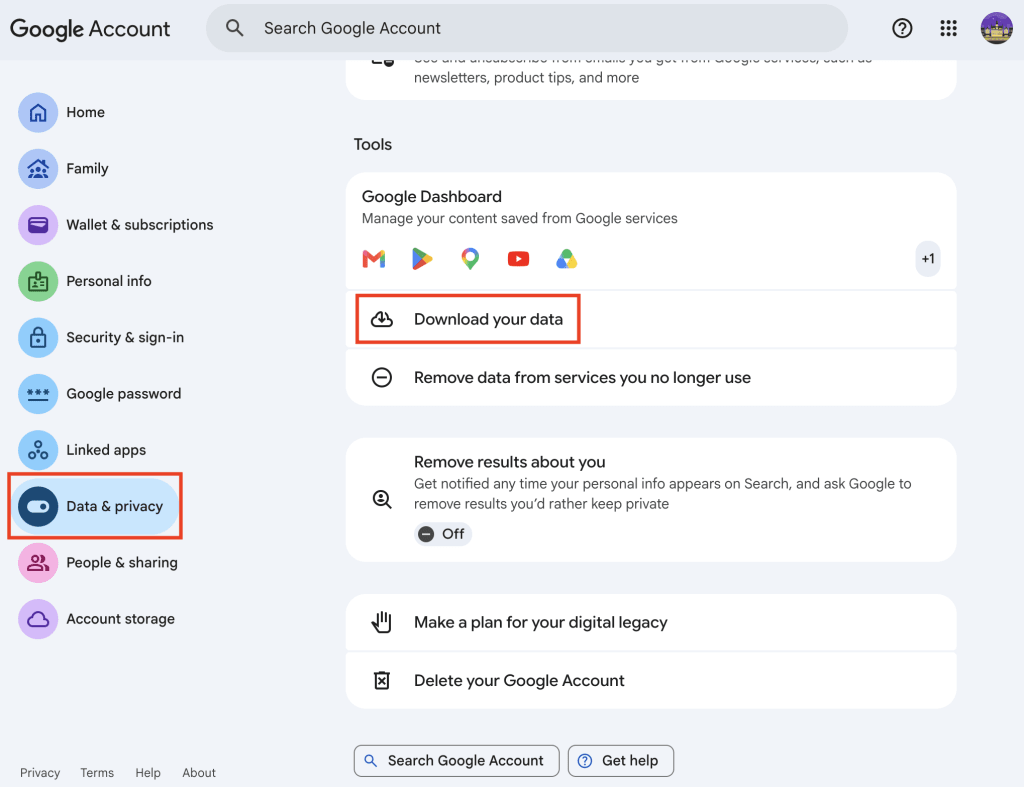
Gå til profilen din og klikk på Administrer Google-kontoen din. På venstre side ser du en meny med alternativer – klikk på Data og personvern. Her er et par gode steder å starte.
Her vil du se nesten alt – og ja, vi mener alt – du har foretatt deg på internett mens du har vært logget på Google-kontoen din. Du kan bla gjennom nett- og appaktiviteten din, se hvor du har vært på Google Maps, få en fullstendig oversikt over hver eneste YouTube-video du noen gang har sett (helt ned til dagen), og mer.

Helse- og stemmedata
Hvis du bruker en smartklokke, Fitbit(nytt vindu) (som ble kjøpt opp av Google i 2021), eller en annen bærbar enhet for å overvåke din fysiske statistikk, er den sannsynligvis synkronisert med Google Fit or Google Health. Selv om disse må være aktivert for at helsesporeren din skal fungere, bør du alltid vurdere om du vil at Google skal vite detaljer om helsen din, inkludert vekt, menstruasjonsdata, puls, aktivitetsnivå, søvnsyklus og skritt for dagen.
Voice Match er Googles måte å gjenkjenne stemmen din på på tvers av sine Google Home-produkter. Stemmen din kan være like personlig som et fingeravtrykk, og å gi Google tilgang til stemmen din hjelper selskapet med å trene opp AI, i tillegg til at det øker mengden sensitive data Google kan bruke til å identifisere deg.
Last ned dataene dine
Vil du ha svaret på «Hva vet Google om meg?» Å laste ned dataene dine er den beste måten å se alt Google har samlet inn om deg. Husk at filen vil være stor og at du kanskje må gå gjennom mye informasjon. Gå til Google Dashboard (under Data og personvern) og klikk på Last ned dataene dine for å be om informasjonen.
Google vet ting du aldri har delt
Da en Proton-ansatt spurte «Hva vet Google om meg?», oppdaget hun at Google visste ting hun aldri personlig hadde fortalt selskapet, og at det lærte ting om henne i sanntid.
Det visste at hun nylig hadde blitt singel, selv om hun aldri hadde valgt dette alternativet. Det visste inntektsklassen hennes, hvor hun bodde, at hun ikke har barn, og at hun leide en leilighet – alt uten at hun rørte en eneste knapp.
Da hun så på tidslinjen sin, kunne hun se alle destinasjoner hun hadde reist til mens hun brukte Google Maps.
Slik stopper du målrettede annonser
Gå til myadcenter.google.com(nytt vindu) og slå av personlig tilpassede annonser (øverst i høyre hjørne) for å stoppe målrettede annonser.

Gå deretter til myactivity.google.com(nytt vindu) og slå av sporing for Nett- og appaktivitet, Tidslinje, Play-historikk og YouTube-historikk.
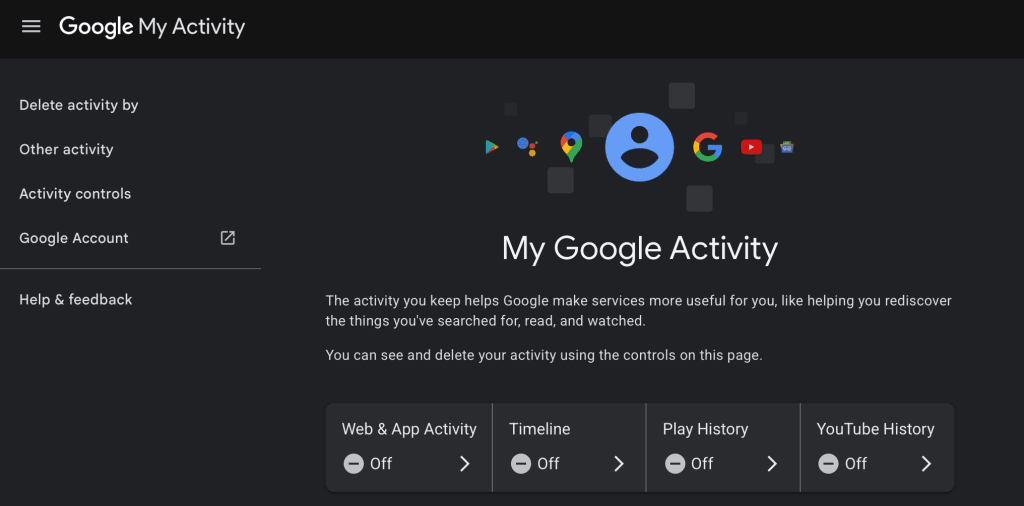
Du kan også få tilgang til innstillingene for Data og personvern ved å klikke på Google-kontoikonet ditt → Administrer Google-kontoen din → Data og personvern.

Koblingen mellom overvåkingskapitalisme og Google
Google er ikke bare et teknologiselskap med en søkemotor. Det er en gigant innen annonsering. Google forklarer det på denne måten:
Googles viktigste inntektskilde er annonser på egne nettsteder og apper. Annonsører forteller Google hvilke målgrupper de ønsker å nå, og vi prøver å vise annonsene deres til folk i disse gruppene. Hvert av Googles produkter og tjenester viser annonser på ulike måter for å bidra til å nå nye og eksisterende kunder.
Byggeomfattende innsamling av tusenvis av datapunkter om nesten alle i verden har gjort at Google har utvidet sin rekkevidde: Google har i bunn og grunn så mye data om oss at det har blitt den største aktøren i annonseovervåkingsindustrien(nytt vindu).
Google gir brukerne sine en illusjon av valgfrihet, og dermed en illusjon av en bedre pålogget opplevelse. Ta for eksempel formuleringen av Googles filosofi om «tilpassede annonser». Gjennom et vennlig språk oppfordrer selskapet deg til å «gjøre annonsene dine mer relevante ved å la Google få vite hva du vil se mer eller mindre av». Dette er Googles måte å få målrettede annonser til å høres ut som en gratis tjeneste du mottar, i stedet for en måte å bruke informasjon om deg på — som plassering, seksuell orientering, hobbyer og inntektsnivå — til å påvirke beslutningene dine.
Googles annonsesystem er bevisst utformet på denne måten
La oss se nærmere på denne linjen: «Annonsører forteller Google hvilke typer målgrupper de ønsker å nå, og vi prøver å vise annonsene deres til folk i disse gruppene.» Det høres harmløst ut, men det er det ikke.
Google bruker et system kjent som «real-time bidding» (RTB) for å auksjonere bort dataene dine til høystbydende.
Slik fungerer det: Først bygger Google en detaljert profil av deg ved hjelp av dataene dine. Deretter sender de disse dataene til tusenvis av selskaper som konkurrerer i en auksjon om å kjøpe annonseplass, som vil vises som en målrettet annonse på datamaskinskjermen din.
Dette medfører alvorlig risiko. Fordi dataene dine blir eksponert for tusenvis av annonsører i løpet av noen nanosekunder, kan de også havne i hendene på datameglere, cyberkriminelle eller amerikanske myndigheter.
«Hver gang du ser en målrettet annonse, blir personopplysningene dine eksponert for tusenvis av annonsører og datameglere», skriver Lena Cohen fra Electronic Frontier Foundation. «Denne prosessen gjør mer enn bare å levere annonser — den gir næring til statlig overvåking, utgjør en risiko for nasjonal sikkerhet og gir datameglere enkel tilgang til din påloggede aktivitet.»
Legg Google bak deg, og start med e-post
Hver eneste personopplysning Google berører, fra søk og e-post til plasseringshistorikk og stemme, fører tilbake til ett sted: Google-kontoen din. Det er det som gjør den så verdifull for Google, og så risikabel for deg. En enkelt pålogging knytter hele ditt digitale fotavtrykk til én profil, og det er nøyaktig derfor å slette Google-kontoen din, «deGoogle» og å bytte til alternativer som prioriterer personvern, er en fin måte å bli tryggere på når du er pålogget.
Det beste stedet å starte er med e-post. Innboksen din er ikke bare der meldingene dine ligger, men hovednøkkelen til ditt digitale liv, knyttet til banken din, abonnementer, sosiale medier og arbeidskontoer. Den som kontrollerer e-posten din, kan tilbakestille passordene dine og sette sammen et detaljert bilde av hvem du er.
Proton Mail er et naturlig første skritt bort fra Google. Den beskytter meldingene dine med ende-til-ende-kryptering og nulltilgangskryptering, som betyr at vi aldri har tilgang til dataene dine og ikke kan skanne dem for å bygge atferdsprofiler, vise annonser, trene KI-modeller eller dele dem med tredjeparter — og vi ønsker det heller ikke.