Faça a pergunta “O que sabe o Google sobre mim?” e a resposta poderá chocá-lo.
Sabe muito. Sabe onde esteve na internet e também onde esteve na vida real. E se sabe tanto sobre uma pessoa, sabe tanto sobre toda a gente.
Vejamos o que as pessoas pesquisam na internet. O navegador web da Google envia tudo o que é introduzido na barra de pesquisa para um servidor da Google em tempo real, mesmo no modo incógnito e antes de premir Enter.
No que toca às conversas privadas do Gmail trocadas com amigos, familiares ou qualquer outra pessoa, a Google digitaliza cada uma delas. Dependendo de como utiliza a IA dentro do Gmail, pode inadvertidamente adicionar as suas mensagens confidenciais ao Gemini, que podem ser utilizadas para treino de IA.
Quanto aos trajetos que faz utilizando o Google Maps, a Google guarda e acompanha cada localização, incluindo a data e a hora em que viajou.
Mesmo para quem tenta evitar a Google, os seus serviços estão integrados na internet. Mais de metade de todos os sítios web utilizam o Google Analytics, que recolhe informações das visitas à web ou à aplicação — o que significa que a Google pode rastrear e recolher dados sobre as pessoas, mesmo que não utilizem o motor de pesquisa da Google ou o navegador Chrome.
Essa pergunta por si só já é motivo suficiente para analisar mais a fundo o que esta grande empresa tecnológica sabe sobre si e quanto valem os seus dados para a Google.
- Compreender o alcance da Google
- Como saber o que a Google sabe sobre si
- A Google sabe coisas que nunca partilhou
- A ligação entre o capitalismo de vigilância e a Google
- O sistema de anúncios da Google foi concebido desta forma de propósito
- Deixe a Google para trás, começando pelo e-mail
Compreender o alcance da Google
Esta lista de coisas que a Google sabe sobre si é extensa. A empresa adquire ativamente e sabe o seguinte:
Calendário, incluindo o seu horário, compromissos, reuniões, com quem são e onde
Atividade na web e em aplicações, incluindo os sítios web que visita, as aplicações que utiliza e a frequência com que as usa
Fotos, incluindo onde foram tiradas e quem mais aparece nelas, como crianças
Documentos, incluindo a forma como escreve e os temas sobre os quais escreve
Histórico de pesquisa na internet, incluindo o que digita mas sobre o qual muda de ideias e acaba por não efetuar uma pesquisa
E-mails, incluindo os não enviados que estão nos rascunhos
A sua voz: a Google sabe como soa a sua voz e a forma como fala se utilizar o Google Home, o Nest ou qualquer outra aplicação com a marca Google Assistente.
Histórico do Maps (também conhecido como linha do tempo), incluindo onde vai e quando
Histórico de pesquisa e de visualização do YouTube: as suas pesquisas (desde vídeos de culinária a tutoriais sobre como mudar um pneu) criam um perfil detalhado sobre si. O tempo despendido em cada vídeo também é monitorizado.
Quando analisada em conjunto, esta lista permite à Google fazer inúmeras suposições e tirar muitas conclusões sobre si. O aparecimento de IA como o Gemini só ajuda a empresa a estabelecer ligações mais rapidamente e a criar um perfil detalhado sobre a sua vida e ligações, mesmo que as pessoas ao seu redor não estejam ativas online.
Como pode saber o que a Google sabe sobre si?
Não pode escrever “O que é que a Google sabe sobre mim?” na Google e esperar uma resposta precisa. Mas pode tomar medidas para compreender a profundidade do que a Google sabe sobre si, de forma a controlar melhor os seus dados e a sua privacidade. Afinal de contas, só podemos compreender o que conhecemos — e a Google aposta que a maioria dos seus utilizadores não irá tomar as medidas necessárias para o descobrir.
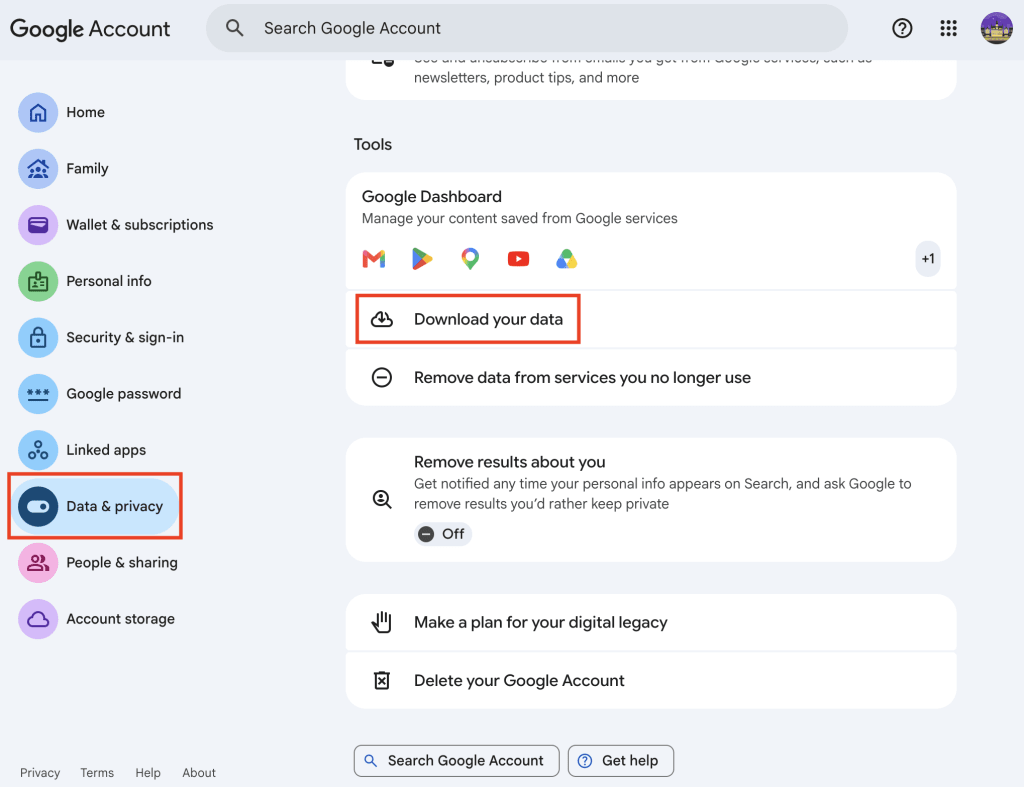
Aceda ao seu perfil e clique em Gerir a sua conta Google. No lado esquerdo, verá um menu de opções — clique em Dados e privacidade. Aqui estão alguns bons locais por onde começar.
Aqui verá quase tudo — e sim, queremos mesmo dizer tudo — o que tem feito na internet enquanto está ligado à sua conta Google. Pode navegar pela sua atividade na web e em aplicações, ver onde esteve no Google Maps, obter um histórico completo de todos os vídeos do YouTube que já viu (até ao dia) e muito mais.

Dados de saúde e de voz
Se utiliza um relógio inteligente, o Fitbit(nova janela) (que foi adquirido pela Google em 2021) ou qualquer outro dispositivo vestível para monitorizar os seus dados físicos, é provável que esteja sincronizado com o Google Fit ou o Google Health. Embora estes devam estar ativados para que o seu rastreador de saúde funcione, deve sempre ponderar se quer que a Google saiba detalhes sobre a sua saúde, incluindo o seu peso, dados menstruais, ritmo cardíaco, nível de atividade, ciclo de sono e passos diários.
O Voice Match é a forma de a Google reconhecer a sua voz nos seus produtos Google Home. A sua voz pode ser tão pessoal como uma impressão digital, e permitir que a Google aceda à sua voz ajuda-a a treinar a IA e contribui para a imensidão de dados confidenciais que a Google pode utilizar para o identificar.
Transferir os seus dados
Quer a resposta para “O que é que a Google sabe sobre mim?” Transferir os seus dados é a melhor forma de ver tudo o que a Google recolheu sobre si. Tenha em atenção que o documento será grande e poderá ter muito por onde pesquisar. Aceda ao painel de controlo da Google (em Dados e privacidade) e clique em Transferir os seus dados para solicitar as informações.
A Google sabe coisas que nunca partilhou
Quando uma funcionária da Proton perguntou “O que é que a Google sabe sobre mim?”, descobriu que a Google sabia coisas que ela nunca lhe tinha dito pessoalmente e que estava a aprender coisas sobre ela em tempo real.
Sabia que ela estava solteira recentemente, embora nunca tivesse selecionado essa opção. Sabia a sua faixa de rendimentos, onde morava, que não tinha filhos e que estava a arrendar um apartamento — tudo isto sem ela tocar num único botão.
Quando olhou para a sua linha do tempo, conseguiu ver todos os destinos para onde tinha viajado enquanto utilizava o Google Maps.
Como parar anúncios direcionados
Para parar os anúncios direcionados, aceda a myadcenter.google.com(nova janela) e desative os anúncios personalizados (no canto superior direito).

A seguir, aceda a myactivity.google.com(nova janela) e desative a monitorização de Atividade na web e em aplicações, Linha do tempo, Histórico de reprodução e Histórico do YouTube.
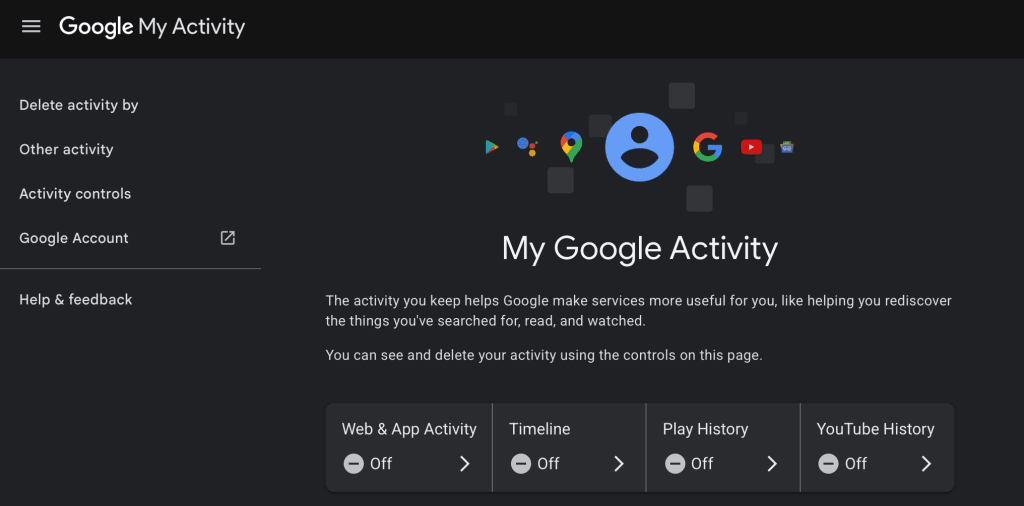
Também pode aceder às suas definições de Dados e privacidade clicando no seu ícone da conta Google → Gerir a sua conta Google → Dados e privacidade.

A ligação entre o capitalismo de vigilância e a Google
A Google não é apenas uma empresa tecnológica com um motor de pesquisa. É um gigante da publicidade. A Google explica-o desta forma:
A principal fonte de receita da Google provém de anúncios nos nossos próprios sítios e aplicações. Os anunciantes indicam à Google os tipos de públicos que pretendem alcançar e nós tentamos mostrar os seus anúncios a pessoas pertencentes a esses grupos. Cada um dos produtos e serviços da Google apresenta anúncios de formas diferentes para ajudar a alcançar clientes novos e existentes.
Ao acumular milhares de pontos de dados sobre quase todas as pessoas no mundo, a Google alargou o seu alcance: essencialmente, a Google tem tantos dados sobre nós que se tornou o maior engenheiro da indústria de vigilância publicitária(nova janela).
A Google dá aos seus utilizadores a ilusão de escolha e, por conseguinte, a ilusão de uma melhor experiência online. Veja a formulação da filosofia de “anúncios personalizados” da Google. Através de uma linguagem amigável, a empresa incentiva-o a tornar “os seus anúncios mais relevantes, permitindo que a Google saiba o que gostaria de ver mais ou menos”. Esta é a forma que a Google encontrou para fazer com que os anúncios direcionados pareçam um serviço gratuito que está a receber, em vez de uma forma de utilizar informações sobre si — a sua localização, orientação sexual, passatempos e faixa de rendimentos — para influenciar as suas decisões.
O sistema de anúncios da Google foi concebido desta forma de propósito
Analisemos esta frase: “Os anunciantes indicam à Google os tipos de públicos que pretendem alcançar e nós tentamos mostrar os seus anúncios a pessoas pertencentes a esses grupos.” Parece inofensivo, mas não é.
A Google utiliza um sistema conhecido como “licitação em tempo real” (RTB) para leiloar os seus dados ao licitante que oferecer o valor mais alto.
Eis como funciona: em primeiro lugar, a Google cria um perfil detalhado sobre si utilizando os seus dados. Em seguida, transmite esses dados para milhares de empresas que competem num leilão para comprar espaço publicitário, que aparecerá como um anúncio direcionado no ecrã do seu computador.
Isto acarreta riscos graves. Como os seus dados são expostos a milhares de anunciantes em questão de nanossegundos, também podem cair nas mãos de corretores de dados, cibercriminosos ou do governo dos EUA.
“Sempre que vê um anúncio direcionado, as suas informações pessoais são expostas a milhares de anunciantes e corretores de dados”, escreve Lena Cohen, da Electronic Frontier Foundation. “Este processo faz mais do que apresentar anúncios — alimenta a vigilância governamental, representa riscos para a segurança nacional e dá aos corretores de dados um acesso fácil à sua atividade online.”
Deixe a Google para trás, começando pelo e-mail
Cada dado pessoal em que a Google toca, desde as pesquisas e o e-mail até ao histórico de localização e à voz, remete para um único local: a sua conta Google. É isso que a torna tão valiosa para a Google e tão arriscada para si. Um único início de sessão associa toda a sua pegada digital a um único perfil, razão pela qual eliminar a sua conta Google, fazer o deGoggling e mudar para alternativas que priorizam a privacidade é uma excelente forma de ficar mais seguro online.
O melhor local para começar é o e-mail. A sua caixa de entrada não é apenas onde as suas mensagens residem, mas a chave mestra para a sua vida digital, com ligações ao seu banco, subscrições, redes sociais e contas de trabalho. Quem controlar o seu e-mail pode repor as suas palavras-passe e criar uma imagem detalhada de quem é.
O Proton Mail é um passo natural para se afastar da Google. Protege as suas mensagens com encriptação ponto a ponto e encriptação de acesso zero, o que significa que nunca acedemos aos seus dados e não podemos analisá-los para criar perfis de comportamento, mostrar anúncios, treinar modelos de IA ou partilhá-los com terceiros — e nem o queremos fazer.