È più chiaro che mai che troppa parte della tecnologia da cui dipende il mondo è controllata da pochissimi giganti tecnologici, la maggior parte dei quali ha sede negli Stati Uniti e in Cina.
Archiviazione cloud, hosting web, email, social media, videochiamate, piattaforme di comunicazione e i principali strumenti di produttività che aziende e governi utilizzano ogni giorno sono diventati un’infrastruttura essenziale. L’economia moderna non può funzionare senza di essa. Il controllo su quell’infrastruttura conferisce ai fornitori — e ai paesi le cui leggi ne regolano l’attività — un potere sproporzionato su tutti coloro che ne dipendono.
Da tempo seguiamo questa concentrazione. Una nostra ricerca precedente ha rilevato che il 74% delle aziende europee quotate in borsa dipende dalla tecnologia statunitense, alimentando in Europa un dibattito più ampio su sicurezza economica, sovranità digitale e rischi geopolitici.
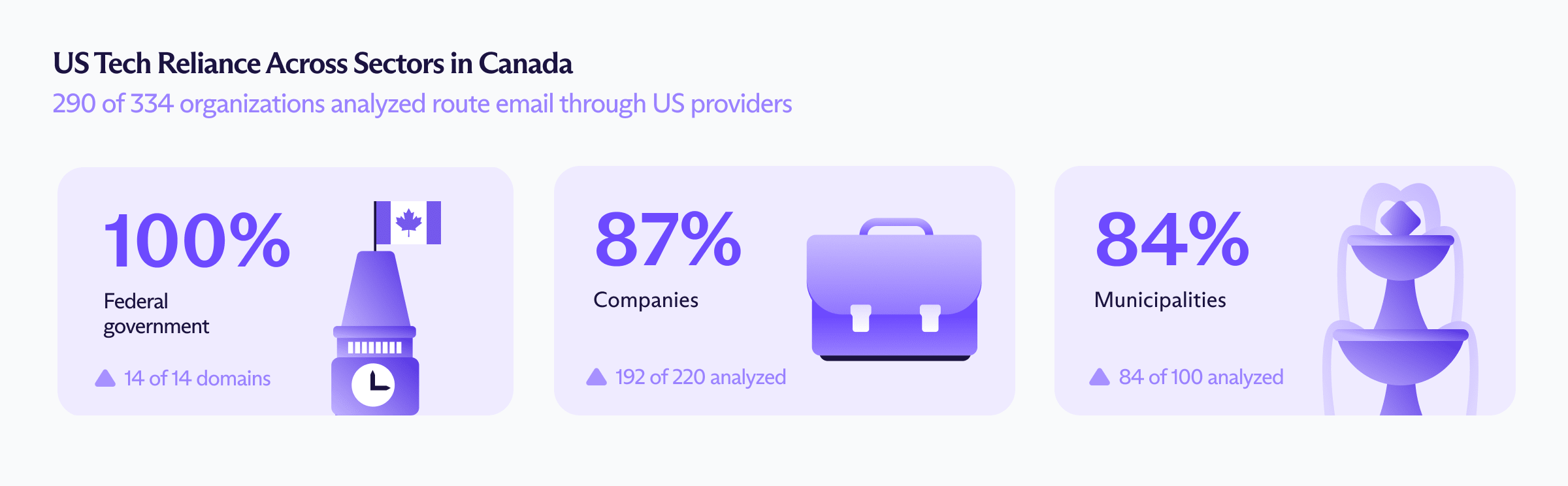
Ora abbiamo scoperto che il Canada è ancora più esposto dell’Europa. Abbiamo esaminato 220 società quotate in borsa che rappresentano il 70% della capitalizzazione totale della borsa canadese e abbiamo rilevato che l’87% si affida a infrastrutture di proprietà statunitense per la propria email. Lo stesso vale per l’84% dei 100 comuni più grandi. Abbiamo inoltre scoperto che 14 domini governativi federali, provinciali e territoriali su 14 si affidano a infrastrutture email statunitensi.
Per essere chiari, il problema non è che queste aziende siano statunitensi. Il rischio nasce quando troppa parte dell’infrastruttura da cui dipende il mondo si trova sotto il controllo e la giurisdizione di un unico governo. In un momento di crescenti tensioni geopolitiche e negoziazioni commerciali, riteniamo importante comprendere appieno le diverse leve che un paese può detenere su un altro dietro le quinte.
Come abbiamo misurato la dipendenza del Canada dalla tecnologia statunitense
Abbiamo raccolto i dati utilizzando lo stesso metodo della nostra precedente ricerca in Europa. Tramite query DNS pubbliche, abbiamo identificato i record mail exchange (MX) associati al dominio di ogni organizzazione. Questi record mostrano quali aziende gestiscono l’email di un’organizzazione, direttamente o tramite un servizio di sicurezza email.
Per il Canada, abbiamo esaminato tre settori dell’economia e del settore pubblico:
Governi federali, provinciali e territoriali. Abbiamo esaminato tutti e 14 i domini federali, provinciali e territoriali. Di questi, tutti e 14 si affidano a Microsoft 365.
Aziende. Abbiamo analizzato le 220 aziende dell’S&P/TSX Composite Index, che insieme rappresentano circa il 70% della capitalizzazione totale della borsa canadese. Delle aziende esaminate, 161 utilizzavano Microsoft 365 e nove Google Workspace per la propria infrastruttura email.
Comuni. Il Canada conta più di 4.000 governi locali, quindi ci siamo concentrati sui 100 comuni più grandi del paese per popolazione. Di questi, 77 utilizzavano Microsoft e uno Google.
Perché questo è importante
Il problema di questo assetto è piuttosto semplice: una sola azienda, con sede in un paese e operante secondo le leggi di quel paese, gestisce l’email dei governi di un’intera nazione del G7.
La legge statunitense conferisce a quel paese un potere reale. Ai sensi del CLOUD Act, le autorità statunitensi possono obbligare le aziende tecnologiche americane a consegnare i dati in loro possesso, compresi i dati archiviati al di fuori degli Stati Uniti. Quando gli Stati Uniti hanno imposto sanzioni alla Corte penale internazionale, ad esempio, Microsoft ha disattivato l’account email del procuratore capo della corte(nuova finestra), una mossa che Microsoft aveva inizialmente dichiarato ai parlamentari britannici essere una decisione della stessa CPI, prima di riconoscere che quella testimonianza era inaccurata. L’accesso alle infrastrutture può essere revocato per motivi politici e praticamente da un giorno all’altro.
AWS, Microsoft Azure e Google Cloud servono circa l’85% del mercato cloud europeo e quando uno di questi si guasta, i guasti si propagano a cascata. Un importante interruzione di AWS alla fine del 2025 ha mandato in tilt app in tutti i settori; nove giorni dopo è seguita un’interruzione di Azure(nuova finestra), che ha messo offline Outlook, Teams e decine di servizi aziendali per otto ore.
Gran parte dell’infrastruttura email utilizzata da aziende e governi canadesi dipende da Microsoft, esponendoli allo stesso tipo di interruzioni del servizio.
Questi rischi esistono, tuttavia, indipendentemente da quale paese detenga il controllo. Un mondo in cui un governo può legalmente accedere alle comunicazioni centrali di altre nazioni è il problema, indipendentemente da quale sia quel governo e da dove abbiano sede le sue aziende.
I canadesi stanno già reagendo
La dipendenza che abbiamo rilevato nei settori pubblico e privato del Canada si inserisce in una rottura più ampia delle relazioni tra Canada e USA, che comprende dazi di rappresaglia pari a un dollaro per dollaro e negoziati commerciali falliti in modo molto pubblico.
Questo contesto sta già influenzando il modo in cui i canadesi vedono la loro dipendenza tecnologica. Il reportage di Politico(nuova finestra) sul dilemma della sovranità digitale del Canada descrive un paese che traccia la propria strada per ridurre la dipendenza dalla tecnologia americana, sottolineando che la sua economia più piccola e l’industria tecnologica legata agli USA ne limitano gravemente il potere contrattuale. Questo riflette il cambiamento che abbiamo documentato in Europa nell’ultimo anno, in cui la nostra ricerca ha rilevato che il 73% degli europei ritiene che le loro società dipendano troppo dalla tecnologia statunitense e che il 56% dichiara ora che l’infrastruttura locale conta per loro più di un anno fa.
La posizione del Canada differisce da quella dell’Europa in un aspetto importante: le istituzioni europee sono passate dalla diagnosi alla legislazione, con il pacchetto sulla sovranità tecnologica della Commissione europea che impegna finanziamenti importanti per le alternative locali. Le istituzioni canadesi non hanno annunciato piani di migrazione, e non spettta a noi farlo. Proton è un’azienda svizzera. Quello che possiamo fare è mostrare cosa dicono i dati e cosa comportano per chiunque dipenda da questi sistemi, incluso ciò che la lenta e imperfetta transizione europea rivela su quanto questi passaggi siano difficili in pratica.
Cosa può fare qualsiasi organizzazione al riguardo
Per le aziende e le istituzioni canadesi che valutano il proprio livello di esposizione, i primi passi sono concreti:
Elenca ogni strumento di terze parti che utilizzi: indica quali hanno sede fuori dal Canada e quali di questi rientrano nella giurisdizione legale di un governo straniero.
Identifica cosa fermerebbe le tue operazioni: quali strumenti, se interrotti domani, bloccherebbero il lavoro? Questo rientra nella pianificazione della continuità operativa.
Verifica dove si trovano i tuoi dati: secondo le leggi di quale paese sono regolati? Chi può accedervi e attraverso quale procedura legale?
Prova le alternative: per la maggior parte degli strumenti critici esistono alternative canadesi ed europee, e alcune offrono strumenti integrati che semplificano la migrazione, come Easy Switch di Proton.
Migra prima i servizi a rischio più elevato: la migrazione completa richiede tempo. Inizia dai sistemi senza i quali non puoi operare.
Quando la tua email aziendale dipende da aziende tecnologiche statunitensi, esponi la tua organizzazione a rischi strategici che, alla fine, sfuggono al tuo controllo.