Cyberstalking pada dasarnya merupakan pelanggaran privasi. Tindakan ini sering kali dimulai dari informasi yang Anda bagikan secara daring secara sukarela, mulai dari postingan media sosial hingga foto yang ditandai.
Sekitar satu dari lima perempuan dan satu dari 10 laki-laki(jendela baru) di AS akan mengalami stalking pada suatu saat dalam hidup mereka, dan porsi stalking yang terjadi melalui ponsel atau laptop, bukan secara langsung, terus bertambah.
Yang terpenting, cyberstalking adalah kejahatan. Namun, undang-undang yang mendefinisikannya berbeda-beda di seluruh dunia.
Panduan ini membahas apa itu cyberstalking dan bagaimana perbedaannya dengan bentuk pelecehan daring lainnya. Kami juga mengkaji apa kata hukum di yurisdiksi utama. Selain itu, Anda akan mempelajari cara mengenalinya, menanggapinya, dan menjadikan diri Anda target yang lebih sulit sejak awal.
Apa itu cyberstalking?
Cyberstalking adalah penggunaan internet, email, media sosial, atau sarana elektronik lainnya secara berulang untuk melecehkan seseorang dengan maksud menakut-nakuti atau mengendalikannya. Seperti pelaku stalking luring, sebagian besar pelaku cyberstalking pernah menjalin hubungan sebelumnya dengan targetnya, baik sebagai mantan pasangan, rekan kerja, maupun kenalan.
Bentuk pelecehan yang dapat dianggap sebagai cyberstalking sangat beragam. Pada 2025, seorang laki-laki di AS menggunakan chatbot AI(jendela baru) untuk memancing orang-orang ke rumah korbannya sebagai bagian dari serangan cyberstalking selama tujuh tahun. Di Inggris, seorang perempuan dijatuhkan hukuman penjara 28 bulan(jendela baru) karena memposting tuduhan berbahaya dan palsu secara daring.
“Cyberstalking” sering digunakan secara longgar bersama beberapa istilah terkait berikut:
- Pelecehan daring mencakup lebih luas daripada cyberstalking. Undang-undang cyberstalking biasanya memerlukan bukti bahwa perilaku tersebut menimbulkan rasa takut akan bahaya fisik; undang-undang pelecehan daring sering kali hanya mensyaratkan niat untuk mengganggu atau membuat Anda resah, dengan tanpa alasan yang sah(jendela baru) untuk melakukan kontak.
- Cyberbullying adalah pola kontak yang agresif dan tidak diinginkan, tetapi istilah ini umumnya dikaitkan dengan anak di bawah umur dan sekolah, bukan orang dewasa.
- Doxing adalah tindakan menerbitkan alamat, nomor telepon, atau rincian identitas seseorang untuk menakut-nakuti atau membahayakannya. Tindakan ini biasanya merupakan taktik dalam kasus stalking atau pelecehan yang lebih luas, dan hanya sedikit negara yang menganggapnya sebagai kejahatan tersendiri.
Dari sisi hukum, pembedaan ini penting jika Anda ingin mengetahui perlindungan apa saja yang berlaku bagi Anda.
Undang-undang cyberstalking di seluruh dunia
Cyberstalking jarang dianggap sebagai pelanggaran tersendiri. Sebaliknya, kasus ini biasanya dituntut berdasarkan undang-undang stalking atau pelecehan umum. Hampir semua sistem hukum yang dibahas di sini juga memiliki satu persyaratan yang sama: bukti adanya pola perilaku berulang, bukan satu kejadian tunggal.
Amerika Serikat
Tidak ada “undang-undang cyberstalking” federal yang tunggal. Sebagian besar penuntutan dilakukan di tingkat negara bagian, berdasarkan statuta stalking atau pelecehan yang telah diperluas untuk mencakup komunikasi elektronik. California mengesahkan undang-undang negara bagian pertama yang secara eksplisit menyebut cyberstalking sebagai pelanggaran pada 1999, dan sebagian besar negara bagian lain kemudian mengikutinya(jendela baru).
Di tingkat federal, 18 U.S.C. § 2261A(jendela baru) mengkriminalkan penggunaan perjalanan antarnegara bagian atau komunikasi elektronik dengan maksud membunuh, melukai, melecehkan, menakut-nakuti, atau mengawasi seseorang, ketika perilaku tersebut menimbulkan tekanan emosional yang berat atau rasa takut yang wajar akan bahaya serius. Vonis atas pelanggaran ini dapat dijatuhi hukuman penjara hingga lima tahun sebagai hukuman dasar.
Inggris Raya
Inggris menuntut cyberstalking berdasarkan Pasal 2A Protection from Harassment Act 1997(jendela baru), undang-undang yang sama dengan yang mengatur stalking luring. Vonis stalking dapat berujung pada hukuman penjara hingga 10 tahun. Untuk pesan ancaman tunggal atau pesan yang sangat menyinggung yang tidak memenuhi ambang pola stalking berkelanjutan, jaksa dapat menggunakan Malicious Communications Act 1988(jendela baru) atau Communications Act 2003(jendela baru). Baru-baru ini, Online Safety Act 2023(jendela baru) memperkenalkan kewajiban statutory bagi platform yang beroperasi di Inggris, dengan menyebut stalking dan pelecehan sebagai salah satu jenis konten ilegal yang wajib ditangani secara khusus oleh platform.
Jerman
Jerman mengkriminalkan stalking berdasarkan Pasal 238 Kode Penal(jendela baru) (StGB), yang diamandemen pada 2017 secara khusus untuk memperkuat perlindungan. Undang-undang ini secara eksplisit mencakup perilaku yang dilakukan “melalui telekomunikasi atau dengan menggunakan data pribadi [korban]” — termasuk meniru identitas orang tersebut — yang merupakan jembatan langsung ke cyberstalking. Vonis dapat berujung pada hukuman penjara hingga tiga tahun, menjadi lima tahun dalam kasus berat. Kasus cyberstalking di Jerman juga sering dituntut bersamaan dengan pelanggaran terkait seperti ancaman daring (Pasal 241 StGB) atau penghinaan dan pencemaran nama baik (Pasal 185–187 StGB).
Prancis
Prancis menangani cyberstalking berdasarkan Pasal 222-33-2-2 Kode Penal(jendela baru), yang mendefinisikan bentuk pelecehan moral sebagai perilaku berulang yang memperburuk kondisi kehidupan seseorang dan merugikan kesehatan fisik atau mentalnya. Vonis dapat berujung pada hukuman penjara hingga satu tahun dan denda 15.000 €. Undang-undang Republik Digital Prancis tahun 2016 memperkuat hukum dengan hukuman yang lebih berat untuk “revenge porn”,(jendela baru) menggandakan masa penjara dan menaikkan denda menjadi 60.000 €.
Kanada
Di Kanada, stalking daring dituntut berdasarkan Pasal 264 Kode Kriminal(jendela baru), ketentuan pelecehan kriminal yang disahkan pada 1993. Vonis memerlukan bukti bahwa perilaku tersebut membuat korban secara wajar takut terhadap keselamatan dirinya atau orang yang dikenalnya, dan dapat dijatuhi hukuman penjara hingga 10 tahun. Cyberstalking juga dapat dituntut berdasarkan Bill C-13(jendela baru) (Protecting Canadians from Online Crime Act), yang menetapkan bahwa “kontak tersebut bersifat berulang dan tidak diinginkan” serta bahwa “korban harus secara wajar takut terhadap keselamatan dirinya atau keselamatan orang yang dikenalnya”.
Italia
Italia mengkriminalkan stalking sebagai “atti persecutori” (perbuatan yang bersifat menganiaya) berdasarkan Pasal 612-bis Kode Kriminal(jendela baru), yang diperkenalkan pada 2009. Undang-undang ini mencakup perilaku berulang yang menimbulkan kecemasan atau ketakutan yang menetap, rasa takut yang wajar terhadap keselamatan seseorang, atau memaksa korban mengubah kebiasaan sehari-harinya. Ketentuan ini secara khusus menyebutkan email dan pesan teks sebagai contohnya. Hukuman dasar berkisar antara satu hingga enam setengah tahun penjara, dan undang-undang ini telah diperkuat dua kali, yaitu pada 2019 dan 2023. Korban perlu mengajukan pengaduan dalam waktu enam bulan sejak kejadian.
Brasil
Brasil menjadikan stalking sebagai kejahatan tersendiri baru-baru ini, melalui Law 14.132/2021(jendela baru), yang menambahkan Pasal 147-A ke Kode Penal. Undang-undang ini mendefinisikan pelanggaran tersebut sebagai pengejaran berulang terhadap seseorang, dengan cara apa pun, yang mengancam keselamatan fisik atau psikologisnya, membatasi kebebasan bergeraknya, atau melanggar privasinya. Komentar hukum di Brasil memandang cyberstalking secara tegas tercakup dalam frasa “dengan cara apa pun”. Hukumannya adalah penjara enam bulan hingga dua tahun ditambah denda, yang dinaikkan sebesar setengah jika kejahatan menyasar anak-anak, lansia, atau perempuan karena jenis kelaminnya.
Australia
Australia menuntut cyberstalking berdasarkan Pasal 474.17 Kode Kriminal(jendela baru), yang mengkriminalkan penggunaan “carriage service” — layanan telepon atau internet apa pun — untuk mengancam, melecehkan, atau menyinggung, dengan hukuman penjara hingga lima tahun, dan yang patut dicatat tidak mengharuskan jaksa membuktikan bahwa korban benar-benar takut akan bahaya fisik.
India
Pasal 354D Kode Penal India(jendela baru), yang ditambahkan pada 2013, secara eksplisit mengkriminalkan tindakan laki-laki yang monitoring penggunaan internet, email, atau komunikasi elektronik lainnya oleh perempuan sebagai bentuk stalking — salah satu rujukan statutory paling langsung terhadap perilaku ala cyberstalking di mana pun. Meskipun undang-undang ini secara khusus melindungi perempuan dari laki-laki dan tidak berlaku secara umum, laki-laki mendapat perlindungan berdasarkan undang-undang terpisah tentang penakut-nakutan(jendela baru). Vonis pertama dapat berujung pada hukuman penjara hingga tiga tahun, menjadi lima tahun untuk pelanggaran berulang.
Filipina
Safe Spaces Act 2019(jendela baru) Filipina melangkah lebih jauh daripada kebanyakan negara, dengan menyebut “cyberstalking” secara langsung sebagai salah satu bentuk pelecehan seksual daring berbasis gender, bersama dengan pesan seksual yang tidak diinginkan dan pembagian gambar tanpa persetujuan. Ini mungkin merupakan rujukan paling langsung terhadap cyberstalking sebagai kejahatan tersendiri di dunia.
Negara lain di dunia
Gambaran hukum di tingkat internasional tidak merata dan sering kali tidak lengkap. Penilaian Bank Dunia tahun 2020(jendela baru) menemukan bahwa hanya 30% perekonomian di seluruh dunia yang memiliki perlindungan hukum terhadap pelecehan daring, dan hanya 12% yang melindungi dari pelecehan seksual daring secara khusus. Hanya 21 dari 190 perekonomian yang dianalisis memiliki undang-undang yang secara eksplisit melindungi anak-anak dari pelecehan daring. Riset terbaru(jendela baru) menunjukkan bahwa cakupan legislatif tersebut belum banyak membaik.
Mengapa cyberstalking merupakan masalah privasi
Setiap bentuk cyberstalking bergantung pada kemampuan pelaku mendapatkan sejumlah informasi digital. Namun, dalam semua kasus, informasi itulah yang mereka gunakan sebagai senjata terhadap korbannya, dan sumbernya banyak kemungkinan:
- Broker data dan situs pencarian data orang. Situs-situs ini mengambil dan menjual kembali alamat, nomor telepon, tempat kerja, dan rincian keluarga Anda, sering kali tanpa sepengetahuan Anda, dan situs-situs tersebut sering menjadi titik awal termudah bagi pelaku stalking yang menyusun profil tentang Anda.
- Metadata foto dan lokasi. Foto yang diambil dengan layanan lokasi aktif memuat koordinat GPS yang tersemat dalam metadata gambar-nya. Pelaku stalking telah menggunakan metadata dari foto di aplikasi kencan dan media sosial untuk mengidentifikasi rumah dan tempat kerja korban.
- Stalkerware. Ini adalah perangkat lunak monitoring komersial yang dipasang di sebuah perangkat, biasanya oleh seseorang yang memiliki akses fisik ke perangkat tersebut, yang memungkinkan pelaku kekerasan melacak pesan, panggilan, aktivitas penjelajahan, dan lokasi.
- Kata sandi yang digunakan ulang atau lemah. Satu kata sandi dari akun lama yang tidak terkait yang mengalami pembobolan dapat menjadi celah yang memungkinkan seseorang mengambil alih email atau media sosial Anda.
Membersihkan jejak digital Anda adalah tindakan paling efektif untuk tetap aman.
Kenali cyberstalking, tanggapilah, dan lindungi diri Anda
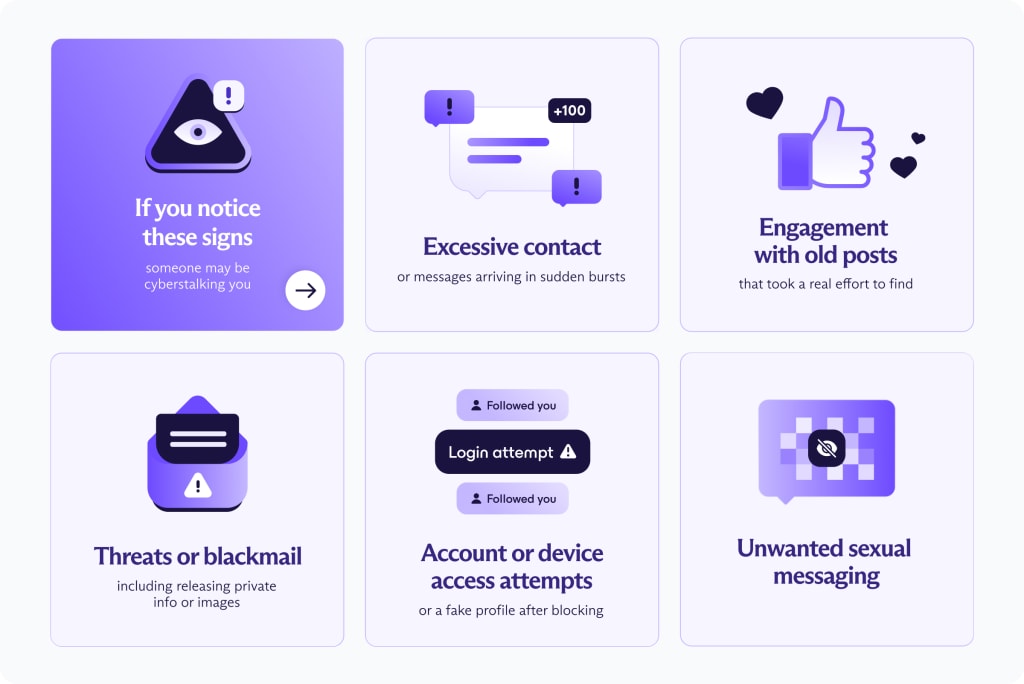
Jika Anda memperhatikan tanda-tanda ini, seseorang mungkin sedang melakukan cyberstalking terhadap Anda:
- Kontak yang berlebihan atau datang dalam ledakan tiba-tiba
- Interaksi dengan postingan media sosial lama yang benar-benar memerlukan usaha keras untuk digali
- Ancaman atau pemerasan, termasuk ancaman untuk mengungkap informasi atau gambar pribadi
- Percobaan mengakses akun atau perangkat Anda, atau profil palsu yang menghubungi setelah Anda memblokir akun aslinya
- Pesan seksual yang tidak diinginkan
Sinyal paling jelas bahwa sesuatu telah bergeser dari perhatian yang tidak diinginkan menjadi penguntitan adalah jika kontak tetap berlanjut setelah Anda dengan jelas meminta untuk berhenti.
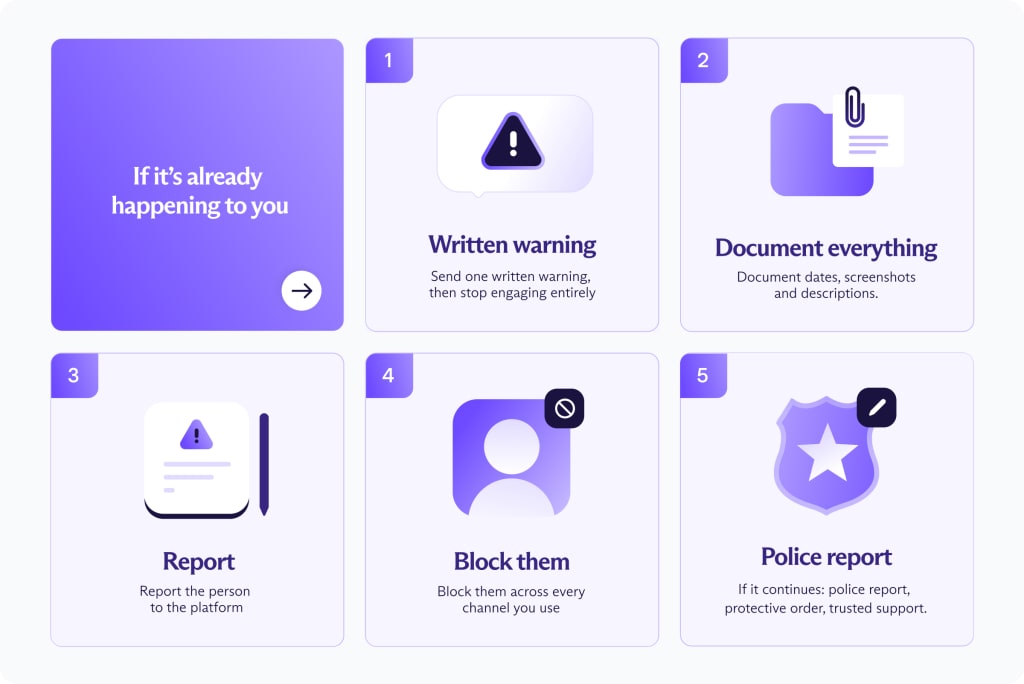
Jika Anda menjadi korban cyberstalking:
- Kirim satu pesan tertulis yang jelas, nyatakan bahwa kontak tersebut tidak diinginkan, lalu hentikan interaksi sepenuhnya.
- Dokumentasikan semuanya: tanggal, tangkapan layar, dan deskripsi setiap kejadian.
- Laporkan orang tersebut ke platform tempat kontak terjadi.
- Blokir mereka di setiap kanal yang Anda gunakan.
- Beri tahu orang-orang yang Anda percaya daripada menghadapinya sendiri.
- Jika tetap berlanjut, buat laporan polisi dan pertimbangkan putusan pembatasan atau perlindungan.
Catatan tentang stalkerware: Jika Anda menduga ada stalkerware di ponsel Anda, menghapusnya dapat memberi tahu orang yang memasangnya dan berpotensi memperburuk situasi. Jika Anda sedang menjalani hubungan yang penuh kekerasan, ada baiknya mencari dukungan dari pendamping kekerasan domestik sebelum bertindak.
Lihat penjelasan mendalam tentang stalkerware dari Coalition Against Stalkerware(jendela baru).
Untuk melindungi privasi Anda:
- Cari nama Anda sendiri untuk melihat informasi apa saja yang sudah dapat ditemukan, lalu keluar dari situs broker data dan situs pencarian orang. (Catatan: Ini bukan solusi sekali jadi, karena daftar baru bisa muncul kembali seiring waktu.)
- Tinjau pengaturan privasi daring Anda dan matikan penandaan geolokasi pada kamera serta aplikasi, agar foto tidak lagi membawa data GPS.
- Gunakan VPN(jendela baru) untuk menyembunyikan alamat IP Anda(jendela baru), sehingga lokasi umum Anda tetap tersembunyi dari siapa pun yang mencoba melacak koneksi Anda kembali ke diri Anda. Namun, perlu diingat bahwa VPN tidak akan menyembunyikan data GPS atau melindungi informasi yang Anda masukkan sendiri ke dalam akun.
- Gunakan pengelola kata sandi untuk membuat kata sandi unik untuk setiap akun, dan aktifkan autentikasi dua faktor sebagai lapisan keamanan tambahan.
- Gunakan alias email alih-alih alamat email asli Anda saat mendaftar ke layanan apa pun, agar layanan dan broker data tidak pernah menghubungkan akun baru kembali ke identitas Anda.
- Awasi perangkat Anda untuk melihat tanda-tanda stalkerware: baterai cepat habis, aplikasi yang tidak dikenal, atau perubahan izin yang tidak Anda lakukan.
Privasi adalah pertahanan terbaik Anda terhadap cyberstalking
Cyberstalking adalah kejahatan, dan banyak negara memberikan jalur hukum untuk meresponsnya. Namun, hukum bekerja setelah kejadian; langkah yang lebih efektif adalah membuat data pribadi Anda lebih sulit ditemukan sejak awal.
Langkah itu dimulai dari hal-hal dasar: alamat email yang tidak terkait dengan nama asli Anda, kata sandi yang tidak dapat ditebak atau digunakan ulang oleh penguntit dari pembobolan lama, dan koneksi internet yang tidak menyiarkan lokasi Anda kepada siapa pun yang mengawasi.
Misi kami di Proton adalah membantu Anda melindungi privasi dari pengawasan perusahaan teknologi besar. Namun, melakukannya juga merupakan langkah baik untuk menjaga keselamatan pribadi Anda.