Cyberattacks pose enormous risks to businesses. Hackers using ransomware or phishing scams to gain entrance to your business network can result in serious reputational and financial damage. However, not all cyberattacks are launched from outside your business.
Insider threats are cyberattacks that originate from inside your business. Here’s what you need to know about insider threats and what you can do to prevent them.
What is an insider threat?
Insider threats come in many forms, but they all have one thing in common: they originate within your business network. An attack that breaches your network isn’t classified as an insider threat. And an insider threat isn’t always created by an employee — a contractor or a criminal who’s phished their way into your business network can also create an insider threat.
Types of insider threats
Accidental
Sometimes, a team member shares a document with someone who shouldn’t have access, or doesn’t store sensitive information: this isn’t done intentionally, but intent doesn’t negate impact. Many insiders are just team members who, through human error, have accidentally created risk within your business network
Negligent
A negligent insider is a team member who isn’t following the security best practices of your business. This can look like failing to report the loss of a device with access to your business network or not meeting the standards of your business’s cybersecurity policies.
Intentional
An intentional insider creates a threat for personal gain, either by downloading and selling sensitive data or by harassing team members. Usually, an intentional insider is someone that bears a grudge against your business — perhaps an ex-employee or a contractor who left on poor terms.
Malicious
Much like an intentional insider, a malicious insider seeks to exploit your business. However, they won’t have a personal connection to it. They’re more likely a hacker targeting multiple businesses who is choosing their targets based on the type of data or the amount of money they assume they’ll be able to extract.
Collusive or third party
Collusive insiders are similar to malicious insiders, except that they’re collaborating with multiple parties, sometimes within your business itself. For example, a hacker may collude with an employee or a rival company may collude with a group of hackers to exfiltrate valuable information or money.
What can insider threats do to your business?
Because of the varied nature of insider threats, they have have varied consequences. However, there are some common
- Data breaches: By sharing sensitive data with unauthorized individuals, or storing sensitive data in insecure locations, team members can inadvertently cause data breaches. Data breaches invite the potential for hackers to launch phishing scams against your business, attempting to gain access to your network for further exploitation.
- Theft: Sensitive data, IP, client details, and financial data are all valuable targets for hackers attempting to exfiltrate data from your systems. This data can be sold on the dark web, allowing hackers to further exploit your business.
- Espionage: If your business is in possession of exclusive IP, corporate espionage could be a threat. An insider threat could see malicious or collusive intruders attempt to steal copyrighted or trademarked material, or even a rival government attempting to collect information.
- Sabotage: An insider can deliberately sabotage your digital infrastructure in order to disrupt your business continuity. This could include using tactics like deleting or exfiltrating data, disabling key systems, deploying malware, or interfering with codebases.
While malicious insider threats do occur and can cause significant damage, they’re not the most common type of insider threat. Research suggests that most insider threats are actually unintentional, potentially accounting for around 62%(new window) of incidents. But whether they’re intentional or accidental, insider threats pose the same amount of harm.
Team members may not realize how much they’re inviting risk by failing to follow your cybersecurity best practices or by introducing shadow IT solutions into your network. For example, sensitive data that’s accidentally left unsecured can invite data breaches, creating reputational damage and even regulatory fines. And with AI solutions such as ChatGPT and Copilot becoming integrated into workplaces without proper data protection measures, the attack surface of your network is increasing all the time.
How to spot an insider threat
An insider threat in your network will create red flags. Usually, you’ll be able to spot a potential insider threat by looking for the following behavior:
- Anomalous access attempts e.g. attempts made from unusual IP addresses, unknown devices, or at an irregular time outside your business hours.
- Access attempts for data not usually accessed by specific individuals
- Access attempts for apps, documents, or services from unknown or unauthorized users
- Malware or suspicious software (particularly any software that can grant remote access) installed on team member devices, whether business-owned or personal.
- Loss of access or changes to team member accounts e.g. passwords that have been changed without the account owner’s knowledge or consent, changes within the account such as privacy settings and known devices.
- Your business documents and sensitive data appearing online without having been shared.
Whether an insider threat is malicious or accidental, you can aim to prevent them in the same way: by investing in your team members’ cybersecurity practices and by creating a secure, unified ecosystem with zero access encryption.
How to prevent insider threats
These are the areas you’ll need to invest in if you want to prevent insider threats from damaging your business:
Threat detection
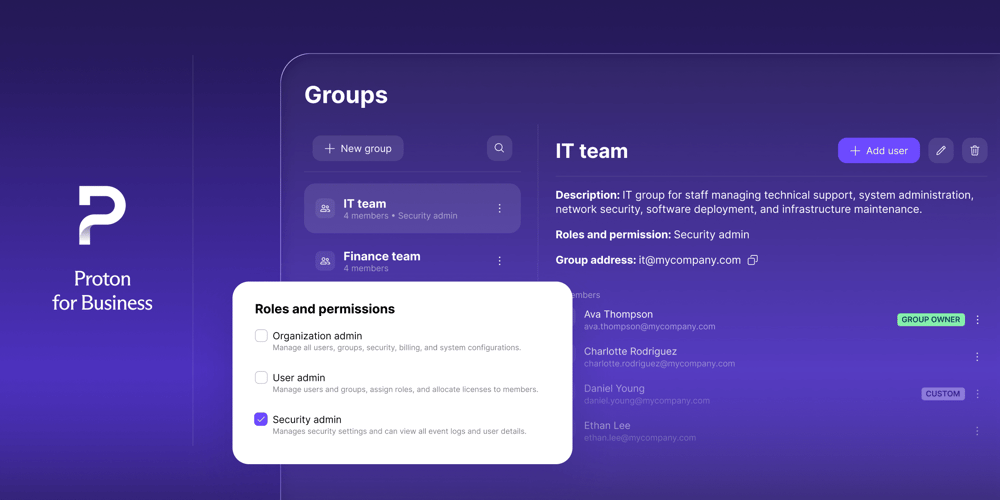
Whether it’s unusual user behavior or unauthorized changes being made to your team’s folders or password vaults, usage logs can help admins oversee exactly what’s happening within your business network. Helpful information such as IP addresses and lists of events with times and dates attached can help your security team spot unusual activity quickly, revoking access to potentially compromised accounts and purging malicious insiders.
Enforced security policies
Inconsistently applied security policies leave open gaps in your network and more opportunities for team members to make mistakes. By building security policies into your infrastructure, you can ensure that team members are acting by your cybersecurity standards.
For example, with a business password manager, you can prevent passwords being shared outside your network, and ensure that all new passwords created meet your chosen criteria. With a business drive, you can ensure that files are protected with passwords or even created with expiration dates.
Access management
Centralizing access management helps your IT admins make sure that authorized individuals have access to only what they need, and also to remove access from unauthorized individuals such as ex-employees or former contractors. Onboarding and offboarding are essential to prevent perpetual access to your network and systems, so tools like single sign-on (SSO) and SAML can help your admins manage access for all of your business tools from one central location.
Secure app ecosystem
Unfortunately, insider threats are common. According to research by Fortinet, 77%(new window) of organizations have experienced insider-driven data loss in the past 18 months. Fortunately, there are many tools you can deploy in order to bolster the security of your organization.
Proton Pass and Proton Drive are end-to-end encrypted solutions that can help your team manage and protect business documents, passwords, and sensitive data. Proton Pass centralizes your business passwords, strengthening access security while helping team members work more effectively. You can put an end to lost passwords and passwords being shared via email with shared vaults and secure sharing. Preventing insider threats means investing in account protection, which a password manager streamlines and simplifies.
Proton Drive gives your business a secure location to store your more sensitive data, protecting it with end-to-end encryption meaning that no unauthorized individual can access it.Proton Drive is ISO 27001 certified and SOC 2 Type II attested, helping your business simplify compliance and meet regulatory compliance standards. Team members can still collaborate in real time on documents and spreadsheets, sharing them as needed, but with extra security protecting your sensitive business data. If you’re looking to protect your network from insider threats as well as external ones, consider investing in infrastructure with security built into its foundations.