
How to use a custom domain from Porkbun with Proton Mail
- Reading
- 6 mins
- Categories
- Custom email domain
- Domain setup
- Proton Mail
If you purchased a custom domain, such as yourdomain.com, from Porkbun, you can use Proton Mail to send and receive emails using addresses like yourname@yourdomain.com.
To do this, you must have a paid Proton plan. The number of custom domains you can use with Proton Mail depends on your plan:
- Proton Mail Plus: 1 custom domain
- Proton Unlimited: 3 custom domains
- Proton Duo: 3 custom domains
- Proton Family: 3 custom domains
- Proton Visionary (legacy): 10 custom domains
- Proton Mail Essentials: 3 custom domains
- Proton Mail Professional (now deprecated): 10 custom domains
- Proton Workspace Standard: 15 custom domains (by default with the option to add more)
- Proton Workspace Premium: 20 custom domains (by default with the option to add more)
Here’s how to set up your custom Porkbun domain with your Proton Mail account:
Step 1: Create your organization
When you purchase a Proton for Business plan, you’re prompted to set up your organization. If you skipped it, you can do this now by following the steps below.
If you’ve already created an organization, or if you’re not on a Business plan, skip this section.
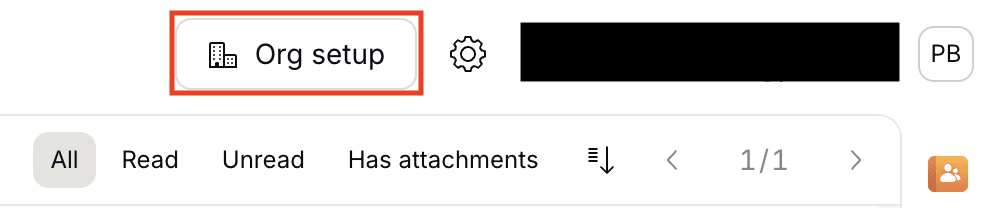
- Click Org setup in the top-right corner.
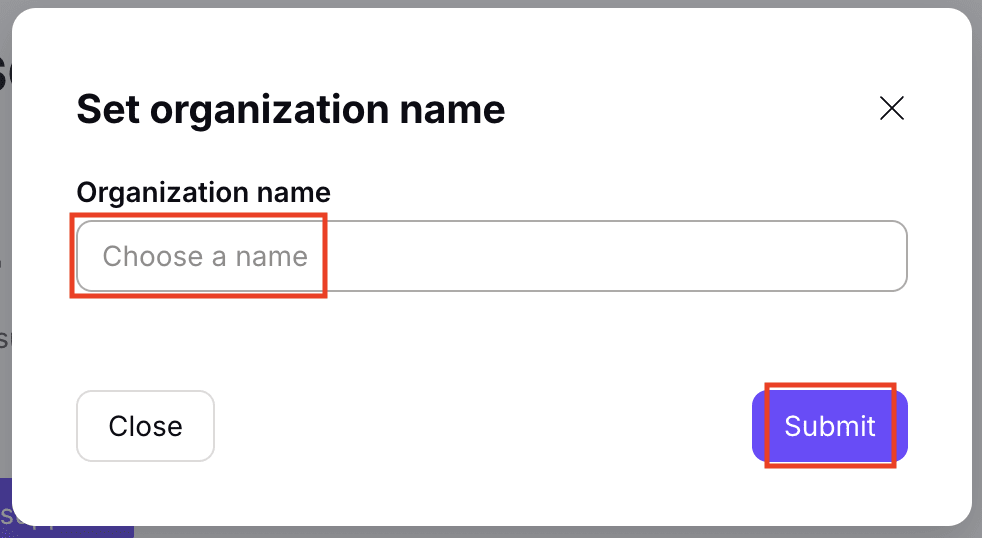
- Set an Organization name and click Submit. You can change it later.
- Allocate storage space to your administrator account and click Submit.
Learn more about setting up your organization
Step 2: Connect and verify your domain
To verify your Porkbun custom domain, you’ll need to add DNS records to your domain’s DNS settings.
Note: The steps below apply only if your domain’s nameservers are set to Porkbun DNS. If your nameservers point to another service, add the same DNS records in that provider’s DNS management console instead of the Porkbun dashboard.
Learn how to update DNS records for your custom domain
Follow these steps to verify your Porkbun custom domain:
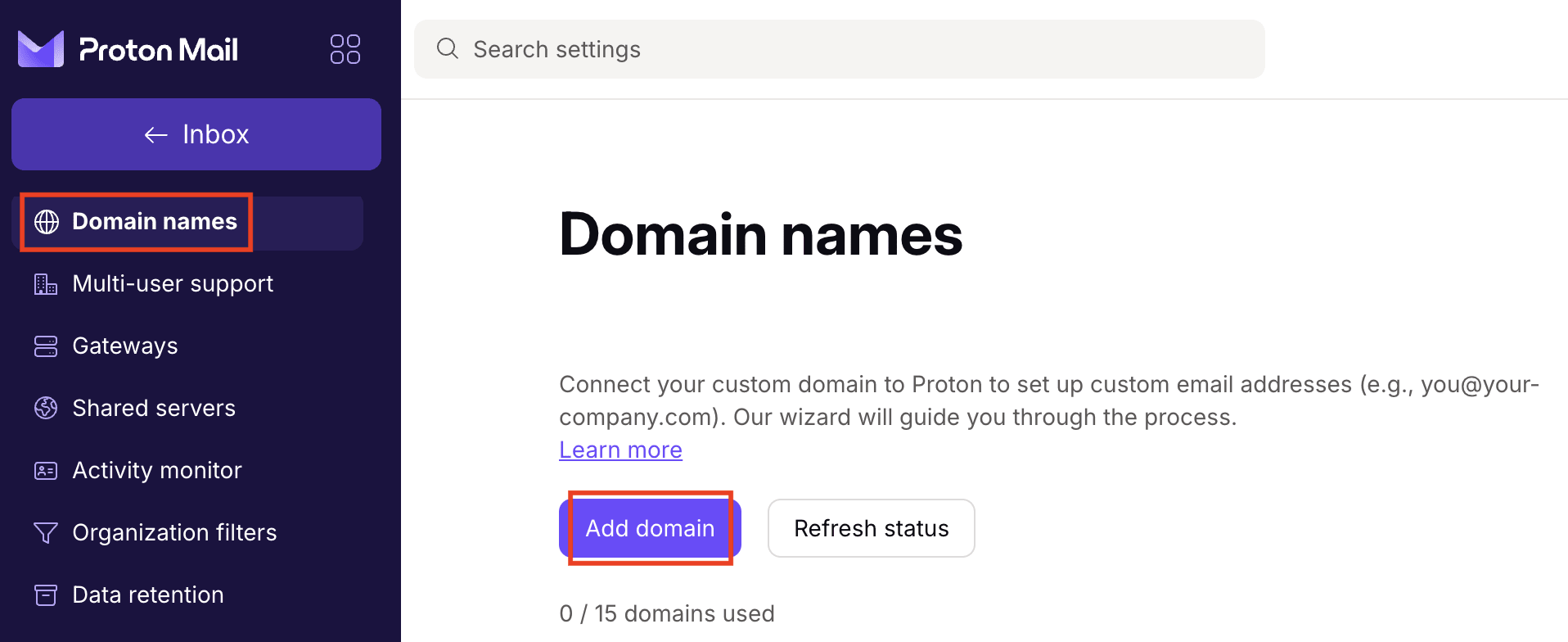
- In your Proton Mail account, go to Settings → Domain names and click Add domain.
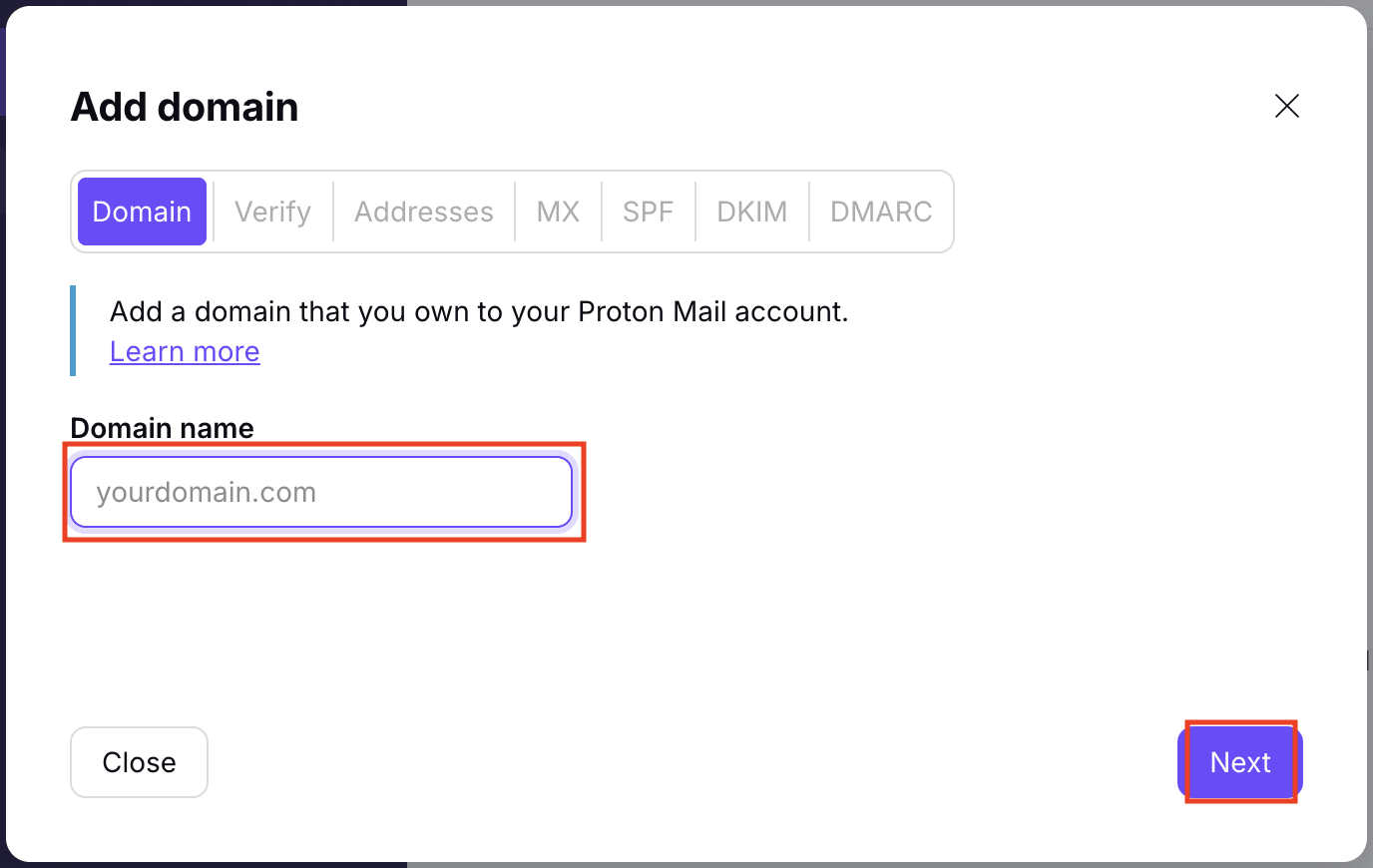
- Enter a domain name and click Next.
- Copy the TXT record, including Type, Host name, and Value / Data / Points to.
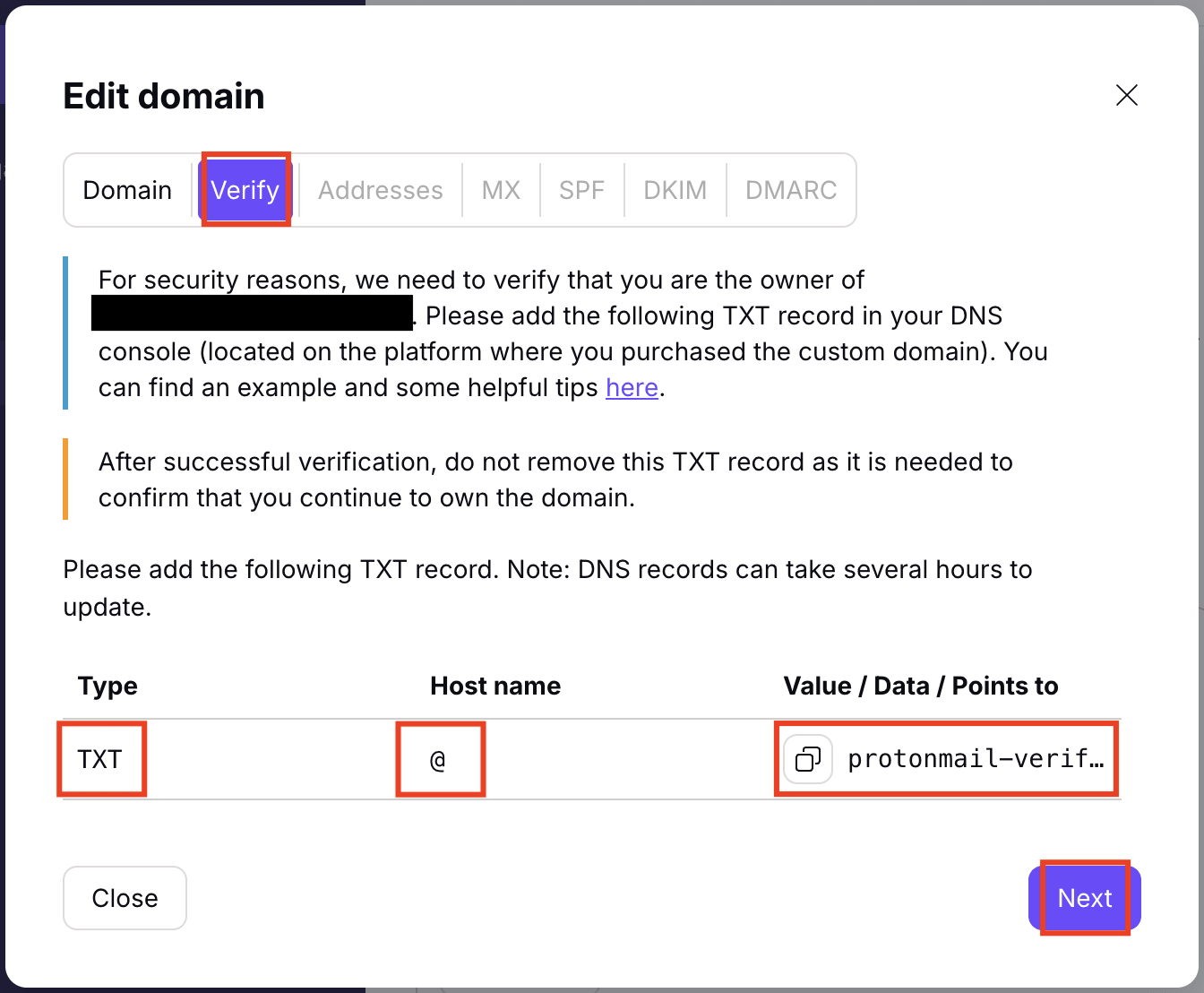
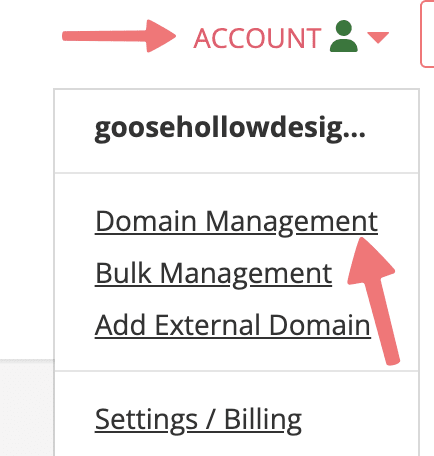
- Open a new browser tab, go to Porkbun(new window), sign in, and open Account → Domain Management.
- Find your domain and click Details on the far right. Then, locate DNS Records and click edit (✏️).

- In the Manage DNS Records menu, do the following:
- Set Type to TXT – Text record.
- Leave the Host field blank.
- Under Answer, paste the TXT record you copied in Proton Mail.

- Click Add. Don’t close the Porkbun page yet.
- Switch to the Proton Mail custom domain setup page and click Verify. It may take several hours to complete verification.
Step 3: Create new users and addresses for your custom domain
Before continuing, make sure you’ve purchased enough seats for the users you plan to create.
Navigate to Addresses and click Add user or Add address. This will open Users and addresses settings.
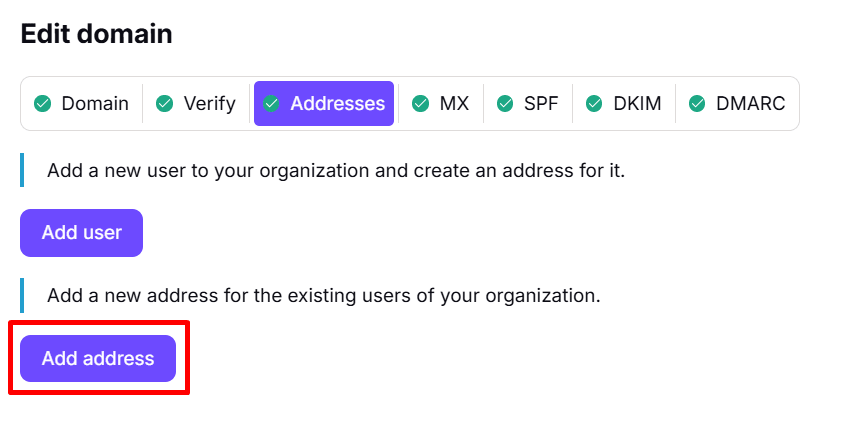
You have two options: Click Add user to create a new user account for your custom domain, or Add address to create new email addresses for an existing user.
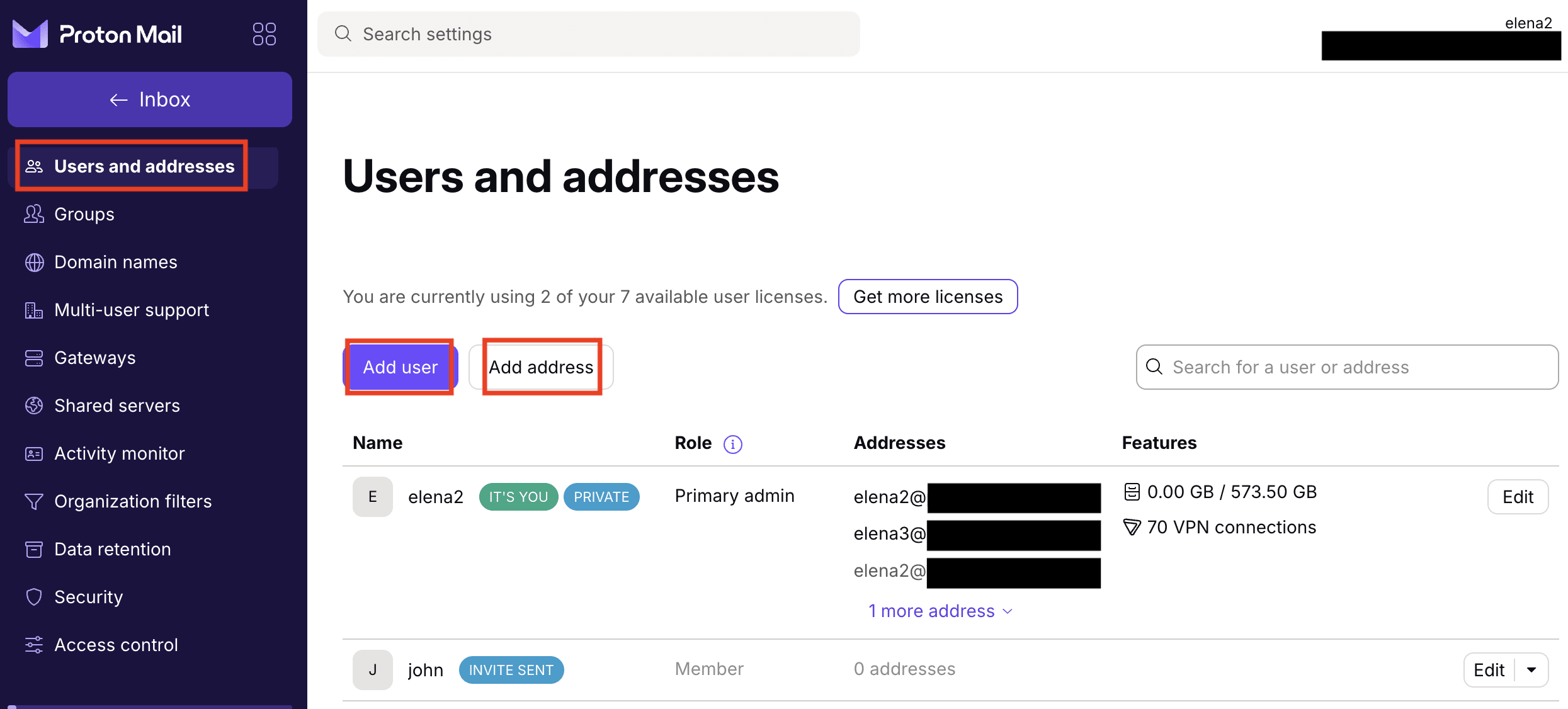
If you select “Add user”
You’ll be guided through setting up a new user account.
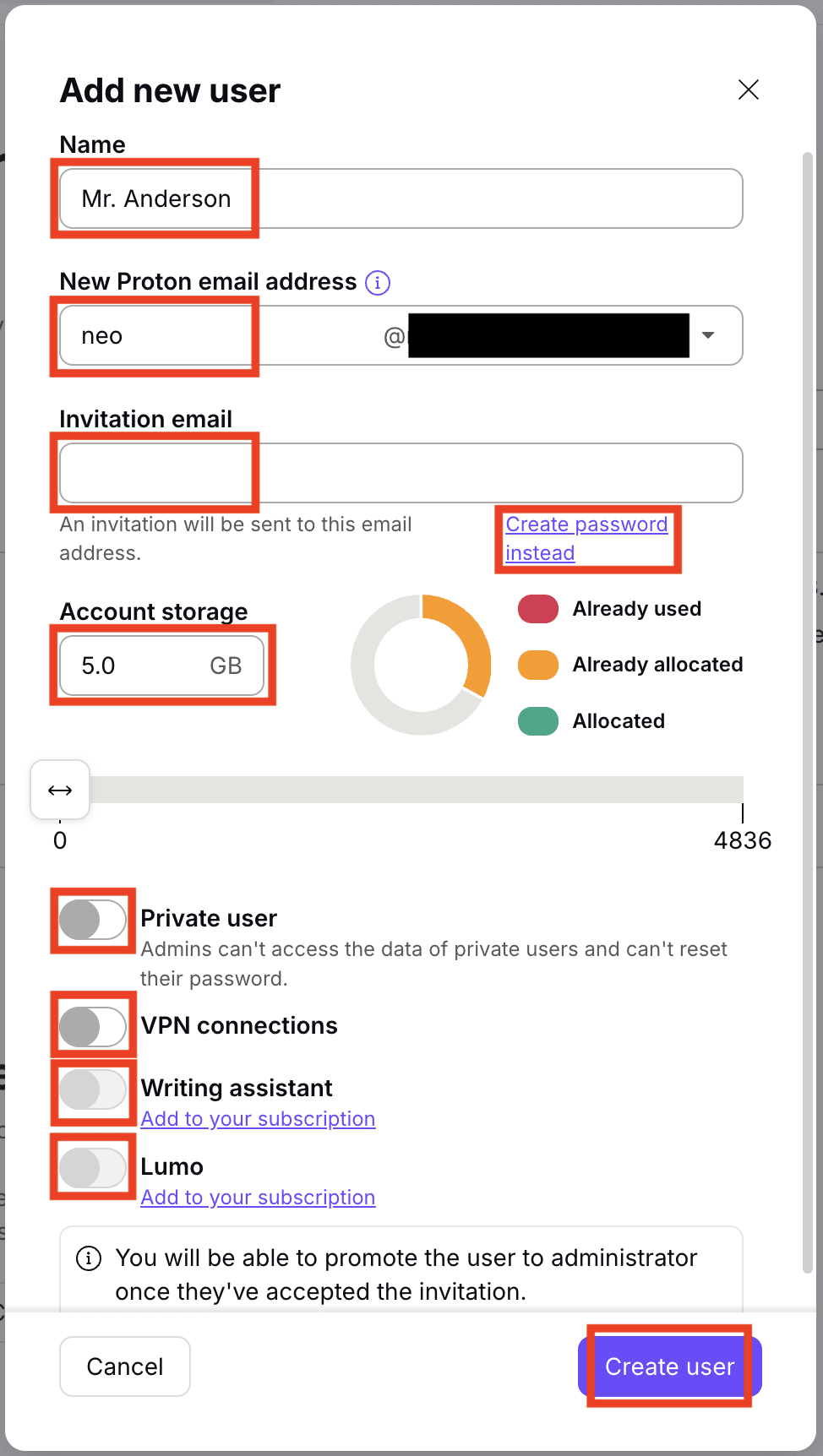
You can:
- Set the user’s name and new Proton email address
- Choose how the user gets access:
- Enter an invitation email, allowing the user to set their own password, or
- Click Create a password instead to set up a password manually, which you’ll need to securely share with the user
- Assign account storage
- Choose whether to make the user a private user. Making a user private prevents organization admins from managing the user or accessing their data. Depending on your organization’s policies, this may not be recommended. Learn more about user roles.
- Depending on your Proton subscription, you can optionally enable:
- VPN connections, allowing the user to connect remotely
- Writing assistant, providing access to Proton Scribe for proofreading or refining emails
- Lumo, granting access to our private AI assistant for business(new window)
Once finished, click Create user.
If you select “Add address”
You’ll be able to add email addresses to an existing user.
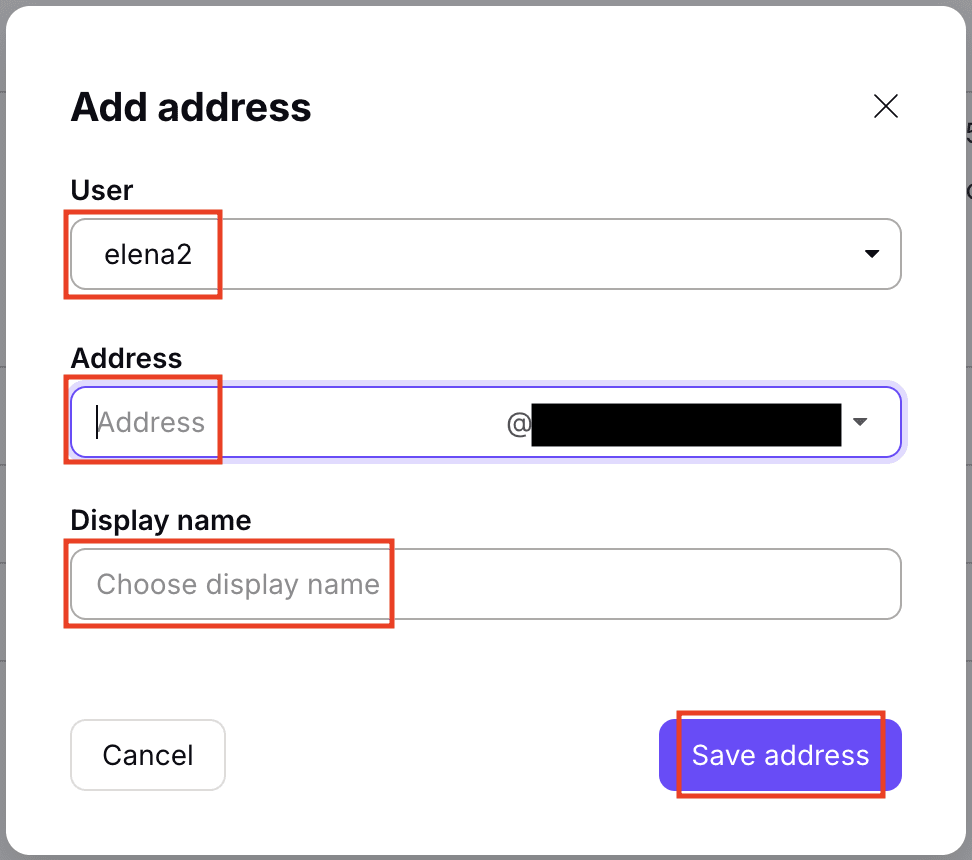
For each address, you can:
- Select a domain
- Set the new email address
- Set a display name
When you’re done, click Save address.
Learn more about adding users to your organization.
Step 4: Update MX records
Before continuing, make sure to create all user email addresses for your Porkbun domain in Proton Mail, so no emails are lost during migration.
When you update your MX records, you’re telling the internet to deliver all incoming emails for your domain to Proton Mail’s servers instead of your previous email provider. After this change, emails sent to addresses that don’t exist in Proton Mail won’t be delivered, because your domain will no longer route mail to your old server.
To ensure emails sent from your custom domain are delivered reliably and protected against spoofing, configure MX records with your Porkbun by following these steps:
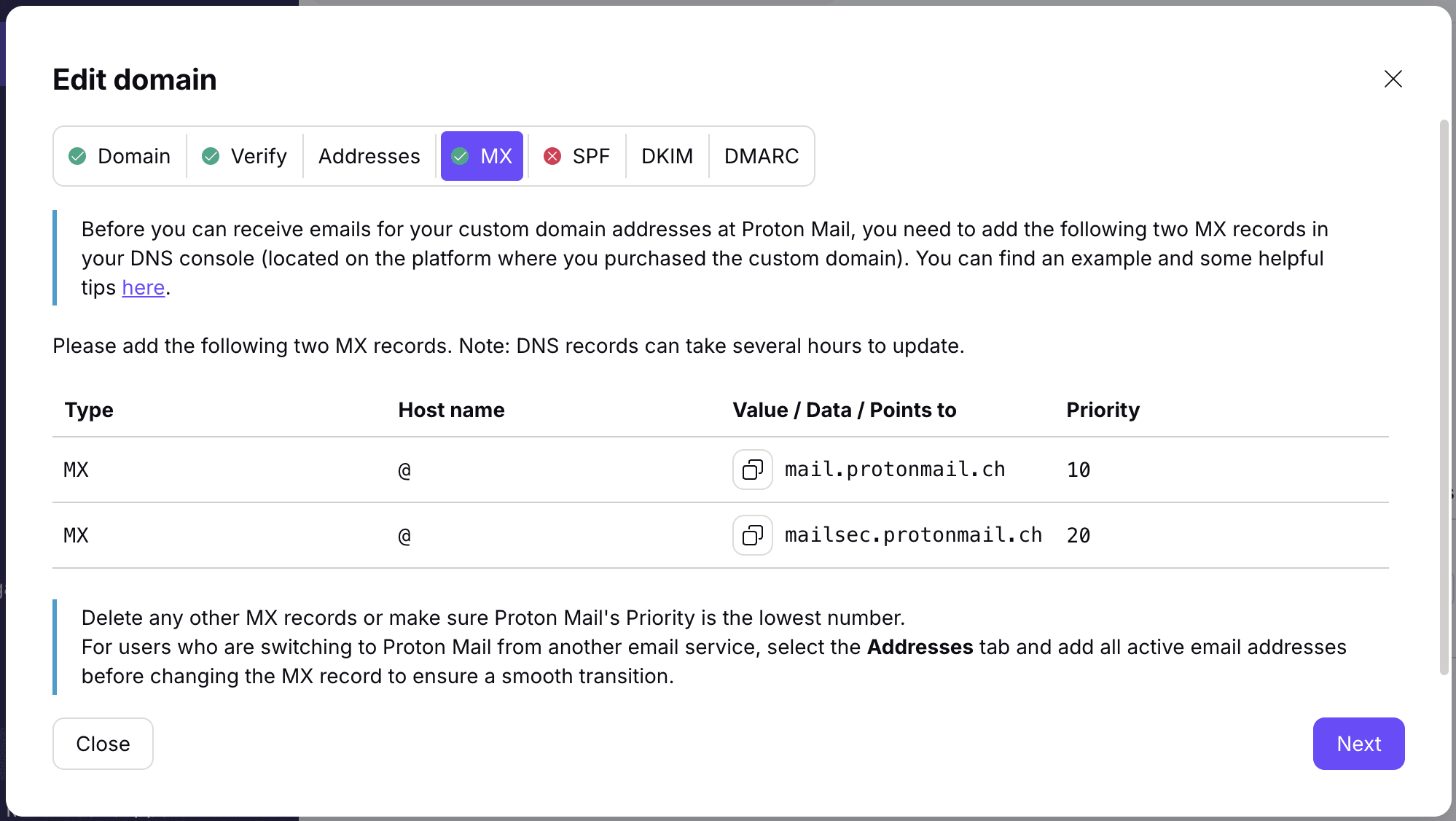
- Go to Settings → Domain names and click Review next to your domain.

- Navigate to MX and copy both MX records, including Type, Host name, and Value / Data / Points to.
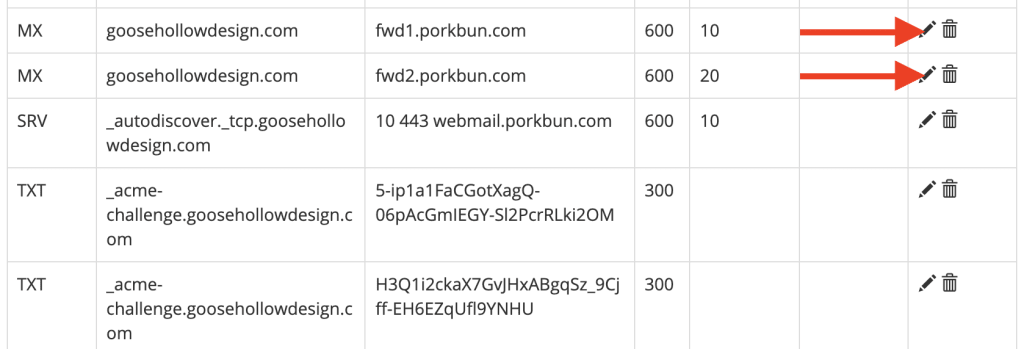
- Go to the Porkbun page, scroll down, and delete any existing MX records by clicking trashcan (🗑️).
- Scroll up to Manage DNS Records menu and do the following:
- Set Type to MX – Mail exchange record.
- Leave the Host field blank.
- At Answer, enter the first MX record you copied from Proton Mail.
- Click Add.
- Repeat these steps for the second MX record.

- Return to the Proton Mail custom domain setup and click Next.
Step 5: Configure SPF, DKIM, and DMARC records
SPF, DKIM, and DMARC records help protect your domain from spoofing and improve email deliverability. Without them, your messages may be rejected or sent to spam by major email providers like Gmail.
Follow these steps to set up your SPK, DKIM, and DMARC records with Porkbun when setting up a custom domain using Proton Mail:
- Copy the SPF record, including Type, Host name, and Value / Data / Points to.

- Go back to the Porkbun page → Manage DNS records menu and do the following:
- Set Type to TXT – Text record.
- Leave the Host field blank.
- Under Answer, paste the Value / Data / Points to record you copied in Proton Mail.
- Click Add.
- Return to the Proton Mail custom domain setup page and click Next.
- In the DKIM tab, copy all three CNAME records, including Type, Host name, and Value / Data.

- Switch to the Porkbun page → Manage DNS records menu and do the following:
- Set Type to CNAME – Canonical name record.
- Set Host to the first Host name value you copied in Proton Mail.
- Under Answer, paste the first Value / Data / Points to record you copied in Proton Mail.
- Click Add.
- Repeat these steps for the two remaining DKIM records.

- Return to the Proton Mail custom domain setup and click Next.
- In the DMAC tab, copy the TXT record, including Type, Host name, and Value / Data / Points to.
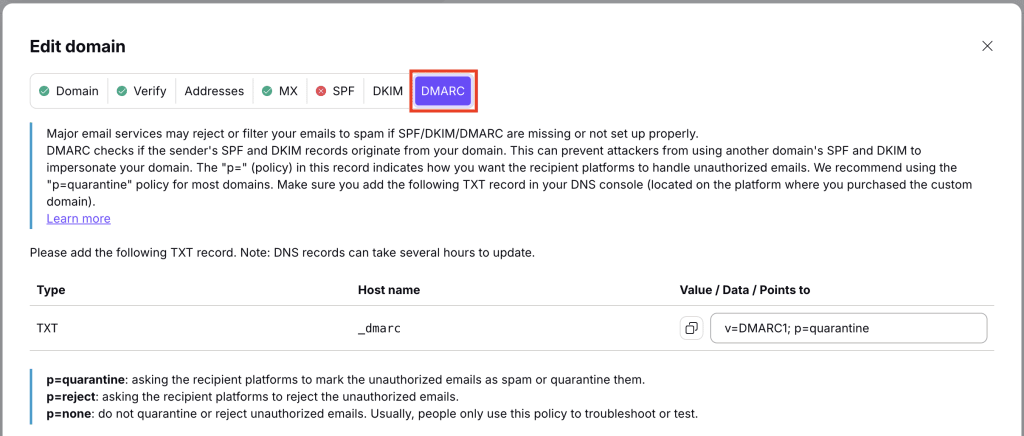
- Switch to the Porkbun page → Manage DNS records menu and do the following:
- Set Type to TXT – Text record.
- Set Host to the Host name value you copied in Proton Mail.
- Under Answer, paste the Value / Data / Points to record you copied in Proton Mail.
- Click Add.

That’s it! You can now send and receive emails using your Porkbun custom domain with Proton Mail.