European business leaders don’t believe they’re in control of their digital tools. We discovered that 74% of them worry a US kill switch will disrupt their operations — about the same number as those who feared ransomware or cyberattacks.
That finding, revealed in a Proton survey of 1,500 European business leaders, signals that leadership teams and boardrooms are now weighing a high-level geopolitical risk on the same scale as the everyday threat of hackers.
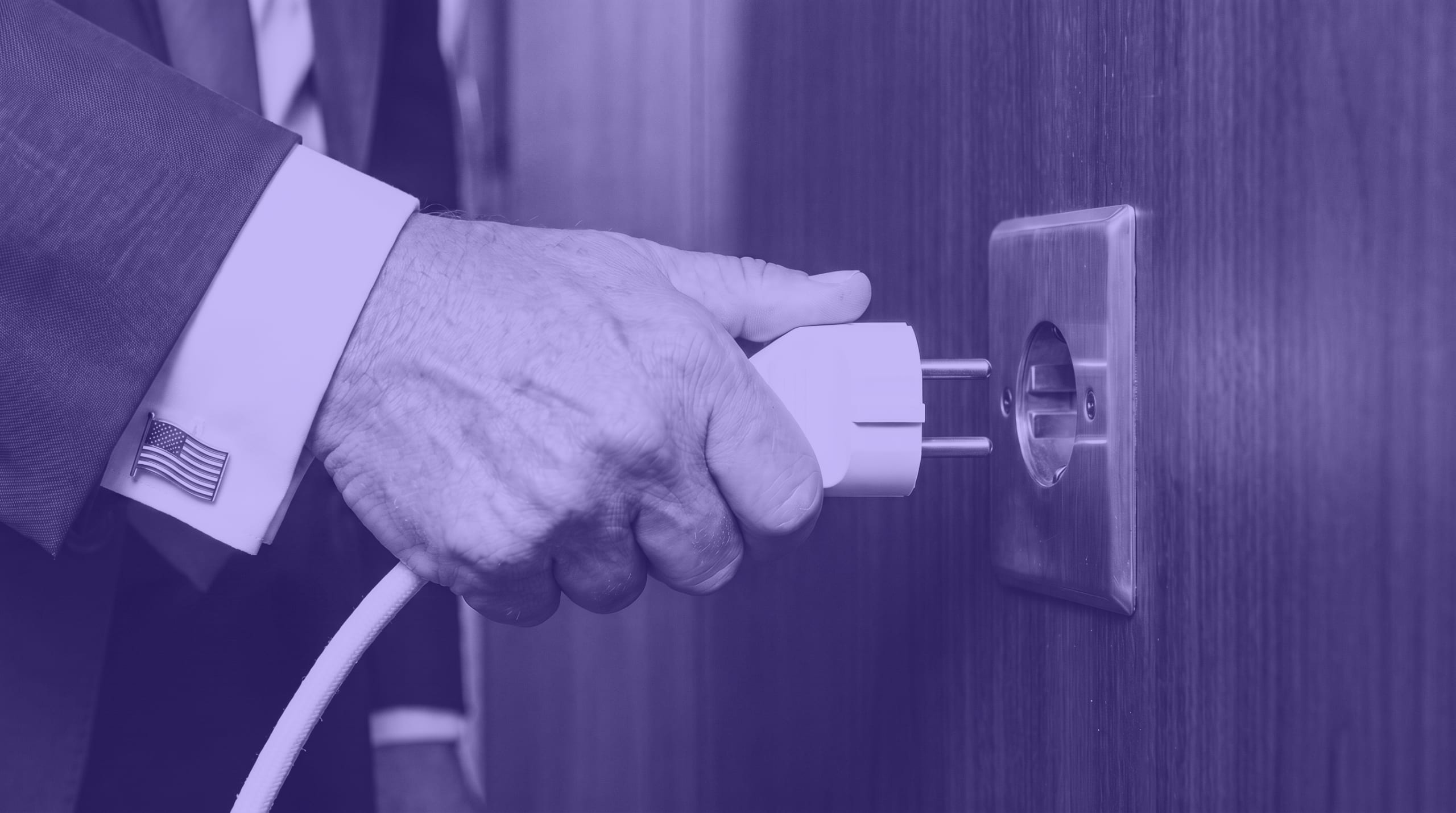
It’s relatively rare for a foreign government to order a tech company to cut off access to services, what EU policymakers have referred to as a “kill switch.”But prominent examples from the US have stoked fears in recent months.
Washington signaled threats over Greenland(nueva ventana) that put Danish businesses and policy makers on edge, blocked Microsoft usage by the International Criminal Court(nueva ventana), and restricted global access to powerful large language models.
Add these tensions to the risk of normal technical outages, and organizations are now turning to business continuity strategies to hedge their exposure, putting fallback communications and operations tools in place so they can keep working through any downtime.
To understand whether Europe is prepared for an outage, a cyberattack, or a provider cutting off access outright, we conducted a multi-country survey asking founders, CEOs, and IT directors about the effects of tech disruption.
Here’s what we found.
56% say geopolitical risk is a factor in their tech purchasing decisions
Worried the US administration could order providers to cut off IT services to foreign businesses overnight, European businesses are weighing these risks as heavily as ransomware or cyberattacks.
The concerns are valid. The US administration has already demonstrated a willingness to wield executive power, including sanctions, export controls, or tariff threats, to accomplish foreign policy goals.
Kill switch anxiety now at par with fear of cyberattacks
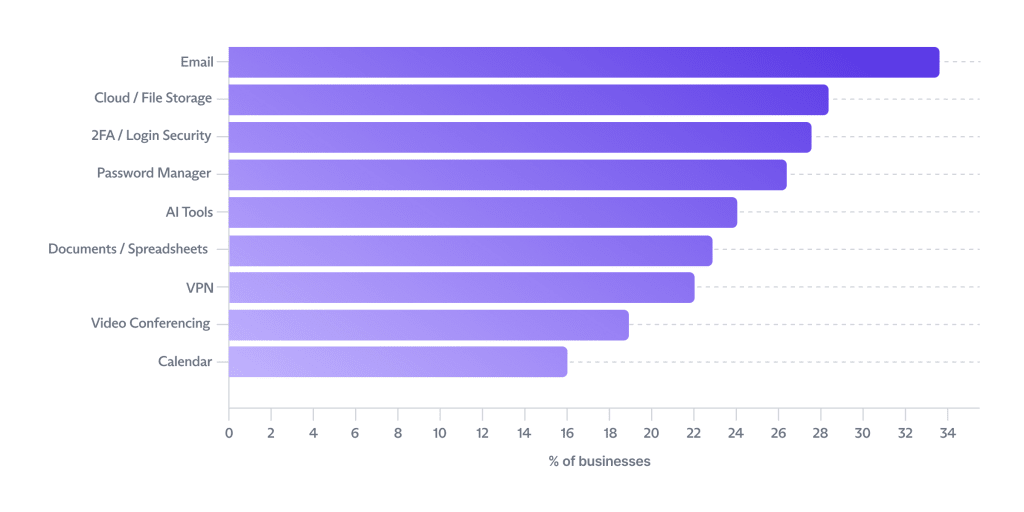
If ransomware and cyberattacks are worth mitigating with a security plan, then kill switch and outage risk is equally deserving of a proactive response. In reality the response is uneven, with organizations adopting business continuity solutions for one system at a time. Only 34% of businesses have a fallback for their most important platform: email.
How concerned are you that your company could lose access to a critical technology service due to a cyberattack or ransomware attack? vs How concerned are you that one of your US technology providers could disable your access through a kill switch?

Business continuity coverage is a patchwork
A kill switch could impact the entire stack. If all your services are based in the US, a secondary provider that’s also a US company may not be helpful. Only diversifying outside US jurisdiction provides a solution.
Does your company have continuity solutions for any of the following systems in the event of a disruption like an outage, a cyberattack, or losing access to a service you rely on?
Two-thirds of businesses would switch providers after a government-triggered blackout
A clear majority of businesses is willing to act. Businesses are planning for every kind of disruption — outages, cyberattacks, loss of access. They know that whatever the cause, the cost of going dark is too expensive to ignore.
If a foreign government intentionally disabled or blocked access to a critical technology service your company relies on, how likely would you be to switch to an alternative provider?

54% of businesses would stop work after just a day without access
No matter their size, 86% of businesses we surveyed said they experienced at least one disruption in the past 12 months from an outage, cyberattack, or loss of access to a service. And they say real money is at stake.
A huge share of businesses are living on a 24-hour buffer where a kill switch or technical outage would be an immediate operational crisis.
Most businesses are one bad day away from a shutdown
More than half (54%) of businesses say they couldn’t survive more than a single business day before having to shut down services and operations until digital tools were back online. And each day of downtime comes with a real cost, with effects that touch a company’s finances and its ability to operate.
If your company suddenly lost access to cloud and digital services or suffered a cyberattack, how long could it operate before having to shut down?

READ MORE: How deep does Europe’s dependence go?
Nearly 1 in 3 large businesses expect a six-figure loss from a single day offline
Loss scales with size, as you’d expect — though the number is stark: 29% of large businesses expect to lose more than €100,000 from a single day of downtime.
If your tech systems went down for a day, how much do you estimate your company would lose?

A tech outage hits every part of the business
A day offline doesn’t just show up on a balance sheet. It stalls the work itself, strains relationships with customers, and, for some businesses, chips away at their reputation long after access is restored.
If your company lost access to these critical digital tools, how would it be affected?

But where that damage lands varies depending on what a business actually does.
The tech and software segment is disproportionately affected across every category, with “unable to stay productive” as its top impact. Because its entire business is its digital infrastructure, a kill switch threatens revenue, ops, customers, and reputation all at once.
Healthcare providers feel it most acutely in email with 35% reporting disruptions there, the highest of any industry. The sector rates reputational damage as a bigger threat (31%) than any other segment, reflecting how much trust and public perception matter when patient-facing systems go down.
Business services firms feel it most in their ability to serve customers with 40% saying a disruption would leave them unable to support clients.
94% of businesses already have a business continuity plan in place
Only 6% of businesses said they have no plan at all, or don’t know if they do. But “having a plan” covers a wide range of readiness: 44% test theirs regularly, 36% have one but don’t test it, and 13% describe theirs as informal.
As you consider your business continuity plan, the findings of our survey point to important takeaways:
- Identify which providers are US-owned — a US company can be compelled to cut your service, even if it’s hosted on EU servers.
- Think in connected systems. Email, calendar, storage, and communications don’t always fail in isolation during an outage or kill switch.
- Choose a business continuity solution before a crisis hits, not during. An outage becomes an operational crisis within a few hours.
- Test how your business continuity plan performs against a full kill switch scenario, not just a single system going down.
Proton’s business continuity solution runs on European infrastructure, independent of Google, Microsoft, and Amazon. So when Big Tech goes down, you don’t go down with them. Set up dormant accounts now, and your team can switch over the moment your primary tools fail, with no interruption to email, calendar, or video conferencing.
Methodology
This survey was conducted by Proton among 1,500 business leaders across the UK, Germany, and France (500 respondents per country), fielded July 15–24, 2026. Respondents were screened for involvement in their company’s technology, backup, security, or continuity decisions — 32% identified as the main decision-maker, 38% share decision-making, and 30% influence recommendations. Respondents spanned a range of roles, including IT leaders (16%), founders/owners (7%), marketing and sales leads (12%), HR/People Ops leads (11%), and finance/procurement (10%), among others. Industries represented included technology/software (22%), healthcare (26%), business services (15%), and education/research (15%).
Correction: An earlier version of this article accidentally repeated the wrong survey question above a chart about continuing operations after an incident. It should have read, “If your company suddenly lost access to cloud and digital services or suffered a cyberattack, how long could it operate before having to shut down?”