Gegevensbeveiliging staat zelden bovenaan de agenda bij een pitch voor een nieuw bedrijf. Maar nieuw onderzoek suggereert dat dit wel het geval zou moeten zijn.
Uit ons grootschalige onderzoek onder 3.000 oprichters, leidinggevenden en IT-leiders bij het midden- en kleinbedrijf in zes landen — de VS, het VK, Brazilië, Frankrijk, Duitsland en Japan — blijkt dat beveiliging een vast onderdeel is geworden van het commerciële gesprek.
Maar liefst 66% van de bedrijfsleiders gaf aan dat het aantonen van een veilige omgang met klantgegevens ‘zeer belangrijk’ of ‘van kritiek belang’ was voor het binnenhalen van nieuwe opdrachten.
Deze verschuiving wordt deels gedreven door blootstelling. Bij gegevensschendingen is vaak een derde partij betrokken — leveranciers, verkopers, hostingpartners of uitbestede IT-ondersteuning. Wanneer een bedrijf met u samenwerkt, zijn ze zich ervan bewust dat ze u hun gegevens toevertrouwen. Want als die gegevens onder uw toezicht worden geschonden, staat hun reputatie ook op het spel.
Verdient beveiliging een dia of twee in uw volgende pitchdeck? Dit is wat de gegevens tonen.
Klanten vragen hoe u hun gegevens zult beschermen
Wanneer een potentiële klant klantgegevens, financiële gegevens, interne documenten of andere gevoelige gegevens met u deelt, blijven zij daar zelf verantwoordelijk voor. Toezichthouders, hun eigen klanten en hun bestuur houden hen nog steeds verantwoordelijk.
Een schending in uw systemen kan hun nalevingsverplichtingen activeren, hun klantrelaties beschadigen en hun merk in de krantenkoppen doen belanden. Het is dan ook logisch dat bedrijven kritischere vragen stellen voordat ze tekenen.
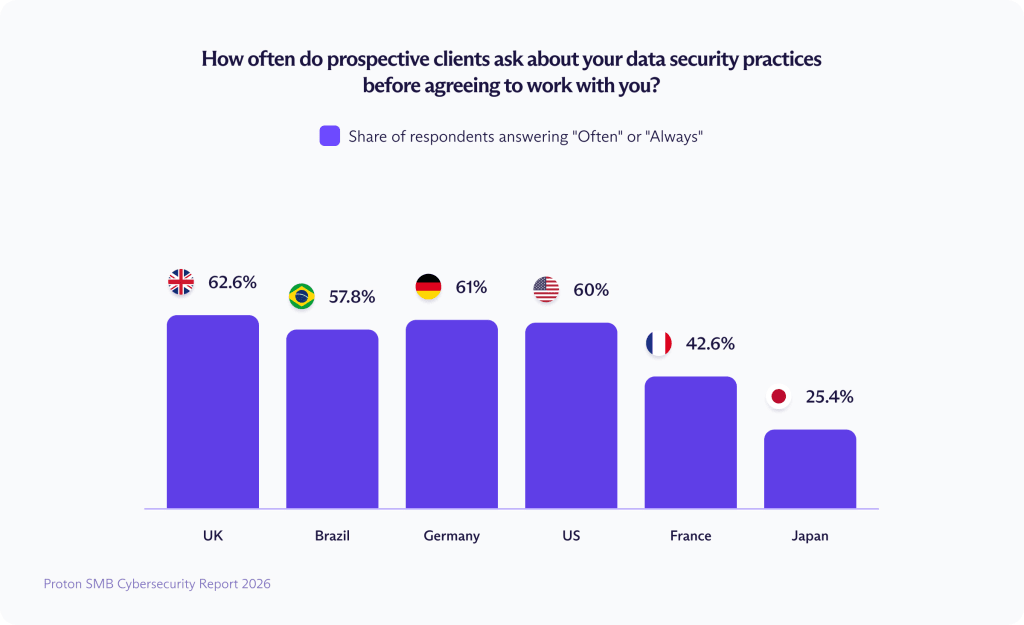
Als u een duidelijk, zelfverzekerd antwoord heeft, heeft u een ingang. Zonder dat antwoord kunt u meer vragen, vertragingen in de goedkeuring of — afhankelijk van hoe gereguleerd de sector van uw potentiële klant is — een gemiste deal verwachten.
Beveiliging is een van de primaire barometers geworden die potentiële partners gebruiken om te beslissen wie ze kunnen vertrouwen.
Uw concurrentie deelt haar beveiligingspraktijken al
Bedrijven die actief zijn in streng gereguleerde sectoren — financiële diensten, gezondheidszorg, juridische dienstverlening — lopen al jaren voorop in deze trend. Nalevingsvereisten dwongen hen al vroeg hun beveiligingsstatus te documenteren en aan te tonen. Daarom lopen ze hiermee voorop.
Op de vraag of zij het veilig delen van bestanden benadrukken als verkoopargument bij het concurreren om nieuwe opdrachten, antwoordde de overweldigende meerderheid ja.

Bedrijven beschouwen beveiliging steeds vaker als iets waarmee ze zich kunnen onderscheiden, en niet alleen als iets wat ze moeten hebben.
Het proactief presenteren van uw beveiligingspraktijken maakt u de eenvoudige keuze. Het vertelt het IT-team van een potentiële partner dat hun gegevens worden verwerkt binnen een gedefinieerd, controleerbaar kader. Het vertelt het inkoopteam dat u het due diligence-onderzoek al heeft uitgevoerd waar zij anders achteraan hadden moeten gaan. En het vertelt het juridische team dat de aansprakelijkheidskwestie grondig is overwogen.
Dat is het soort partner waarmee risicomijdende kopers willen samenwerken.
Hoe u een overtuigend gegevensbeveiligingsplan presenteert
Als u heroverweegt hoe u uw beveiligingspraktijken wilt pitchen, is dit waar u zich op moet richten:
- Noem niet alleen de tools die u gebruikt. Ons onderzoek toont aan dat 92% van de mkb-bedrijven al moderne beveiligingsmaatregelen heeft getroffen — wachtwoordbeheerders, MFA, VPN’s, training voor werknemers. Het gebruik van tools is de basislijn, niet de onderscheidende factor. Vertel potentiële klanten precies hoe deze maatregelen hun gegevens beschermen: in plaats van “We hebben een wachtwoordbeheerder”, zegt u “Alle inloggegevens van onze klanten worden centraal beheerd, de toegang is op basis van rollen en beperkt tot de teamleden die aan uw account werken, en we hebben een offboardingproces dat machtigingen intrekt op de dag dat iemand vertrekt.”
- Versterk uw verdediging rondom klantgegevens. Gebruik tools die natuurlijk integreren in bestaande workflows, zodat de veilige optie de gemakkelijke optie is. Dwing MFA af voor elke service die dit ondersteunt. Onderhoud en controleer uw proces voor het beheer van inloggegevens regelmatig.
- Wees voorbereid om uw gegevensbeschermingsplan te tonen. Nu het toezicht van regelgevende instanties op relaties met leveranciers in alle sectoren toeneemt, stellen klanten specifiekere vragen: Waar bevinden onze gegevens zich? Hoe zijn ze versleuteld? Wat gebeurt ermee als de relatie eindigt? Bedrijven die duidelijke, gedocumenteerde antwoorden op deze vragen hebben, doorlopen het inkoopproces sneller en zorgen voor minder redenen voor het juridische team van een klant om te onderbreken.
Beveiliging kan u helpen vertrouwen op te bouwen met bedrijven — en vertrouwen is immers vaak de basis waarop inkoopbeslissingen worden genomen. Gebruik uw gegevensbeveiligingspraktijken om uzelf te onderscheiden en u zult de resultaten gaan zien in snellere dealcycli, soepelere goedkeuringen en sterkere klantrelaties.
Ontvang meer bevindingen en inzichten in het volledige rapport
Ons volledige Proton MKB Cybersecurityrapport 2026 behandelt de realiteit van het beveiligings- en bedreigingslandschap waarmee het mkb vandaag de dag wordt geconfronteerd, inclusief wat daadwerkelijk schendingen veroorzaakt ondanks zware investeringen, waar menselijke fouten blijven binnensluipen, hoe cloud en AI nieuwe blinde vlekken creëren — en de strategieën om van uw beveiligingsstack iets te maken dat klanten vertrouwen en concurrenten niet gemakkelijk kunnen evenaren.