Encryption > Surveys > France
3 in 5 people in France consider end-to-end encryption important
But they’re still using services that don’t offer it.
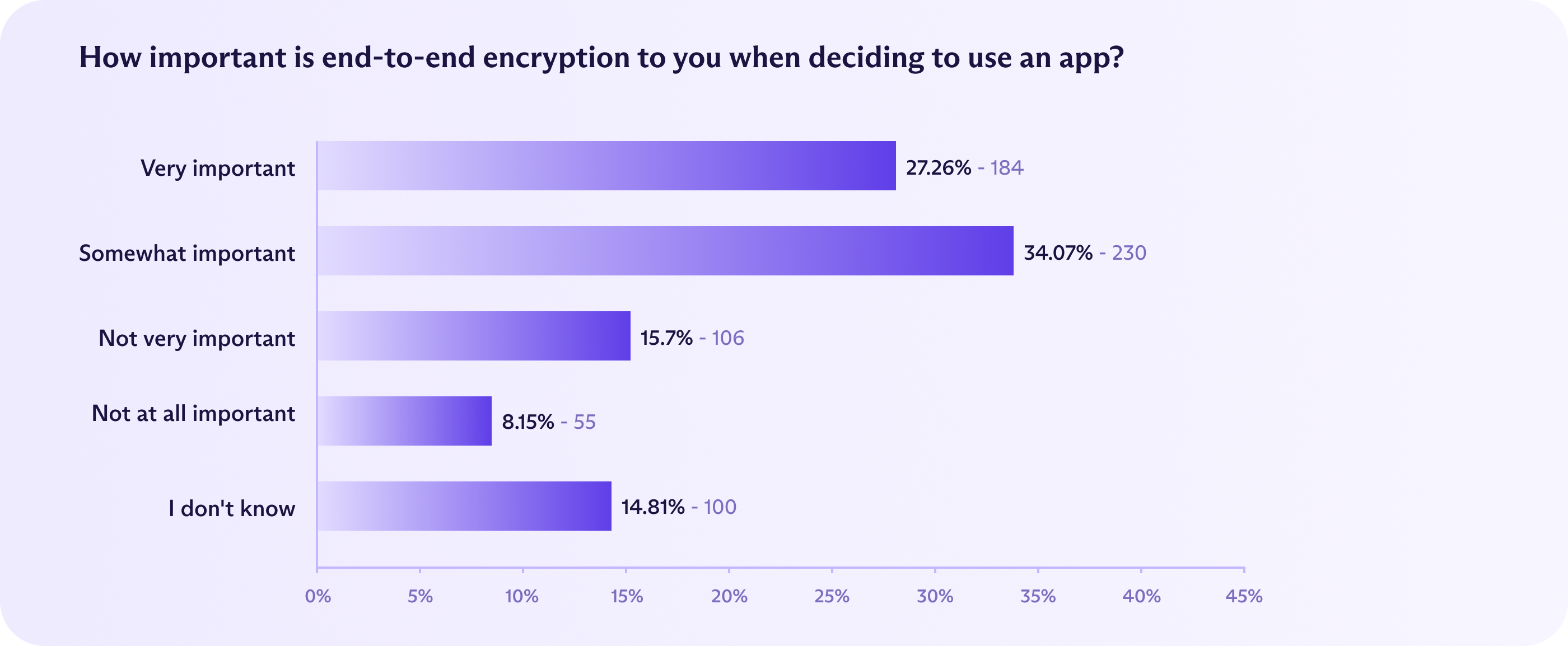
How important is end-to-end encryption to you when deciding to use an app?
A majority of people in France (61%) think end-to-end encryption (E2EE) is important when deciding which app to use, but only 27% of people consider it “very important,” the lowest share among the four countries we surveyed.
About a third of respondents said it was “somewhat important,” making France the only market where a plurality didn’t choose “very important.”
27%
of French consider E2EE “very important,” a lower share than in Germany, the UK, or the US
These results are from a survey conducted from June 19 to 25 among a general-population sample of about 600 adults in Germany and 700 adults in France, the UK, and the USA. We found that in all four countries, most people saw value in E2EE, the strongest form of protection for encrypted email, cloud storage, messaging, and other services that respect user privacy.
By comparison, 47% of Germans rate E2EE as very important, followed by 42% of Americans and 38% of Britons. France’s combined “very” or “somewhat important” total — 61% — is also the lowest, trailing Germany (78%), the US (76%), and the UK (73%).
Confusion about the tech and which services use it
End-to-end encryption enables people to send messages that can only be accessed by them and their intended recipient, never by the service that transmits it or any parties in between, including internet service providers, governments, and advertisers.
There’s significant confusion over how the feature works and who offers it in France. It was the only country in our survey where a majority of people (53%) said they’d never heard of E2EE before. Among the 48% who said they did know what E2EE was, 61% correctly identified how it worked, the lowest rate among the four countries.
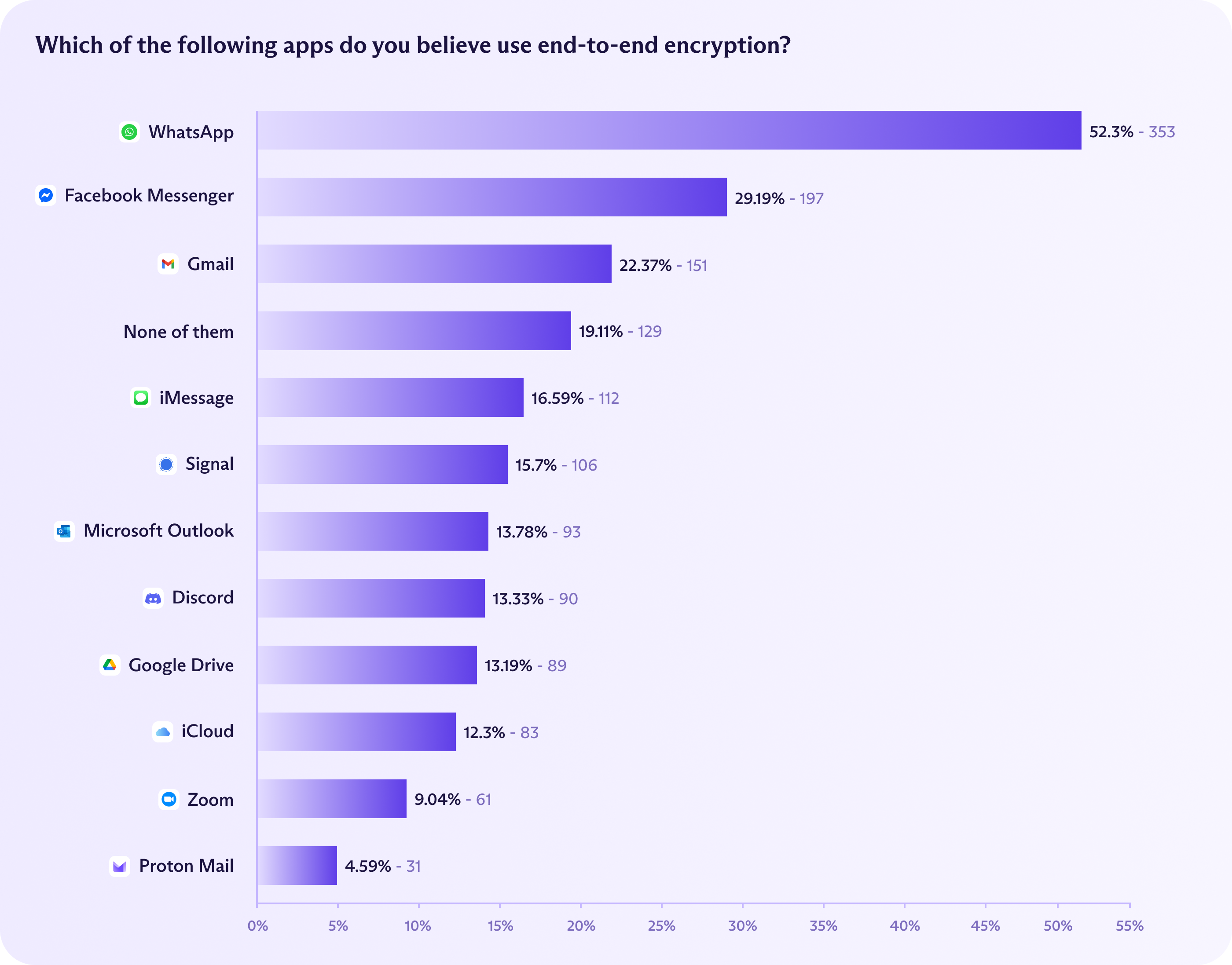
This confusion extended to which services offer E2EE. Roughly 22% of people incorrectly believe Gmail offers E2EE, and 14% have the same erroneous view of Microsoft Outlook.

22%
incorrectly believe that Gmail offers E2EE

14%
incorrectly believe Microsoft Outlook offers E2EE
Younger men are likeliest to see E2EE as ‘very important’
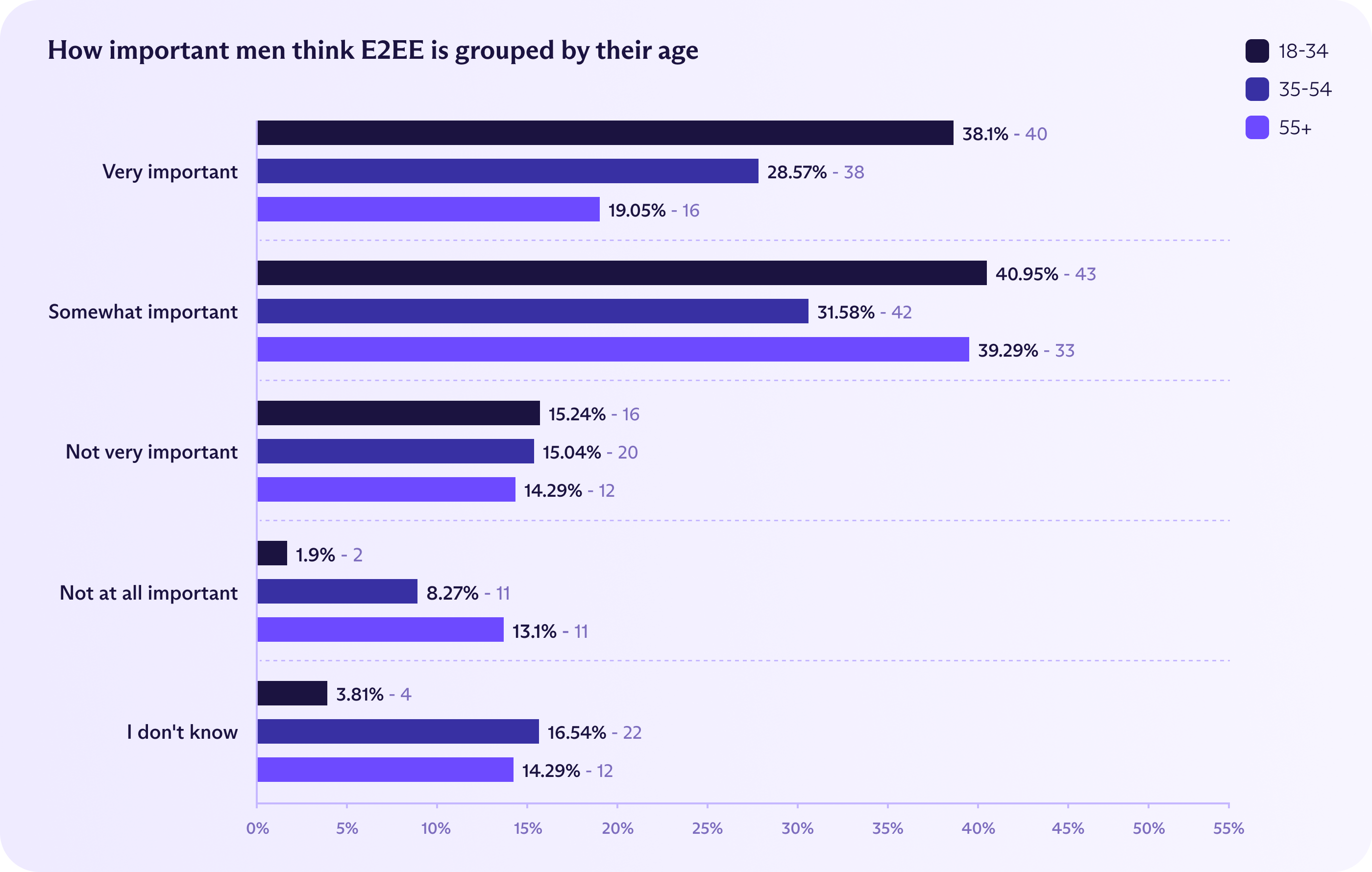
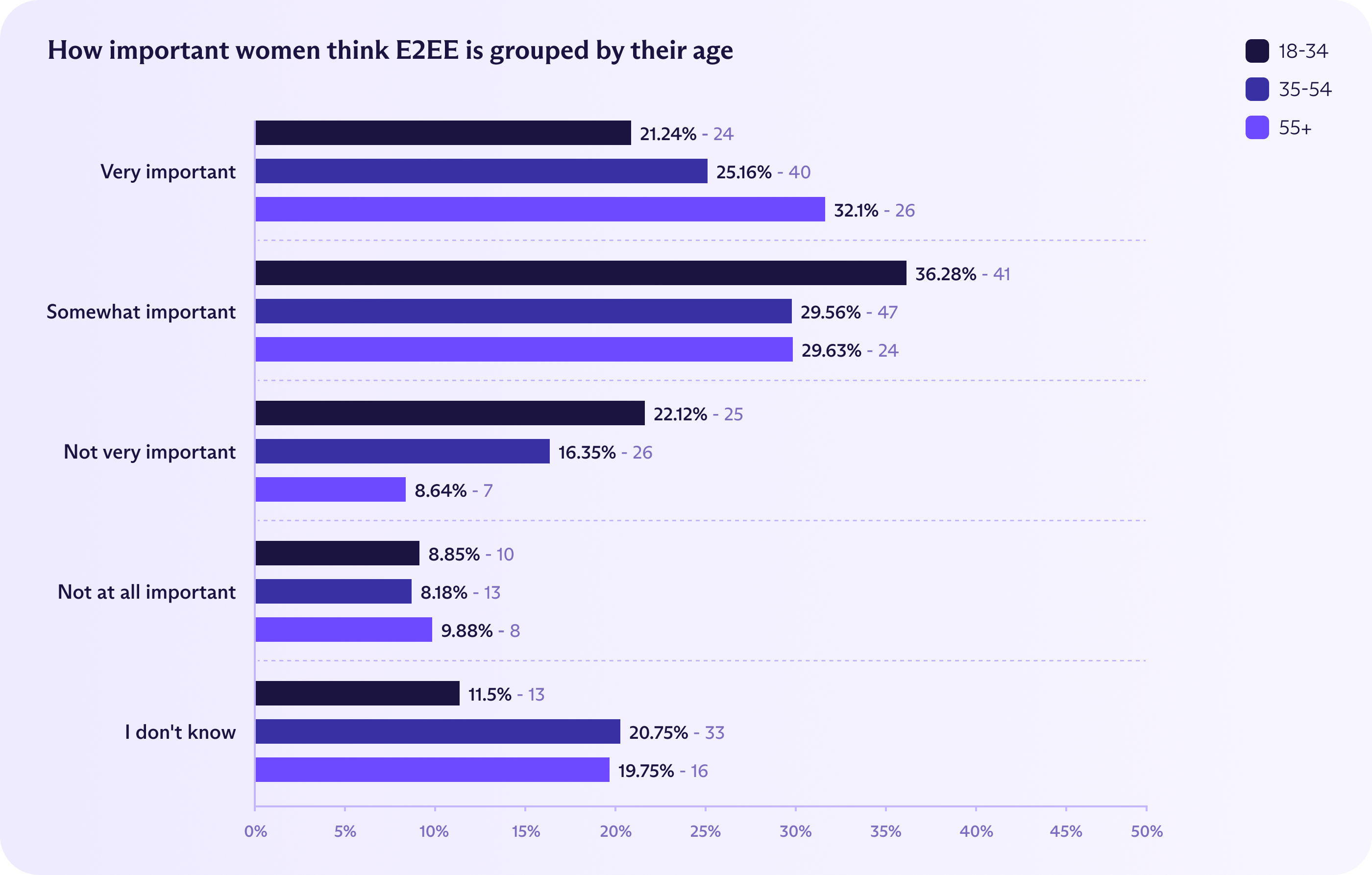
There were some stark divides by age when it came to the importance respondents said they gave E2EE. Young men are the champions for E2EE in France — 38% of men aged 18-34 say it’s “very important.” At the other end of the scale, only 19% of men aged 55 and over called E2EE very important. Women aged 18-34 also showed relatively little enthusiasm, with just 21% rating it very important. All other demographics cluster between 25 and 32%.
‘Are the French still naive? ... Democrats, in fact.’
We spoke with Éric Bothorel, a member of the French National Assembly with experience in digital issues, about these results to see if he could put them into context.
He believes France’s rule of law has given the French populace very little reason to learn about end-to-end encryption as compared to China or the US.
“In a peaceful democracy, the majority of the population does not have to worry about the surveillance of their communications,” the deputy said.
“The Chinese have absolutely no doubt about being constantly monitored by a single party and its agencies. The Americans have absolutely no doubt that the GAFAM [Big Tech] companies co-own their data, to say the least.
“Are the French still naive? Confident? Democrats, in fact. They convince themselves that the law protects them.”
He also points out that despite the internet being integral to our economy and society, people still have trouble understanding how our cybersecurity impacts our daily life.
“Citizens are very vigilant about physical attacks: Their vehicles, their homes, their children are the object of their utmost vigilance. They understand very well what it means to protect themselves. But on the networks, we are still in the immaterial. The perception of risks, intrusions, and violations is not at all the same. Until the day we experience them.”
Public’s confusion pays off for Google
Among the biggest beneficiaries of the public’s misunderstanding was Google. Deputy Bothorel believes the explanation is simple: “We trust the services we use and are suspicious of those we don’t. We trust the sieves that are Meta and Google and are suspicious of France Identité,” the country’s national ID app.
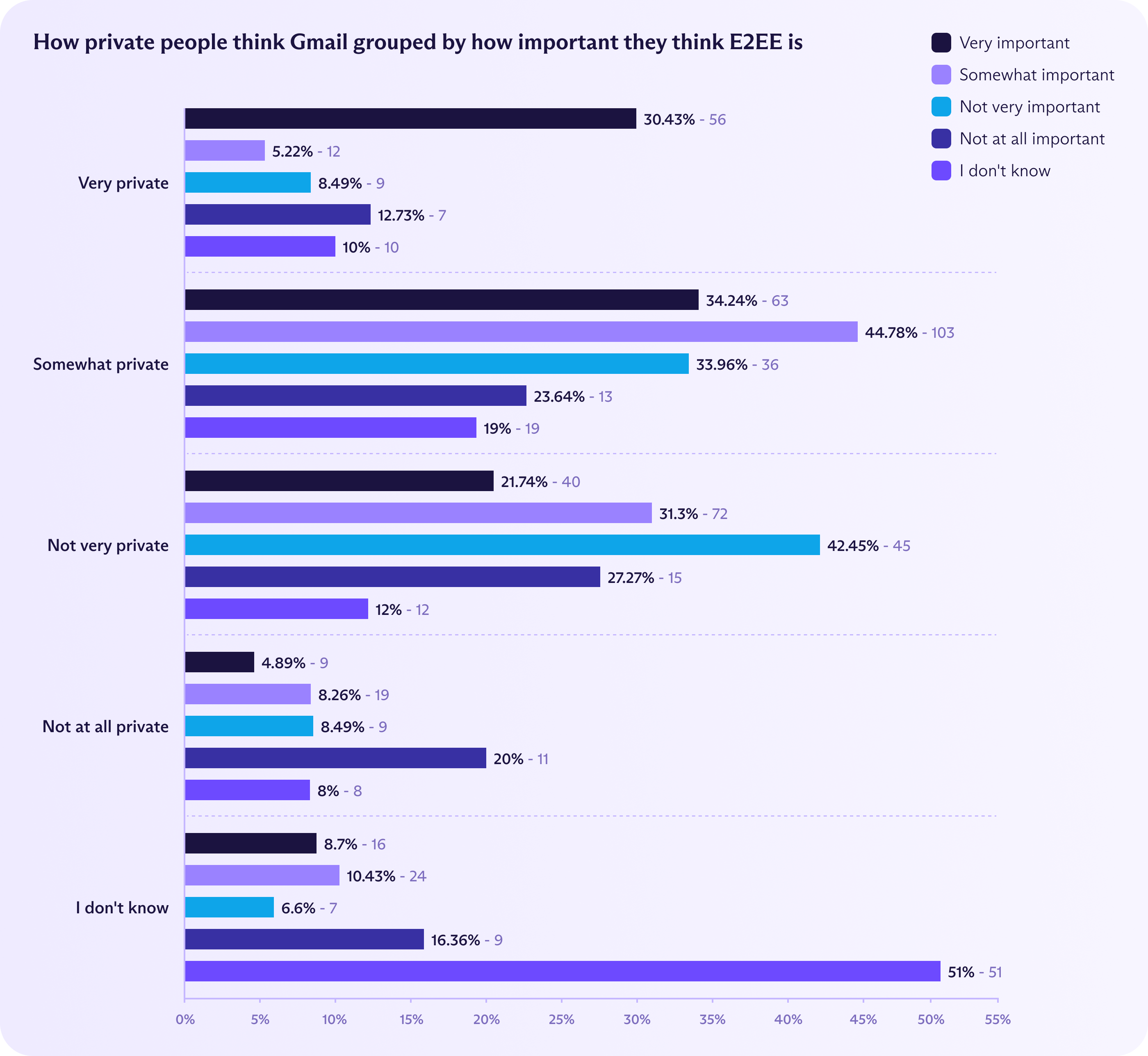
People who consider E2EE very important were in fact more likely to say that Gmail used E2EE than the average person in our survey (35% compared to 22%). That same group was also more likely to see Gmail as private: 30% called Gmail “very private,” and 34% more said it was “somewhat private.”
Still, France has the lowest degree of confidence in Gmail’s privacy of the four countries we surveyed. Just 48% of French respondents said their Gmail messages were “very private” or “somewhat private,” compared with 66% in Germany, 61% in the US, and 57% in the UK.
People trust Meta’s E2EE more than they should
Another winner to emerge in the survey was Meta, the parent company of Facebook, Facebook Messenger, WhatsApp, and Instagram.
End-to-end encryption has long been a key to WhatsApp’s marketing, and it is the only service that a majority of French respondents (52%) correctly identified as offering the technology. (A January 2026 lawsuit, filed after this survey was taken, disputes that claim.)
Facebook Messenger, which adopted E2EE as its default setting in 2023, was recognized by 29%.
65%
Nearly two-thirds of WhatsApp users said they’d consider using another service after learning what data Meta shares with governments.
52%
The share of respondents in France who said they didn’t know that WhatsApp monitored message metadata, like timestamps and contacts. An additional 57% said they didn’t know that Meta, WhatsApp’s parent company, shared that metadata with governments around the world.
After hearing this information, two in three respondents (65%) said they’d consider using another service.

Why does E2EE matter?
Of course, communications sent via these popular services typically remain encrypted in transit, thanks to the widespread adoption of HTTPS. And while Google maintains that it stopped scanning through email to serve targeted advertising in 2017, it continues to do so to ward off spam and malicious content.
But whenever a service lacks end-to-end encryption, that means that there is no technical obstacle preventing the service from accessing its users’ email, files, and photos. Even if says it won’t, the service can always change its mind.
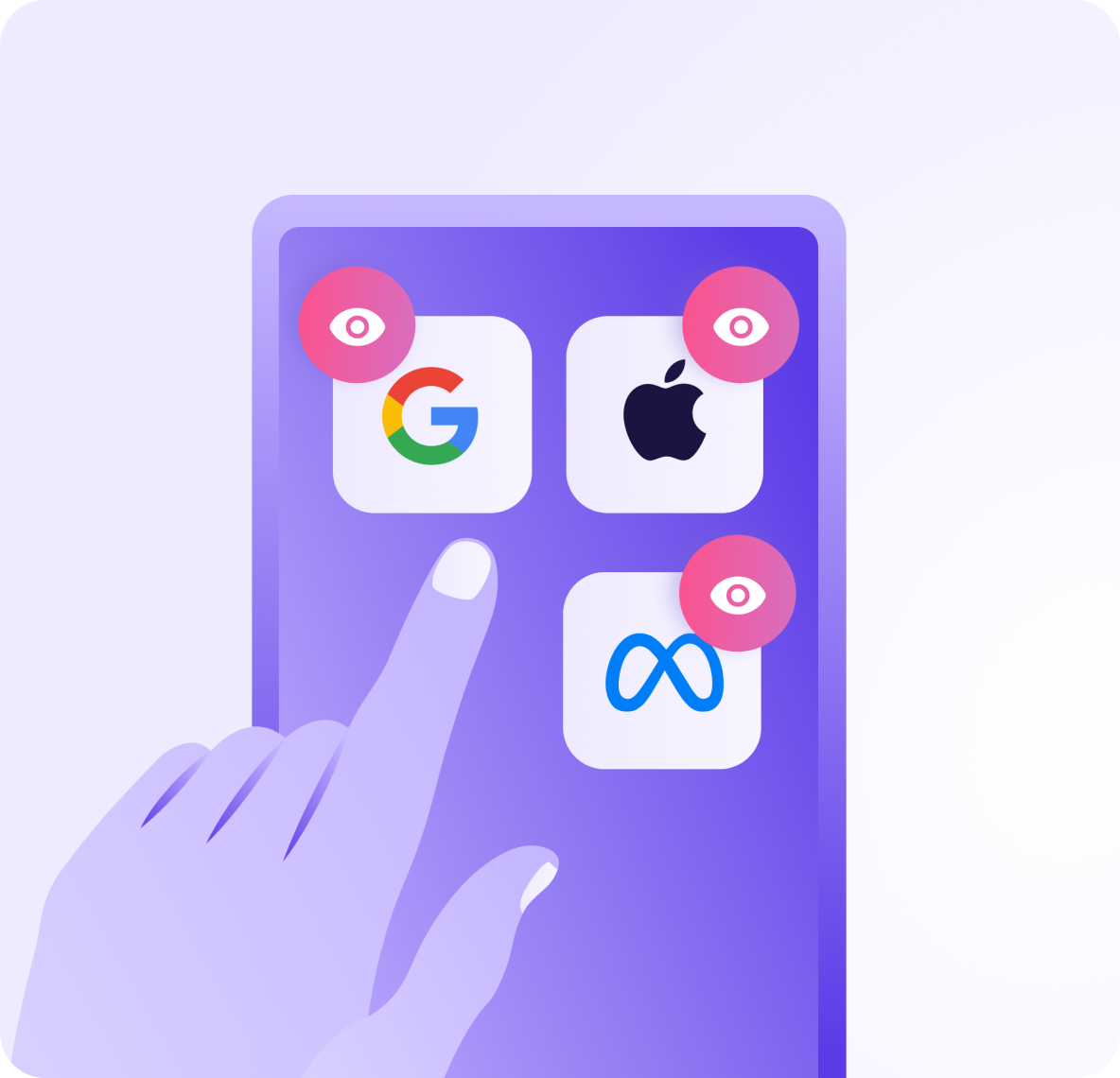
And services without E2EE also remain free to share the files they control with the government, if and when they are asked or ordered to do so. Indeed, Google and Meta, the parent company of Facebook, WhatsApp, and Instagram, are now receiving nearly 500,000 requests for information from US government sources each year.
As Deputy Bothorel explains, “the secrecy of correspondence, while guaranteed by law, is recent and, above all, very fragile.”
Nearly half of Germans think end-to-end encryption is very important
Most Brits say encryption matters
Most Americans say they want encryption