Proton homepage

News

en
  • News
ChatGPT's iMessage plugin feeds your end-to-end encrypted texts into an AI pipeline, opens a privacy backdoor, and grants system permissions.
en
  • News
ChatGPT for Teens promises safer AI for kids but experts warn about unproven protections. OpenAI risks normalizing age verification for LLMs.
en
  • News
Google is changing the Gmail spam filter, letting political emails reach your inbox. Learn how to stop campaign spam and take back control.
en
  • News
Flock's surveillance cameras track drivers across the US. We asked CEO Garrett Langley about abuse, oversight, and who's really in control.
en
  • News
The Gmail “Send as” feature is disappearing. See what's changing, who will be affected, and where you can find a more private alternative.
en
  • News
Researchers found a flaw in Apple's iCloud Private Relay that exposes real IP addresses, the second iCloud privacy failure this summer.
en
  • News
EU regulators fined Google $1 billion for favoring its own services in search and restricting Play Store developers.
en
  • News
France's Constitutional Council struck down the country's ban on social media for children under 15, citing constitutional concerns.
en
  • News
Meta pulled Muse Image, its AI image generator, from Instagram after backlash from users and Hollywood over consent and copyright.
en
  • News
The UK is banning under-16s from social media, following Australia's lead. But the real cost may be privacy.
en
  • News
The Netherlands rejected the purchase of the ID infrastructure provider Solvinity, in a win for the digital sovereignty movement.
en
  • News
By rejecting a short extension, Congress allowed the controversial law to lapse. The fight for surveillance reform now has real leverage.
en
  • News
Top US media saw 116,000+ leaks of sensitive data in the past five years, according to research from Proton. What does this mean for press freedom?
en
  • News
  • For business
Microsoft Edge keeps all saved passwords in plaintext memory instead of encrypting them. Here’s what you risk and what you should do instead.
en
  • News
  • For business
Meta is tracking employees and using behavioral data to train AI while planning layoffs. Are workers helping build their own replacements?
en
  • News
Age verification is expanding from laws to platforms and operating systems, reshaping the internet. Here’s what it means for privacy and access.
en
  • News
The EU unveiled an age verification app and called it technically ready. Security researchers hacked it in under 2 minutes. What it means.
en
  • News
  • For business
Your business data is about to automatically travel outside the EU. Here's why you should opt out and how to do it.
en
  • News
We asked 4,000 people in Nordic countries what they think of US tech. Turns out they're not fans.
en
  • News
Is age verification safe? Learn how age checks can expose children to privacy risks, scams, and data breaches.
en
  • News
Do online age verification systems improve child safety? See how age restrictions and age checks fall short, and what that means for privacy and protection.
en
  • News
Age verification laws are reshaping the internet. See how ID checks, age filters, and platform rules create chilling effects on speech, access, and privacy.
en
  • News
As Section 702 renewal approaches, lawmakers warn VPN users could be treated as “foreign” under US surveillance law, exposing a new privacy risk.
en
  • News
Meta is testing Instagram Plus, a new paid subscription that lets people anonymously view Stories, plus other features. What it means for privacy.
en
  • News
67% of US state legislators have been affected by data breaches at least once: What does this mean for US citizens?
en
  • News
Age verification is moving into operating systems. Here’s how OS-level age checks could reshape privacy and access online.
en
  • News
Apple now requires UK users to verify their age on iPhone. This signals a broader shift toward identity-based access at the device level.
en
  • News
Proton research shows how government access to Big Tech data is reshaping parenting and putting children’s privacy at risk.
en
  • News
Google Chromebooks and Workspace rule US classrooms. Lawsuits claim they collect student data without parental consent. What you should know.
en
  • News
The FBI admits to buying location data on US citizens from data brokers. Here’s how the data economy fuels surveillance and how to stay safe.
en
  • News
Images captured by Pokémon Go players are now helping train AI systems that allow delivery robots to navigate cities with centimeter-level accuracy.
en
  • News
Proton survey shows most US parents worry about their kids' digital footprint, identity theft, and the long-term impact of growing up online.
en
  • News
Instagram will drop end-to-end encrypted chats on May 8, 2026, reversing years of Meta’s push for stronger privacy. Here's what it means.
en
  • News
The App Store Accountability Act would require app stores to verify users’ ages and obtain parental consent. Learn how the bill could affect privacy and security.
en
  • News
An AI-powered toy left 50,000 children’s chat transcripts exposed. Here’s what the incident reveals about data collection, storage, and the risks for kids.
en
  • News
New research from Proton shows that Europeans want to shed US tech dependence and build tech sovereignty for Europe. Read the full report.
en
  • News
From March 2026, all Discord users will have a teen-appropriate experience by default, unless they can verify they are at least 18 years old.
en
  • News
A class-action lawsuit challenges WhatsApp’s end-to-end encryption claims. We break down the allegations, denials, and what’s actually known.
en
  • News
OpenAI is rolling out ChatGPT ads. Here's what's changing, why it's worse than search ads, and what you can do to protect your privacy.
en
  • News
Unsolicited password reset emails worry Instagram users amid breach rumors. What we know on the alleged Instagram leak and how to stay safe.
en
  • News
The Google Dark Web Report tool is shutting down on February 17, 2026. Here's how you can still get alerted to personal data leaks.
en
  • News
As of December 16, 2025, Meta uses your AI chats and other interactions for ad targeting. Here’s what it means and what you can do.
en
  • News
Australia's social media ban for kids under 16 introduces surveillance risks through biometric checks and identity verification.
en
  • News
Ad-data on smart phones can uncover military identities and secrets. So what does this mean for your privacy?
en
  • News
Proton analyzed emails from 50 major retail brands to measure inbox overload and hidden tracking during the 2025 holiday shopping season. Here’s what we found.
en
  • News
ESET Password Manager sales have ended, and your saved data will be deleted on Oct 18, 2027. See how this affects you and what to do next.
en
  • News
  • For business
The OpenAI data breach exposed API user data through Mixpanel. Find out what sensitive information was exposed and how to protect your data.
en
  • News
GrapheneOS leaves France, warning of encryption backdoors. See why end-to-end encryption matters for Pixel users and how backdoors weaken it.
en
  • News
AI-driven ALPR systems are a mass dragnet-surveillance system that poses a direct threat to the privacy and freedom of everyone in the US.
en
  • News
A new digital ID scheme in the UK is raising concerns among British citizens. We investigate how the scheme could work and the pros and cons
en
  • News
Meta isn't just targeting you with ads, it's coaxing you into scams and banned products. And getting rich in the process.
en
  • News
An executive order creating federal regulation for AI in the US could have ramifications for the privacy of citizens: Find out how to protect yourself
en
  • News
News that Google is killing its Privacy Sandbox initiative shows it has little real concern for protecting people from invasive advertising practices.
en
  • News
OpenAI’s ChatGPT Atlas brings AI directly into your browser — but at what cost? Here’s what researchers say about privacy and security risks.
en
  • News
  • For business
An AWS outage is disrupting Alexa, Slack, and other major platforms. Here's what it shows on our reliance on Big Tech and how to respond.
en
  • News
A huge ID photo breach at Discord shows that age verification laws should not be enforced until robust privacy protections are in place.
en
  • News
Sweet Anita, one of Twitch’s most recognizable streamers, took all the right precautions. Then she got deepfaked.
en
  • News
LinkedIn will share your public data with Microsoft to train AI. Find what this means for your privacy and how to opt out.
en
  • News
A former Meta employee alleges the company used internal tracking methods to bypass Apple’s privacy rules and inflate ad metrics.
en
  • News
  • Video
Former CIA officer Andrew Bustamante and Cato’s Jennifer Huddleston debate what privacy means today and how it shapes security, rights, and the internet.
en
  • News
WhatsApp's ex-security chief is suing Meta over privacy and security concerns, adding to recent whistleblower claims. Find out how safe WhatsApp is.
en
  • News
China-supported hackers have been monitoring US internet infrastructure for years. Now US security experts suspect they might have stolen data from everyone in the US.
en
  • News
Disney must pay $10 million to settle allegations by the FTC that it deliberately breached a law designed to keep kids safe online.
en
  • News
Remember giving Facebook access to your camera roll? Some users don't, so Meta AI could be scanning their photos right now. See how to check.
en
  • News
Microsoft plans to make OneDrive the default save location for Word, Excel, and PowerPoint. Here's what that means for your privacy.
en
  • News
Facial recognition technology turns your face into data for ads, surveillance, and tracking. Learn the risks — and how to protect your identity.
en
  • News
Google has warned Workspace users that they should change to passkeys after a surge in phishing attacks. Learn more and what you can do.
en
  • News
  • Video
Surveillance is increasingly in everywhere. Privacy advocate Albert Fox Cahn explains how and where you're monitored — and what you can do about it.
en
  • News
Several recent studies have found data brokers in the US ignoring data requests, hiding opt-out pages, and more. Learn what you can to do to fight back.
en
  • News
Perplexity’s $34.5B bid for Google Chrome shows how AI companies want your browser not just for speed and convenience, but for your data — and your digital life.
en
  • News
  • Proton Pass
Dashlane is axing its free password management plan as of September 2025. Here's what to know — and where you can find a free password manager alternative ASAP.
en
  • News
The new 'Friend Map' feature on Instagram might be sharing your precise location without your knowledge. Here's how to turn it off — and why you might want to.
en
  • News
Dropbox is ending its password manager. Learn how to move your passwords to Proton Pass and explore a privacy-first ecosystem for your data.
en
  • News
  • Video
The video exposes how your digital devices invade your privacy and harvest your personal data from seemingly innocuous daily interactions.
en
  • News
Over 74% of European businesses rely on US tech. This is an unsustainable situation, an obstacle for European innovation, and a threat to European sovereignty.
en
  • News
  • Opinion
Data brokers sell your personal info without consent. Here’s how they threaten democracy — and what you can do to stop them.
en
  • News
You might be surprised how much of your life is affected by AI decision-making using data from data brokers. We explain its issues and how to protect yourself.
en
  • News
We tested a people-finder site like the ones implicated in the Minnesota lawmaker shootings.
en
  • News
Roughly 16% of Swiss federal politicians had their official government email leaked on the dark web. This puts them at risk of phishing attacks or blackmail.
en
  • News
  • Proton Wallet
Coinbase employees sold sensitive personal information to attackers, including government IDs and BTC transaction history. Proton Wallet is built to avoid these risks.
en
  • News
  • Video
Follow investigative journalist Vegas Tenold as he explains his gear and how it keeps him safe from surveillance as he works in the field.
en
  • News
If you want to use Microsoft’s password management features, you now need to step deeper into Microsoft’s walled garden. There's another way.
en
  • News
Is your family’s photo collection safe? We surveyed 2,000 UK parents to uncover the truth about cloud storage risks, data breaches, and protecting precious memories.
en
  • News
At Proton, we believe the best way to protect press freedom is to give journalists tools that make them harder to target — and easier to trust.
en
  • News
  • Proton Wallet
Bitcoin has disinflationary characteristics that potentially make it an effective hedge against inflationary forces.
en
  • News
Apple turned off its end-to-end encryption in the UK in response to a government notice. We look at what this means and how people in the UK can protect their data.
en
  • News
  • Proton Wallet
Learn how CBDCs could give governments new powers to control money and monitor financial activity and how Bitcoin prevents this.
en
  • News
Big Tech companies - Apple, Google, and Meta - have built a mass surveillance machine that the government can easily tap into.
en
  • News
Not only does DeepSeek collect extensive personal information, but it cannot legally resist government demands for access to that data.
en
  • News
President Trump now controls of the US government's warrantless surveillance machine. We look at how it works and how to defend yourself.
en
  • News
As the treat of a TikTok ban looms, many U.S. users are flocking to a new TikTok alternative called RedNote. But should they be?
en
  • News
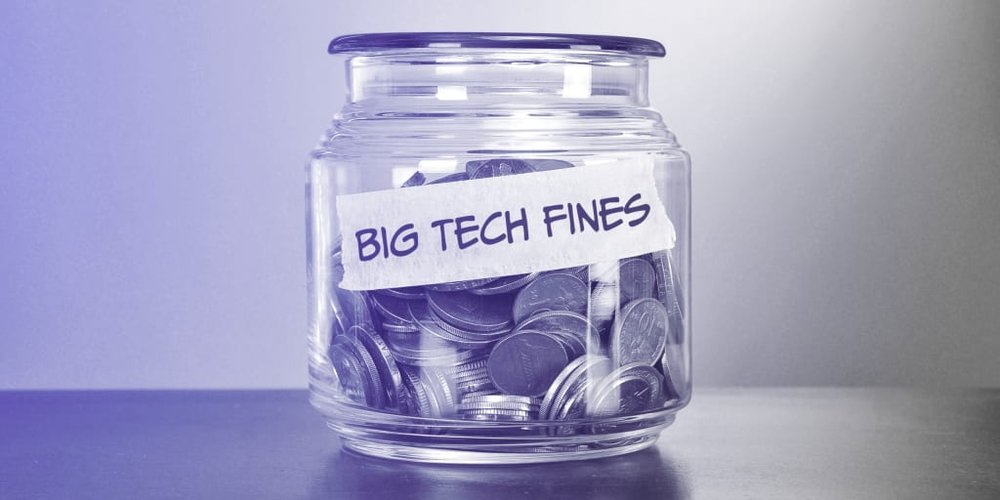
Big Tech fines reached more than $8 billion in 2024. Unfortunately, not even this fine will give Big Tech pause. But progress is being made.
en
  • News
Students modified smart glasses to find someone’s personal data after just looking at them. This is why we must minimize data collection.
en
  • News
The Kaspersky ban raises security and privacy concerns, but you can protect your data by switching to the Proton ecosystem.
en
  • News
AI offers incredible productivity gains, often at the cost of privacy. Is it possible to build AI that protects privacy? We explain how it can be done.
en
  • News
Data harvesters are reaching into virtually every part of your digital life through the little-known surveillance hardware industry.
en
  • News
Any privacy-focused company in the US faces numerous legal challenges, including multiple programs that allow for warrantless wiretaps.
en
  • News
We will explore what to know about the attack on France Travail and ways you can protect yourself from potential phishing scams.
en
  • News
Big Tech companies made 2023 the year of privacy washing. Stay alert for these false advertising trends in the year ahead.
en
  • News
Big Tech (Alphabet, Amazon, Apple, Meta, and Microsoft)'s annual revenue dwarfs total fines. The cost for privacy is insignificant to them.
en
  • News
The new Outlook now appears to be a data collection service for Microsoft’s 801 external partners for targeted advertising.
en
  • News
Google’s new “privacy feature” for Android is just another tracking system. It can’t provide its users with true privacy without destroying its business.
en
  • News
Proton Mail has unique security features that defend against many clever new techniques hackers are using now.
en
  • News
The US could end the unconstitutional, warrantless surveillance of its citizens by fixing Section 702 of the Foreign Intelligence Surveillance Act.
en
  • News
The UK government has proposed using hash scanning to detect abusive material without violating people’s privacy. Unfortunately, it won’t work.
en
  • News
MEPs in the European Parliament held press conferences outlining the compromises reached within the EU Parliament negotiators on the controversial Chat Control proposal.
en
  • News
The British government now has the authority to scan encrypted messages, but it can still choose not to use this power.
en
  • News
Big Tech companies will make enough money to pay most regulatory fines they receive in the time it takes you to read this article.
en
  • News
Google is out of new ideas, and as ad revenue declines the company is doubling down on its data-hungry business model.
en
  • News
Here’s how Big Tech is trying to give itself immunity from government oversight through the Indo-Pacific Economic Framework.
en
  • News
Google and Facebook are handing over user data to police for abortion prosecutions. Learn why Proton would never do that.
en
  • News
AI, and ChatGPT in particular, is having a moment. We examine how AI is trained, what it could lead to, and how it all affects your privacy.
en
  • News
Email addresses were linked to 200 million Twitter accounts. We explain how you can recover and protect yourself from the next breach.
en
  • News
Facebook engineers confessed the company doesn’t know where your data is stored or how it’s used, which means you can't have it all deleted.
en
  • News
Apple’s ad business is growing fast. It tracks you in its apps and uses that data to sell ads despite its privacy claims.
en
  • News
Between Google, Meta, Apple, and Amazon, Big Tech was fined over $3 billion for privacy and competition violations.
en
  • News
Time is running out for Congress to vote on two bills that will create a fairer internet. Join us in calling for a vote.
en
  • News
TikTok’s in-app browser can monitor your keystrokes. It's one of several iOS in-app browsers that can spy on everything you do.
en
  • News
  • Company news
Proton is continuing its bug bounty program with Bug Bounty Switzerland. If you're a security researcher, we invite you to participate.
en
  • News
The introduction of the metaverse has serious implications for our privacy. Find out why and how we can build a metaverse that respects privacy.
en
  • News
The new Proton brings our services together to form a unified privacy ecosystem of encrypted email, calendar, and drive.
en
  • News
  • Opinion
From the introduction of new privacy-focused tools to the passage of new data privacy laws, here are the 10 biggest privacy wins from 2021.
en
  • News
Nearly 90% of Britons are concerned about the privacy of their personal data online, but 20% don’t use any data protection practices at all.
en
  • News
A Swiss court has ruled that Proton Mail, as an email service, is not a telecommunications provider, meaning we are not subject to a telecommunications provider’s enhanced data retention obligations.
en
  • News
Zoom has agreed to an $85 million settlement after lying about its encryption and security standards. Here's how it affects you.
en
  • News
The DMA is a set of proposed rules from the European Commission aiming to curtail Big Tech’s exploitative practices and make the internet more competitive.
en
  • News
We developed Proton Mail and Proton VPN to protect activists, dissidents, and journalists around the world.
en
  • News
The Assistance and Access (A&A) law requires tech companies to help law enforcement agencies break into individuals’ encrypted data.
en
  • News
In order to protect our user community, we have a zero-tolerance policy for criminal acts committed against Proton Mail, or criminal acts committed using Proton Mail.
en
  • News
We have just released a major new version of OpenPGPjs, the world’s most popular open-source JavaScript encryption library.
en
  • News
ProtonMail's encryption and SESTA-FOSTA has severe implications for communications privacy of sex workers. Proton Mail's encryption and Swiss jurisdiction provides strong privacy safeguards.
en
  • News
Join Proton, Fight for the Future, DuckDuckGo, and others in calling on US lawmakers to make the internet a level playing field.
en
  • News
Today, we are participating in the Internet-wide Day of Action alongside Amazon, Netflix, Github, and many others to counter this decision.
en
  • News
Whether it's Facebook, New York Times or a website that you visit in secret, your ISP has a record of all of your browsing history. This highly personal and intimate data can be sold to the highest bidder.
en
  • News
Earlier today, Wikileaks dumped a large database of secret documents from the CIA. We did a deeper analysis of the leak and its implications on online security and privacy.
en
  • News
Since the Yahoo breach impacting 1 billion users, signups of Proton Mail have doubled due to users looking for a Yahoo Mail replacement.
en
  • News
Last week, the Investigatory Powers Bill (IPB) was approved by the UK Parliament and now only awaits an inevitable royal approval before it becomes law.
en
  • News
Earlier this week, Donald Trump won a stunning election victory that will put him in charge of the world's most powerful mass surveillance infrastructure.
en
  • News
As a result of a recent secret US government directive, Yahoo was forced to scan all Yahoo Mail accounts at the request of the NSA and FBI.
en
  • News
We are happy to announce that, due to the efforts of our users and allies, the Swiss Surveillance Law will be put to a vote by the Swiss people
en
  • News
This a guest blog post by Mazin Ahmed, an external security expert who has helped test and audit Proton Mail. We hope it will educate our readers about web security.
en
  • News
A lot of good has certainly resulted from the Internet revolution, but one important freedom that has been threatened in the process is our right to privacy
en
  • News
WhatsApp is forcing its users to share their metadata with Facebook. Privacy requires not just strong technical solutions, but a sound business model.
en
  • News
Big Tech companies have found ways to get more and more advertising revenue out of their users. The secret? They track your activity all over the internet.
en
  • News
The US House subcommittee investigation of tech monopolies confirms the arguments we have made for years. Antitrust enforcement is essential for privacy.
en
  • News
The EU Court of Justice ruled EU law applies when governments force telecommunication providers to process data, making it harder to perform mass surveillance.
en
  • News
The CEOs of Google, Apple, Facebook, and Amazon tried to shift the narrative about whether their companies are monopolies. But their statements don’t match reality.
en
  • News
Big Tech CEOs are being called to testify in front of US Congress again. To avoid another embarrassment, Congress must understand these three key facts.
en
  • News
TikTok is the fastest growing social media platform in the world. However, its links to the Chinese government also pose a major privacy problem
en
  • News
The US Congress is considering a bill that will ban end-to-end encryption and give law enforcement access to almost any encrypted app or device.
en
  • News
The Chinese government has granted Hong Kong law enforcement agencies sweeping surveillance and Internet censorship powers with Article 43.
en
  • News
Google searches for privacy-focused Gmail alternatives have steadily increased since 2019. We examine the numbers and potential reasons why.
en
  • News
The EU is investigating Apple’s App Store practices for antitrust violations. Here’s why we must all resist abuses by tech giants.
en
  • News
Companies like Facebook and Google collect massive amounts of data on their users, which national governments then request for surveillance purposes.
en
  • News
If you’re using Zoom while working from home, you should be aware of Zoom's privacy policies, including its “attention tracking” tool.
en
  • News
The Edison email app scrapes user data while making claims about practicing privacy by design. This misleads users and undermines their right to privacy.
en
  • News
We signed an open letter that opposes the EU’s proposal to loosen oversight of foreign data requests. We call on the EU to protect its citizens’ privacy.
en
  • News
Kazakhstan is trying to spy on Internet traffic by forcing citizens to submit to a man-in-the-middle (MITM) attack. Here’s how to stay safe.
en
  • News
Privacy experts say Gmail confidential mode is neither secure nor private because it does not use end-to-end encryption.
en
  • News
We have joined Privacy For All Act with 23 other tech companies to support better privacy safeguards.
en
  • News
Recent news reports regarding “eFail” have contained significant errors regarding the security of PGP email encryption. It is necessary to correct the record.
en
  • News
Recently, news broke about potential vulnerabilities in PGP, dubbed Efail. However, despite reports to the contrary, PGP is not actually broken, as we will explain in this post.
en
  • News
Turkey has a track record of blocking certain websites. Here's how you can bypass Turkey's online censorship and access any site (such as Proton Mail).
en
  • News
Last Friday, a weaponized version of a NSA exploit was used to infect over two hundred thousand computers in 150 countries with the WannaCry ransomware.
en
  • News
Yahoo today confirmed a massive breach of over 500 million email accounts. This is a major security incident that also impacts some Proton Mail users.
en
  • News
Na sexta-feira passada, o Congresso americano e o presidente Obama assinaram a Lei de Vigilância CISA usando métodos desleais.
en
  • News
Late last Friday, the US Congress and President Obama signed into law the CISA Surveillance Law using very underhanded methods.
en
  • News
In September of this year, the Swiss Parliament passed the new Swiss surveillance law, known as the Nachrichtendienstgesetz (NDG) in German